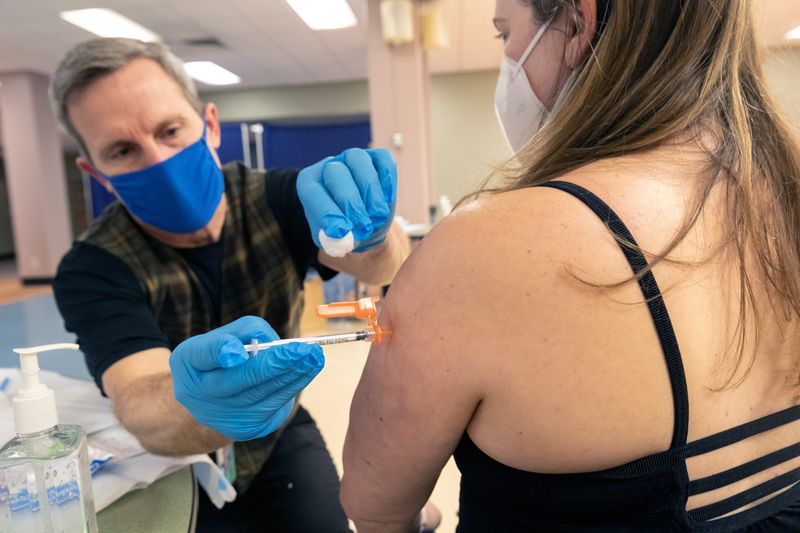
While the Food and Drug Administration approved the next round of COVID-19 vaccines, who’s eligible to receive updated shots this season will differ.
Health and Human Service Secretary Robert F. Kennedy Jr. announced on Aug. 27 that emergency-use authorizations for COVID-19 vaccines have been terminated.

The FDA, which operates under the HHS, has since imposed new restrictions limiting access to the updates shots to people who are at risk for serious complications because they are 65 or older or have other heath problems. Prior to the Aug. 27 vaccine announcement, the vaccines were available to anyone 6 months and older regardless of their health.
This change in guidelines comes at a time when COVID-19 cases, emergency room visits and hospitalizations have been on the rise nationally, according to data from the Centers for Disease Control and Prevention.
Here’s what we know so far about COVID-19 vaccine access this season.
If you have questions about COVID-19 vaccine recommendations, availability and eligibility that you’d like us to answer, please fill out the survey below or visit this link.
What are the available COVID-19 vaccines and who is eligible?
There are three COVID-19 vaccines available for use in the U.S., according to the CDC. There is no preference for one vaccine over another when more than one vaccine is recommended for an age group.
The 2024-25 COVID-19 vaccines more closely target the JN.1 lineage of the Omicron variant, updated from the previous year’s vaccines to give better protection from the strains currently in circulation.
Per new HHS guidelines, here’s what was approved:
Prior to the Aug. 27 announcement, the CDC recommended most adults 18 years or older should get a 2024-25 COVID-19 vaccine, including people who have previously received a COVID-19 vaccine, people who have had COVID-19 and people with long COVID in addition to those 65 and older or who have “high risk” conditions.
Kennedy did not specify which conditions make people at “high risk” when he announced the change in guidelines.
Some health conditions the CDC lists that make someone “higher risk” include asthma, cancer, diabetes, obesity, mood disorders and a history of smoking, however, it is unclear if these factors will be the same ones used moving forward to determine eligibility.
Going by that list, pregnancy would also be classified as a “high risk” condition, however, Kennedy previously announced the removal of pregnant women from the vaccine recommendation list.
Can you still get the vaccine if you are not in the approved groups?
It will depend on the state and what guidance the Advisory Committee on Immunization Practices puts forth later this month.
In some cases, a prescription may be necessary, while in others, patients can self-attest to having a condition that qualifies them for the vaccine.
Should children get the COVID-19 vaccine?
The COVID-19 vaccine will no longer be included in the CDC’s recommended immunization schedule for healthy children and pregnant women, according to a May 27 announcement made by Kennedy.
The announcement, which broke with expert guidance and bypassed the usual scientific review process, drew criticism from a number of professional medical organizations.
What is the difference between flu and COVID-19?
Both influenza, or flu, and COVID-19 are contagious respiratory illnesses, but they are caused by different viruses.
Because flu and COVID-19 have some overlapping symptoms, it can be hard to tell the difference between the two based on symptoms alone, however, some nucleic acid amplification tests, such as PCR tests, can differentiate between flu and COVID-19 at the same time, streamlining the testing process.
Some COVID-19 signs and symptoms include:
Emergency warning signs for COVID-19, indicating emergency help is needed include:
Anna Kleiber can be reached at akleiber@gannett.com.
This article originally appeared on Milwaukee Journal Sentinel: What are the available COVID-19 vaccines and who is eligible? What to know in Wisconsin
Reporting by Anna Kleiber, Milwaukee Journal Sentinel / Milwaukee Journal Sentinel
USA TODAY Network via Reuters Connect