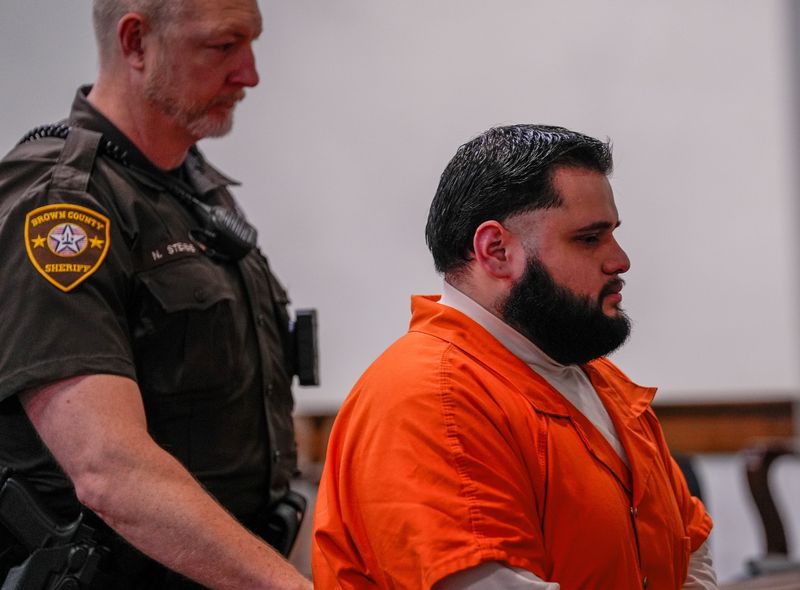
A Green Bay man was sentenced to 24 years in prison June 15 for shooting and killing one man and injuring another in an act the judge described as “almost incomprehensible.”
Omar Hernandez, 27, pleaded no contest June 24, 2024, to first-degree reckless homicide with a dangerous weapon and first-degree reckless injury with a dangerous weapon, both as a party to a crime.

Omar and his brother Jose Hernandez, 26, were charged and convicted in connection with killing Edgar Rodriguez-Hernandez, 27, of Green Bay, and injuring Edgar’s then-24-year-old brother during a fight in the early morning of Feb. 11, 2023. Jose pleaded no contest to aiding a felon and was sentenced Sept. 4, 2024, to three years in prison.
According to discussion at the Hernandez brothers’ sentencings, a dispute between the sets of brothers began earlier in the night at Mi Pueblo, 1905 N. Irwin Ave., Green Bay. After everyone left the bar, it was planned over text for the groups to meet again in the 900 block of Clayton Place to continue the altercation.
During the fight, Omar Hernandez grabbed a gun from his car and shot Rodriguez-Hernandez in the head, according to discussion at his sentencing.
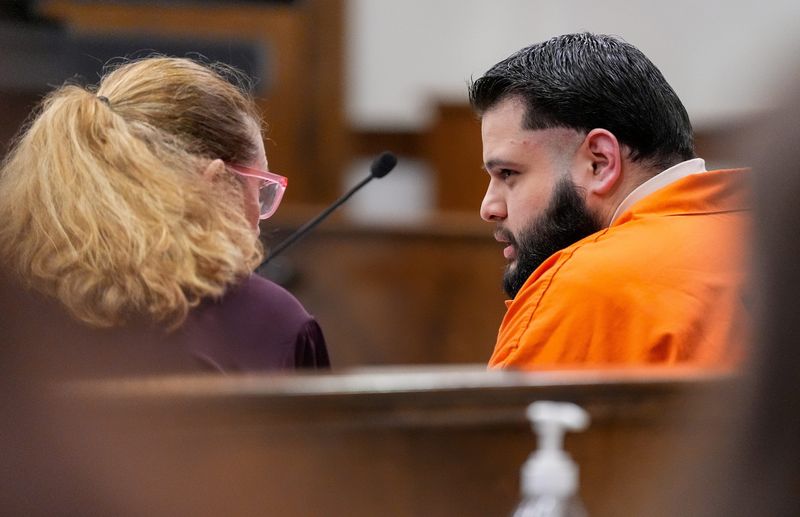
Hernandez and his attorney, Heather Richmond, said Hernandez was acting in what he believed was self-defense, or defense of his brother. Richmond said Omar saw Jose being hit in the head with a glass bottle, didn’t see him moving and thought he was in “grave danger or dying or dead.”
“I was scared for my brother’s life,” Hernandez said in his own statement to the court.
Brown County Deputy District Attorney Caleb Saunders said prosecutors dispute any notion that the shooting occurred out of self-defense. Evidence showed Rodriguez-Hernandez was shot in the back of the head with a downward trajectory, Saunders said, which “can be fairly characterized as execution-style.”
Saunders said no evidence existed that anyone else had a dangerous weapon, outside of the glass bottles. “It’s senseless, it’s not justified,” Saunders said.
Edgar’s brother was shot in the back multiple times as he was leaving the incident, Saunders said. He survived, but told Judge John Zakowski at Jose’s sentencing that surgeons were unable to remove a bullet near his heart, which impacts his physical mobility. “I still have a bullet inside my body, and I haven’t been the same since,” Edgar’s brother said at the time.
Edgar had two children who were orphaned after his death, according to discussion at sentencing. Hernandez “ruined a family,” Saunders said.
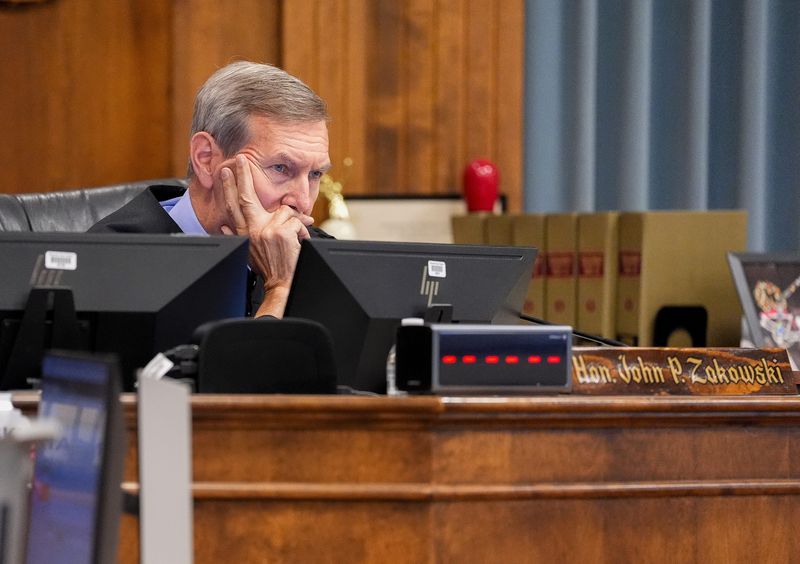
Saunders recommended a 30-year prison sentence followed by 25 years on extended supervision, while Richmond recommended a 10-year prison sentence with four years’ extended supervision. Zakowski sentenced Hernandez to 24 years in prison followed by 26 years on extended supervision.
Sentencing delayed for over a year
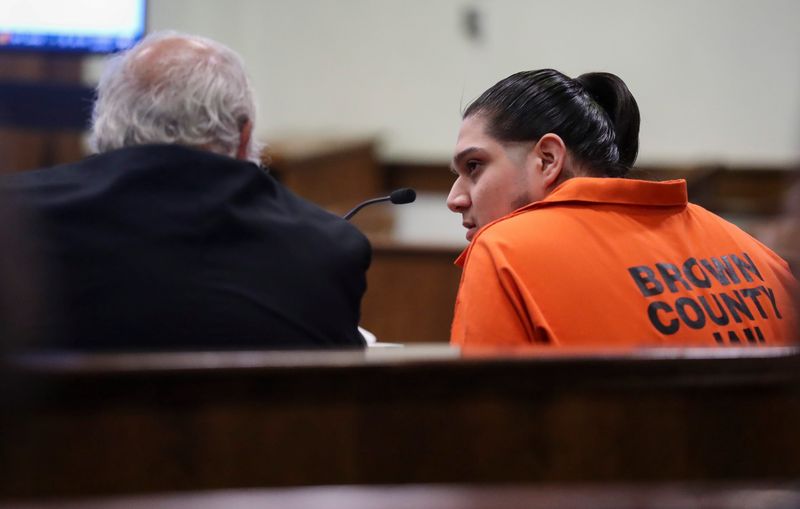
Hernandez was first scheduled to be sentenced Sept. 4, 2024. Hernandez’s attorney, Jevon Jaconi, was sick at the time and sentencing was rescheduled. The sentencing continued to be delayed as Jaconi remained sick and later died.
Richmond took over Hernandez’s representation after Jaconi’s death. Another sentencing hearing was scheduled for February 2025 but was delayed after Hernandez raised the issue of potentially withdrawing his no-contest plea.
Richmond filed a formal motion seeking to withdraw Hernandez’s plea March 23. According to the motion, Hernandez entered his plea at a final pre-trial hearing that took place the same week a trial was scheduled to begin, a decision Richmond said “was made in haste.”
Hernandez said Jaconi told him the plea would be to second-degree reckless homicide and attempted second-degree reckless homicide, according to the motion. The offer was explained verbally and Hernandez never saw the physical documents, the motion said.
At his final pre-trial, Hernandez pleaded to first-degree reckless homicide and first-degree reckless injury, both with dangerous weapons enhancers. According to the motion, Hernandez repeatedly asked Jaconi why the charge being discussed was first-degree not second-degree and Jaconi assured Hernandez he had it “taken care of.”
The motion asserted Hernandez’s pleas were entered “in substantial part, based on a sense of misinformation” and were not voluntary.
Zakowski denied Hernandez’s motion in a May 21 decision. In the decision, Zakowski said nothing was presented to corroborate Hernandez’s claim that Jaconi advised him he would be pleading to second-degree charges and he didn’t find Hernandez’s testimony about the situation to be credible.
Hernandez had several opportunities, including several chances during the final pre-trial hearing alone, to raise the issue of the alleged discrepancy between his plea and what Jaconi told him, Zakowski said. Zakowski didn’t find there to be any fair or just reason to allow the plea withdrawal.
“If the defendant really believed that he was pleading to second-degree charges, he would have interrupted the plea hearing, or answered the court’s question if he had any questions, or would have mentioned something to the [pre-sentence investigation] agent who in turn would have noted that in his report,” Zakowski said. “The court surmises if the defendant really thought he was pleading to [second-degree charges], he would not have waited ten months to file a motion to withdraw his pleas.”
‘The most serious of offenses’
Zakowski said he deals with a lot of tragedies and this case is “near the top of the list.” The saddest part, he said, was that the shooting was preventable.
“Everybody was stupid that night,” Zakowski said, by deciding to reengage the argument after everyone had already left the bar. A group of angry and intoxicated people meeting with a plan to fight with a gun in a nearby car was “a terrible recipe,” the judge said.
After the decision to reengage, Zakowski said, Hernandez made a series of terrible decisions. Zakowski said, as a brother himself, he understood the feeling of wanting to do anything to protect your brother, but shooting someone in the head, “that itself is almost incomprehensible.”
“Then you shoot his brother,” Zakowski said. “He wasn’t threatening you, he wasn’t threatening your brother and you still saw fit to shoot someone in the back. That is awful, no other way to put it.”
While Zakowski said he understood wanting to protect your brother, it “doesn’t mitigate anything.”
Zakowski noted several positives about Hernandez’s character. His only criminal history was a misdemeanor disorderly conduct conviction and several people wrote character letters on his behalf, including leaders of multiple nonprofits who shared details about the positive impact Hernandez had on the community for years. Zakowski said Hernandez also deserved credit for taking responsibility as the shooter and avoiding a trial.
“But I can’t overlook the fact that you murdered somebody, execution-style, and then shot somebody who was just trying to save his own life,” Zakowski said. “It’s the most serious of offenses.”
Vivian Barrett is the public safety reporter for the Green Bay Press-Gazette. You can reach her at vmbarrett@usatodayco.com or (920) 431-8314.
This article originally appeared on Green Bay Press-Gazette: Green Bay man sentenced to 24 years for ‘incomprehensible’ 2023 shooting
Reporting by Vivian Barrett, Green Bay Press-Gazette / Green Bay Press-Gazette
USA TODAY Network via Reuters Connect
By Vivian Barrett, Green Bay Press-Gazette | USA TODAY Network