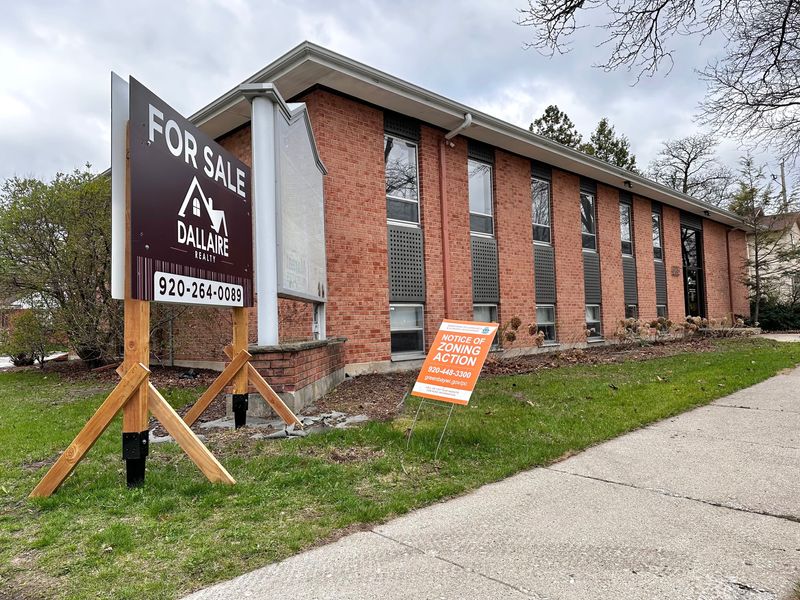
Update: The Green Bay City Council on May 5 approved a conditional use permit to convert a Cherry Street office building into a the sober living facility for no more than 20 men. Developer David Nelson reaffirmed for council members that the facility would have on-site management 24 hours-a-day and would construct privacy fencing and berms around the property, two of the concerns neighbors raised.
Plans for a rooming home for sober men in downtown Green Bay gained the endorsement of the city’s Plan Commission on April 27 over contention about its place in the wider Whitney Park neighborhood.

Only commissioner Derius Daniels dissented from the commission’s endorsement of developer David Nelson’s proposal to remake the vacant Rice Office Building, 828 Cherry St. into a “structured shared housing environment” for men looking “to live in a substance-free setting,” according to a paperwork submitted to city staff.
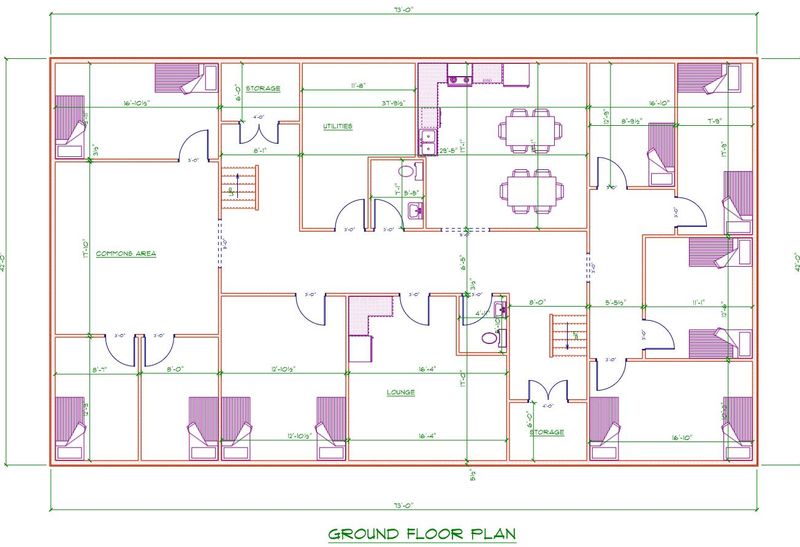
Floor plans show bedrooms, common areas, kitchen, and laundry facilities would replace the current layout meant for offices. Fewer than 20 men would live there due to expected capacity constraints, according city zoning administrator Jon LeRoy in city memo. The rooming house will not offer any kind of treatment on site. “This property is intended to be a home for sober individuals, not a facility to become sober,” LeRoy’s memo said. A six-foot, opaque fence and landscape buffering would be required.
The proposal would be executed in partnership with DalMont Phoenix Foundation for Sober Living and its executive director, Monty Jensen, who would oversee the home’s operations.
Residents, who would live there voluntarily, would be charged with keeping each other sober based on a peer support model of recovery, according to a management plan. They would also be subject to chores, regular meetings, and be required to hold a job or do volunteer work. A policy of no alcohol or substance use would be enforced by random testing, the management plan said. Average rent would be about $150 a week, the plan said.
“The goal is simple, to create a closely monitored, well-run, stable property that provides affordable housing options without creating issues for the surrounding neighborhood,” Nelson wrote in a project narrative to the city.
The project has touched off much debate over the project’s need in the Whitney Park neighborhood, which some residents saw as having an oversaturation of similar service providers. A neighborhood meeting on April 15 gathered over 20 residents, according to LeRoy’s memo that described “much discussion about having too many ‘transient,’ ‘rehab,’ or ‘shelter’ facilities” in the area.
Most of the city’s 16 congregate living facilities – including dorms, shelters and transitional housing – are in the city’s downtown, like the Jackie Nitschke Center and St. John’s Ministries, according to a memo by city planner Stephanie Hummel.
“That’s a lot,” said Daniels, who lives in the Whitney Park neighborhood. He said he would vote against the proposal. “I don’t think there’s a need in this neighborhood.”
Developer Garritt Bader, who also heads the Whitney Park neighborhood association, said he believed the project, though noble, was not a good match for the area, which was “trying to change the narrative of what this neighborhood has been.”
There were already several other social services close by, Bader said, which he said was “not a bad thing, automatically” but could “make it more challenging when looking at how to properly develop or redevelop an area like has been occurring here.”
Most commissioners and city officials were unmoved by those arguments. Plan Commission Vice Chair Jacob Miller called the Whitney Park neighborhood “gentrified,” adding that, “I think some of the motives behind the people coming out against this should be considered a little bit here, as well.” He suggested that any reason against the proposal that “falls into the political realm” and were not relevant to the commission’s authority over zoning laws need to be discussed at the May 5 City Council meeting.
City Council Vice President Jim Hutchison, who sits on the commission, asked that city staff provide any reports by May 5 on reported disturbances and crime at similar facilities. “I hate for this facility to be not forwarded because we’re perceiving it to be a negative impact,” he said.
City Council President Alyssa Proffitt, whose district encompasses the proposed project, said she lives next to a facility whose residents were “scared straight into being the best neighbors on Earth.” She said there was still a need for services to people recovering from addiction whose backgrounds would make them unattractive to landlords in a tight housing market.
(This article has been updated to add a photo.)
Jesse Lin is a reporter covering the community of Green Bay and its surroundings, as well as politics in northeastern Wisconsin. He also writes a weekly column answering reader questions about Green Bay. Contact and send him questions at 920-834-4250 or jlin@usatodayco.com.
This article originally appeared on Green Bay Press-Gazette: Green Bay City Council OKs rooming house for sober living downtown
Reporting by Jesse Lin, Green Bay Press-Gazette / Green Bay Press-Gazette
USA TODAY Network via Reuters Connect