Activist Lucille Berrien had a track record for getting involved when things needed to get done.

She was a welfare rights advocate, a Black Panther Party member, board member for several major local groups and the first Black woman to run for mayor of Milwaukee.
Berrien died earlier this year on May 22. She was 98.
Following her death, many celebrated her as a trailblazer for civil rights in Milwaukee, but to her family, she was also just “Grandma.”
Berrien’s granddaughter and former editor of the Milwaukee Courier, Faithe Colas, said she would always start her day with a call to her grandma.
“Fifteen minutes on what’s happening in the neighborhood, breaking news, and how I could do my job better,” Colas said. “And it was like that for 20 years.”
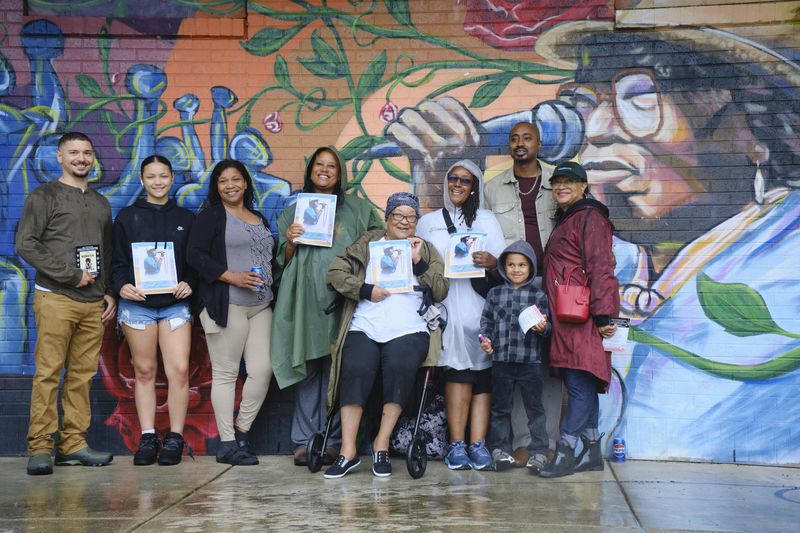
On Saturday, Aug. 1, about 25 people celebrated Berrien’s life and legacy at a park named in her honor in 2021.
The family roasted hot dogs, shared stories, and participated in a libation ceremony− an African ritual of pouring out a liquid as an offering to honor ancestors − and chanted “Ashé” as a closing affirmation. The ritual was performed by historian and Wisconsin Black Historical Society founder Clayborn Benson.
The loss of Berrien was one in a series of recent deaths of influential Black Milwaukeeans involved in the local Civil Rights Movement, continuing their work into the 21st century, like Lamarr Franklin, Dr. William Finlayson, and major musical influences like Manty Ellis.
Pepsi, fashion and showing up
Berrien was born in 1928 in Opa-locka, Florida, to migrant worker parents.
Berrien moved to Milwaukee in 1954 for better opportunities and education for her children in the wake of losing her husband, Henry Lee Berrien, in the Korean War in 1951.
After arriving in the city, she began accepting jobs as a domestic worker, cleaning houses in wealthy neighborhoods like Whitefish Bay but also all the way out in Mequon.
Working on thin margins, she was a welfare recipient and struggled to make ends meet, supporting her family.
Berrien became a prominent voice within the local Civil Rights Movement as an ardent activist for welfare rights.
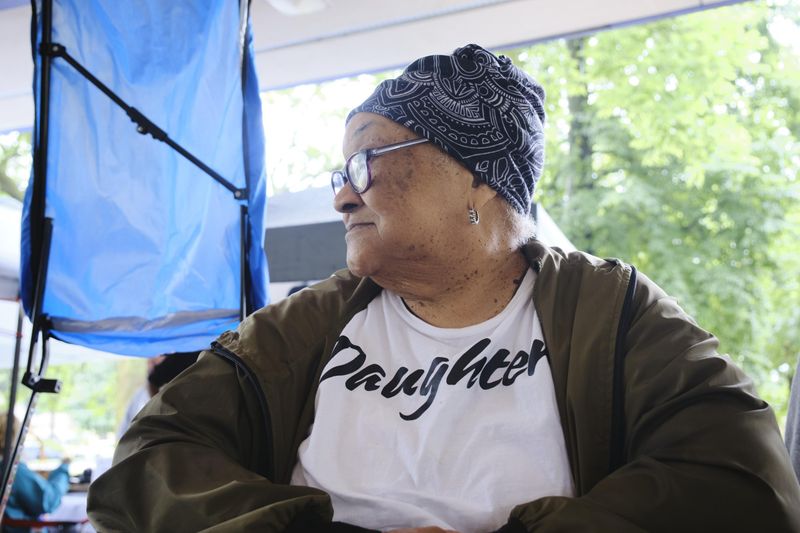
At the celebration of life, Berrien’s family said they would always remember her impact as a change agent, but to them, it was the little things that made Berrien special.
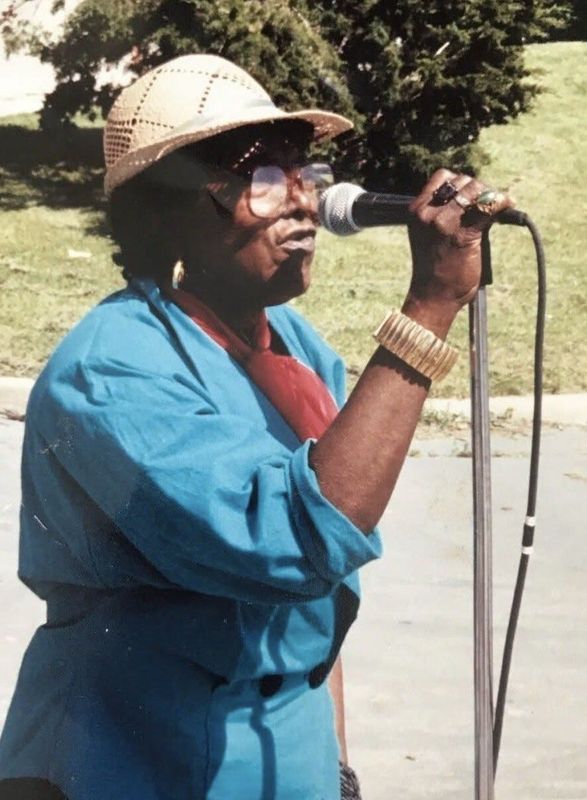
She was fun, stylish and enjoyed excursions with her grandchildren.
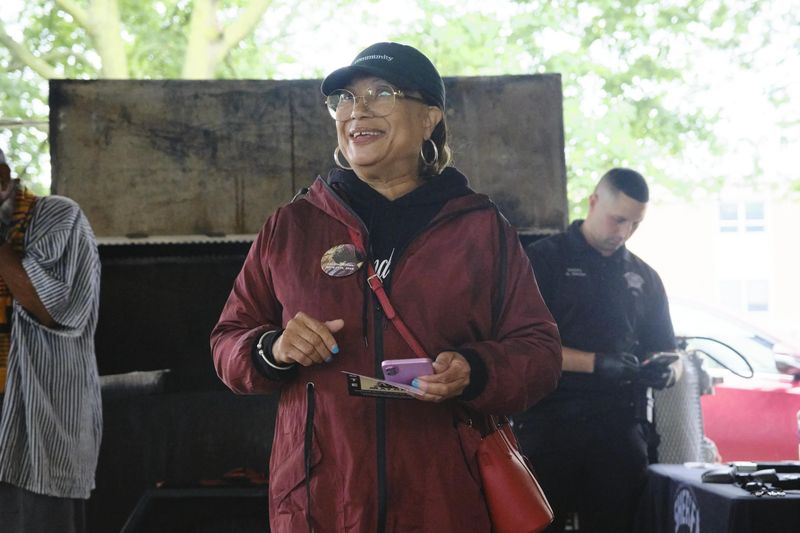
“She was not always an activist. She was very fashion-conscious,” Berrien’s daughter Helen McCray said. “She reminded me a lot of Eartha Kitt.”
That sense of style did not go away as she got older, and she had a deep closet full of clothes to choose from, according to McCray.
Berrien was also an attentive grandmother and tried to remain involved in everyone’s lives, from her children to her great-grandchildren.
Colas said that, as a child, Berrien would take her on excursions, including to her job of cleaning houses.
“She always had me as a little girl, Saturday mornings, going to help her clean somebody’s house or go antiquing,” Colas said. “She always, in those moments, reminded me of the value of everything.”
Colas’ daughter also got to experience adventures with her grandmother.
“My daughter’s favorite thing to do was to call me and say, ‘Mommy, come and get me. ” I don’t want to get arrested with grandma today,” said Colas.
Family also reminisced on Berrien’s quirks. For example, when offering Berrien a drink, any beverage would not suffice.
“She wouldn’t drink water,” Colas said at the celebration. “It was always Pepsi.”
The nursing home where she resided towards the end of her life did not have Pepsi products, and when family members visited, they would bring the drink with them, she said.
Berrien’s life of activism
As a civil rights leader, Berrien became a central voice in the welfare rights movement and a close friend of Father James Groppi and Ald. Vel R. Phillips, two of the major figures in the fight for housing equality.
McCray said part of what made Berrien influential was how she showed up and persisted in creating change.
Berrien was an opponent of the Vietnam War and became a local chairwoman for People’s Coalition for Peace and Justice, an anti-war umbrella organization that included the National Coalition Against War Racism and Repression.
Berrien helped establish the Milwaukee chapter. She also joined the Black Panther Party and helped distribute resources to the city’s Black residents.
In 1970, Berrien spoke at the University of Wisconsin-Milwaukee at a rally following the Kent State Shootings, where the National Guard shot and killed college students in Ohio while they were protesting the Vietnam War.
McCray, Berrien’s daughter, did not join her mother at protests when she was younger, but as a young adult, she decided to get more involved.
“It scared the hell out of me,” McCray. “You had city leaders calling you n*****, and these were the pillars of the community.”
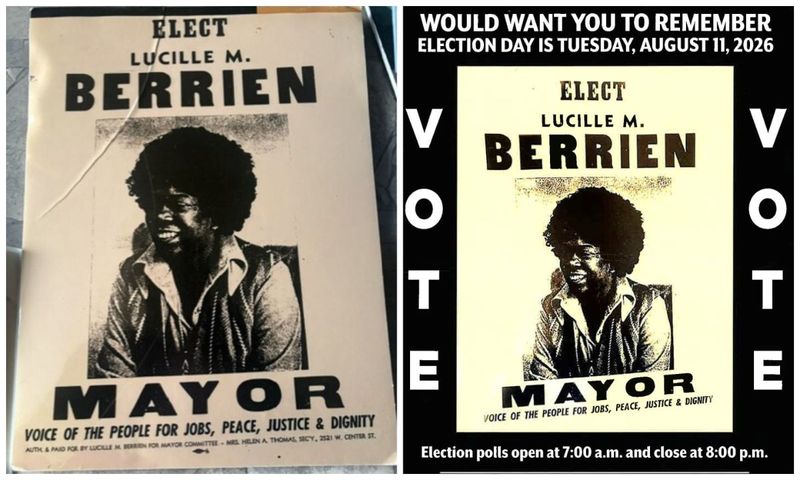
In 1972, Berrien ran for mayor of Milwaukee, becoming the first Black woman to do so, while also managing the local campaign for Shirley Chisholm’s presidential bid.
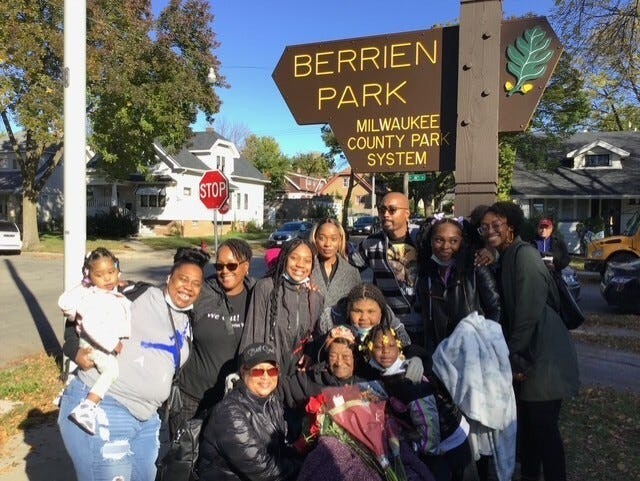
Berrien was recognized by the city as an important figure in Milwaukee’s history, and in October 2021, Lindbergh Park, at the corner of North 16th Street and West Nash Street, was renamed in her honor.
As someone who did not slow down, Berrien worked most of her life as an activist and an involved member of the Milwaukee community.
Later on, when age made it more difficult to move around the city on a whim, she became a board member for Legal Action of Wisconsin and the Milwaukee Alliance Against Racist and Political Oppression.
“Everyone wanted her on their board,” said Brian Verdin, who was friends with Berrien since the late 1960s and co-founded the Milwaukee Alliance with her.
Berrien’s legacy now lives on through her family. She is survived by her daughter, McCray, about 14 grandchildren, and 16 great-grandchildren, some of whom have taken up roles in local social activism.
Everett Eaton covers Harambee for the Journal Sentinel’s Neighborhood Dispatch. Contact: eeaton@usatodayco.com.
Neighborhood Dispatch reporting is supported by Bader Philanthropies, Zilber Foundation, Journal Foundation, Northwestern Mutual Foundation, Greater Milwaukee Foundation, and reader contributions to the Journal Sentinel Community-Funded Journalism Project. Journal Sentinel editors maintain full editorial control over all content. To support this work, visit jsonline.com/support. Checks can be addressed to Local Media Foundation (memo: “JS Community Journalism”) and mailed to P.O. Box 85015, Chicago, IL 60689
The JS Community-Funded Journalism Project is administered by Local Media Foundation, tax ID #36-4427750, a Section 501(c)(3) charitable trust affiliated with Local Media Association, and EnMotive, a subsidiary of USA TODAY Co.
This article originally appeared on Milwaukee Journal Sentinel: Celebration of life honors Lucille Berrien as an activist, fashionista, matriarch
Reporting by Everett Eaton, Milwaukee Journal Sentinel / Milwaukee Journal Sentinel
USA TODAY Network via Reuters Connect
By Everett Eaton, Milwaukee Journal Sentinel | USA TODAY Network