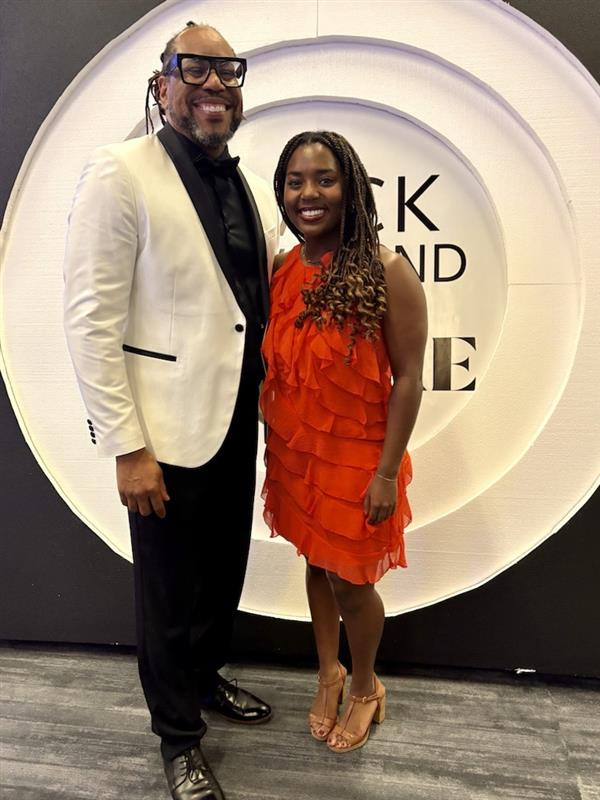
CLEVELAND – Diversity, equity, and inclusion was a key topic at the 50th Anniversary of the National Association of Black Journalists convention as efforts have been scaled back or removed across the country over the past year.
The concern is that the regression is creeping into the media industry. Black journalists carry a unique burden that others inside and outside our newsrooms may never fully appreciate. Because there are so few of us, we often become trusted voices for communities to share their stories. This responsibility can usually be weighty but also gratifying.

While some are quick to label me and others as DEI hires, it’s important to remember that only 6% of U.S. journalists in news reporting roles are Black, according to a 2022 Pew Research Center survey. This percentage is significantly lower than the Black share of U.S. workers (11%) and the overall adult population (12%).
The Trump Administration’s push to eliminate DEI initiatives coincides with challenges in the media industry, which faces declining revenue, viewership and subscriptions. As companies cut staff to stay financially viable, outgoing NABJ president Ken Lemon warns that Black journalists should not be the first to go, as their presence boosts newsroom credibility.
Diverse newsrooms provide a wider array of perspectives, experiences, and cultural insights, which result in more nuanced and comprehensive coverage, Lemon said.
Black columnists (like me) who write about racism and racist systems — the issues many in this country don’t want to acknowledge — also must endure bigoted emails and phone calls, just for doing our jobs.
Newsrooms must reflect diverse communities we serve
Critics argue DEI leads to reverse discrimination and creates division. Some contend that focusing on achieving quotas in newsrooms could detract from commitment to high-quality journalism and established journalistic standards.
This is nonsense. DEI does not lower standards, and there is ample data to support this.
However, this doesn’t stop the emails I receive from readers suggesting that the only reason I have my job is because I’m Black. To those who make this claim, I challenge you to switch places with me. I guarantee you wouldn’t last a month in my shoes.
To improve performance, newsrooms need to hire more people of color to reflect our diverse communities accurately. This strategy is not just wise; it is vital for our survival. However, hiring Black, Latino, and LGBTQ+ reporters is only part of the solution. Newsrooms must also provide these journalists with the support they need to succeed in their roles.
Journalists came together to champion representative coverage
NABJ is the largest organization for African American journalists in the world, boasting over 4,000 members. I have been a member since 1989, and this organization is a major reason I remain in this business today.
This year’s convention was much less tense than last year’s, when then-GOP candidate Donald Trump brought his controversial rhetoric to Chicago after he and Vice President Kamala Harris, whom some Republicans called a DEI hire, were invited to make in-person appearances. However, Harris had a scheduling conflict and couldn’t attend.
When asked why Black voters should support him, Trump claimed, “I have been the best president for the Black population since Abraham Lincoln.”
NABJ allows me the privilege of mentoring young journalists, providing support on various topics like resume tips, story structure, and writing captivating stories that will help them stand out.
To get a sense of why this is important, you only need to look back to December 1975 when 44 men and women met Washington, D.C. to address the lack of Black journalists in mainstream media and the misrepresentation of Black communities when telling our stories. Many of these journalists were the only Black people in their newsrooms.
At TV stations, they faced comments such as not being “Black enough” or being “too Black” to be on-screen, or women’s natural hair not meeting acceptable standards.
Without the efforts of the founders and their sacrifices, media would lack fair and accurate representation of the Black experience. Fast forward 50 years and although things have improved in newsrooms and broadcast centers, not enough has changed.
Journalism highlighted at NABJ made a difference
One of the unique qualities of NABJ is how the organization recognizes its members. I received first place in the “specialty” category for my column “Take it from me: Getting this medical test can save your life.”
Several of my colleagues at the Journal Sentinel also won first-place awards. Photojournalist Angela Peterson for her feature series: “Greentree: The Ties That Bind,” and for best single image of photography for the project. Investigative reporter Tamia Fowlkes, took first for investigative, for “At Wisconsin’s Largest Technical College, Staff Complaints of a ‘Hostile’ Environment for People of Color Persist.”
Former Journal Sentinel intern Wynton Jackson won a collegiate award a story he did last summer at on how Green Bay Packers players maintain their deadlocks during the long NFL season.
Read the NABJ Salute to Excellence award winning work from the Journal Sentinel
The quality of the journalism highlighted at the convention is the best evidence for embracing diversity, something the winner of Chuck Stone Lifetime Achievement Award, named in honor of the architect behind NABJ, embodies.
Art Holiday, the retired news director at St. Louis’s KSDK-TV, highlighted how we all stand on the shoulders of those who paved the way for us. However, he emphasized that as journalists, we pursue our work not for awards but for the passion behind it.
After Holiday graduated from the University of Missouri School of Journalism in 1977, he was hired for his first TV job in Oklahoma City as a weekend sportscaster. While he was in the station’s lunchroom, a salesman he had never met or spoken to asked him, “Do you think you were hired because you’re Black?”
“That’s how he sized me up. A token hire,” Holiday said.
Holiday told the Black journalists to remember, “Success is the best revenge against people who doubt you or disrespect you.”
Holiday, 71, said he has often fantasized about a redo of that conversation with that salesman.
What would that conversation sound like today? It would begin with Holiday’s long list of accomplishments, including three Hall of Fame inductions with two more pending, two Emmys, and numerous other awards.
As the NABJ members began to applaud, Holiday stated, “And I’m still Black!”
Some responded, “Yes, we are!”
Reach James E. Causey at jcausey@jrn.com; follow him on X@jecausey.
This article originally appeared on Milwaukee Journal Sentinel: Black journalists carry unique burden DEI critics fail to understand | Opinion
Reporting by James E. Causey, Milwaukee Journal Sentinel / Milwaukee Journal Sentinel
USA TODAY Network via Reuters Connect