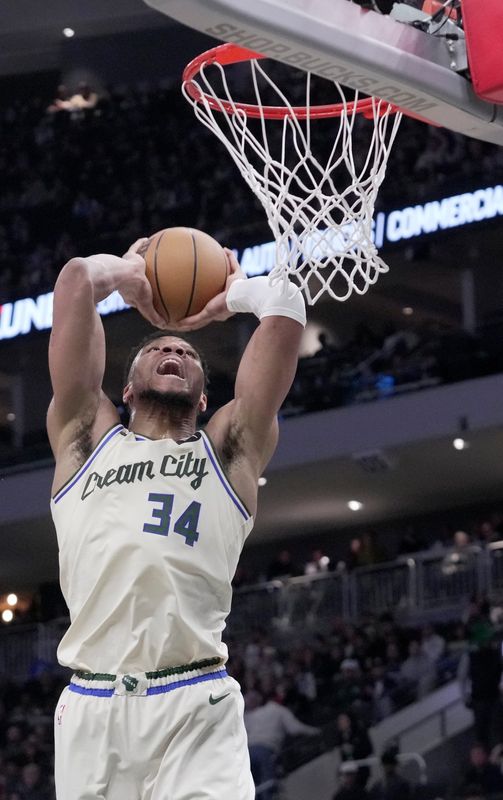
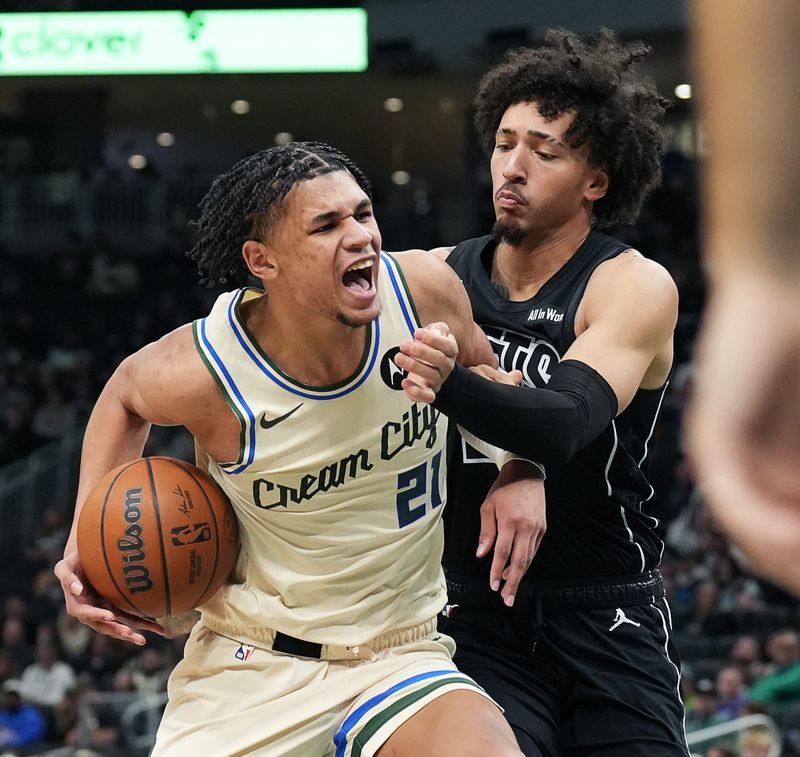
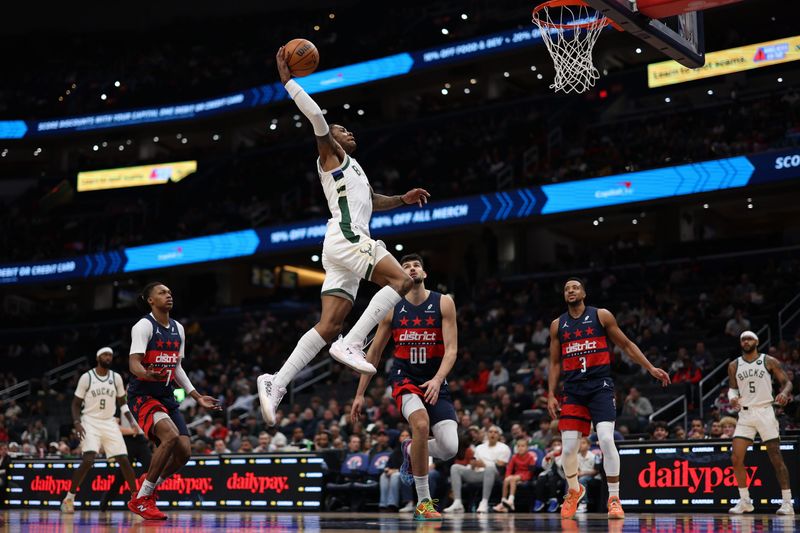
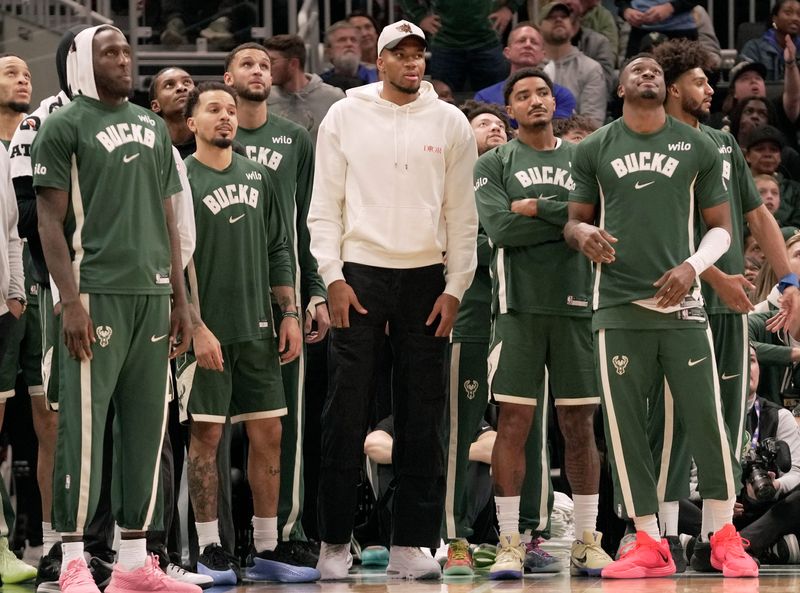
The Milwaukee Bucks are at an organizational crossroads this offseason, as ownership led by governor and co-owner Wes Edens and co-owners Jimmy and Dee Haslam must decide if the team wants to keep MVP candidate Giannis Antetokounmpo, or begin a rebuild by trading him.
That decision has yet to be made and will likely not be made until the June 23 draft. That is when other teams have additional future picks become available to help entice the team to trade the best player in franchise history.

Until then, the Bucks enter this offseason evaluating their options for either vaulting back into contention around Antetokounmpo or use some of the flexibility to create a roster that cannot “tank” in 2026-27 (the team does not possess its own first-round draft pick) but may be somewhat competitive in a strong Eastern Conference.
Let’s break it all down.
Bucks 2026-27 roster
Name, age on opening day, salary (percentage of cap)
Player options
The following player options must be exercised by June 29.
Team option
The team must exercise this option by June 29.
Restricted free agents
Unrestricted free agents
Dead money
Do the Bucks have salary cap space?
No.
How far under the luxury tax are the Bucks?
This is a projection, because the Bucks’ upcoming draft slot is unknown. The Bucks currently have the best odds of winning the No. 10 pick in this year’s draft, and that projected salary is $6.4 million.
So, assuming the No. 10 pick is on the Bucks roster, the team will have about $25-28 million to work with under the luxury tax.
The Bucks will once again try to avoid paying the luxury tax, however, to reset the “repeater” clock. Under the collective bargaining agreement, teams that paid luxury taxes in three of the previous four seasons are subject to severe tax penalties, and the Bucks were a taxpaying team from 2020-25. Even if the Bucks retain Antetokounmpo and try to bolster the roster again around him, avoiding the luxury tax is a prudent decision.
What financial assets do the Bucks have?
Along with having some room under the tax the Bucks will also have access to:
It’s important to note the Bucks don’t have to use the entirety of these exceptions on one player. The team can split the dollars up across multiple players, or trade for a player and slide their salary into these slots.
There are some constraints in a trade, however, such as the BAE can only be used to trade for a player who has at most two years left under contract starting in 2026-27. The NTMLE can only be used to trade for a player who has at most four years left under contract.
Who can the Bucks sign?
Unrestricted free agency is basically dead in the NBA, but the Bucks are not a “cap space” team so they can only use the above exceptions to acquire players. That would likely place them out of the market for veteran free agents like LeBron James, CJ McCollum and Norman Powell.
If they do not use those exceptions as part of a trade for incoming talent, the Bucks would look for players that are undervalued in the market – think Brook Lopez in 2018 and Bobby Portis Jr. in 2020.
It’s hard to forecast who those players might be at this juncture, however, as the Bucks don’t currently have a coach (and therefore a play style to project a skill set into) and there are around 60 players that may become available if player or team options are declined.
Do the Bucks have a draft pick this year?
Yes.
The Bucks own a pick, but they will not know where they are selecting until the NBA draft lottery on May 10. As part of the 2020 Jrue Holiday trade, if the Bucks win a lower draft spot than New Orleans, the Pelicans can swap positions with the Bucks.
For example: If the Bucks win the No. 1 pick and the Pelicans No. 2, the teams will swap spots. This would be the best-case scenario for Milwaukee. (As part of a separate deal between Atlanta and New Orleans, the Hawks would then actually own the top spot. That does not impact the Bucks at all.)
The worst-case scenario for the Bucks would be for the Pelicans to “fall” in the lottery, like the No. 10 spot, which would mean the Bucks give up a better draft position.
Do the Bucks have draft picks to trade?
Yes.
During the first round of the 2026 NBA draft, the Bucks can trade their pick. They also will be able to deal first-rounders in 2031 and 2033, and/or swap first-rounders in 2031, 2032, or 2033.
GM Jon Horst insisted in a late season interview he is empowered to trade future draft picks if that is the course of action the team decides on.
Bucks future draft picks
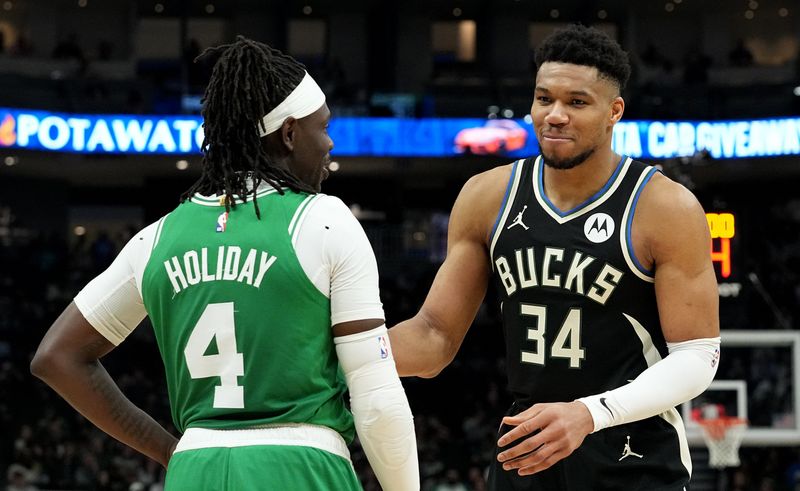
It is true, however, that the team does not “control” its future draft picks through 2029. That is due to the bills yet to be paid on the 2020 Jrue Holiday and 2023 Damian Lillard acquisitions:
2026
2027
No picks.
2028
2029
No picks.
2030
2031
2032
Can the Bucks get their picks back?
Simply, the concept of trading Antetokounmpo and looping New Orleans and Portland into a deal to “get their picks back” is not cut and dry.
The Pelicans have since traded their rights to those picks, so the Bucks would need to bring Atlanta into any conversation. Portland has also traded some rights in 2029, as Washington now gets the second most favorable first-round pick of the three Portland controls: its own, Boston or Milwaukee.
Besides Giannis, are there any other important roster decisions to make?
Yes.
Let’s start with Ousmane Dieng, the No. 11 pick in the 2022 draft the Bucks acquired at the deadline from Oklahoma City. Playing the first real minutes of his four-year career, Dieng flashed quite a bit of potential but also went through some struggles. He started out shooting very well from behind the 3-point line (43%) in his first 17 games, but that cratered to 21% over his final 13.
The lack of shooting consistency was a negative against him coming to the Bucks, so the front office will have to determine which version of Dieng is the real one. He also relied too heavily on a midrange shot, which led to him shooting 42% overall from the field. That is right in line with his career in Oklahoma City (42.3%).
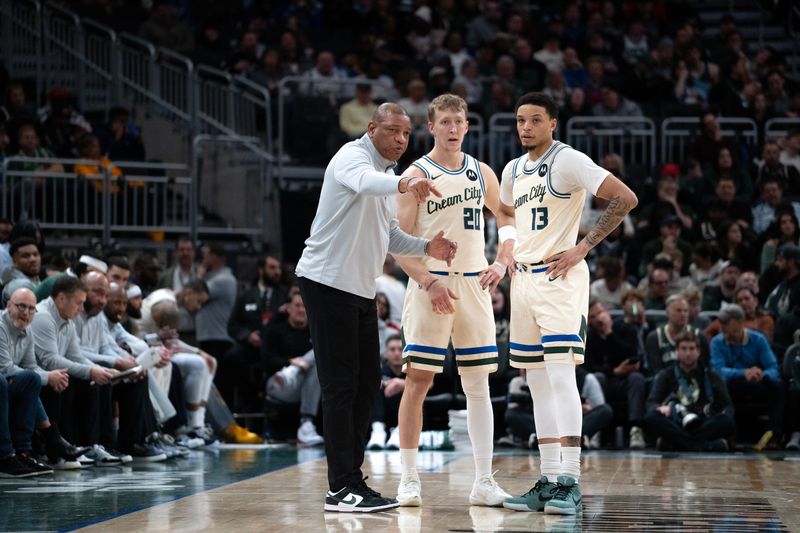
Dieng also averaged nearly six assists per game over his last 12 appearances, including two, double-digit assist games. Former Bucks head coach Doc Rivers also experimented with Dieng defensively, putting him on smaller guards but also the other team’s best player.
As a former lottery pick, Dieng’s qualifying offer will be $8.7 million – a number that is too high for the inconsistency he showed and overall lack of career production. The Bucks must decide if they want to try and instead re-sign him to a multi-year deal at a lower number. But of course, that would require Dieng to agree to that as well.
If not, Dieng could become an unrestricted free agent.
A good comparison for a potential deal would be the No. 10 pick in the 2021 draft, Ziaire Williams. Also a good-sized wing with an inconsistent shot, Williams signed a two-year deal in Brooklyn with a team option in Year 2 for $6.25 million annually.
Kevin Porter Jr. is also an interesting case if he elects to opt out of his $5.3 million player option. A league course versed in the upcoming marketplace told the Journal Sentinel Porter could command $10-15 million annually as a free agent.
He will be 26 at the start of next season and is coming off a year that included two surgeries on his right knee and several other injuries that limited him to 38 games.
However, when Porter did play, he was outstanding at times. He finished the year averaging 17.4 points, 7.4 assists, 5.2 rebounds and 2.2 steals per game. Had Porter played enough games to qualify, he would have tied for sixth in the NBA in assists.
Porter’s 3-point shooting dipped (32%), but he does profile as a more consistent deep ball shooter.
He also had 2 triple-doubles and nine double-doubles in his limited action.
There were times throughout the year when Porter frustrated former head coach Doc Rivers and teammates with over-dribbling and settling for midrange shots, but there were other times he looked like an elite playmaker and secondary scorer.
But, one can say the same thing about Ryan Rollins, who will turn 24 and has no such significant wear and tear. They’re similar players, also, and Rollins will command a big contract following the 2026-27 season. Any Bucks’ decision on what to do with Porter as a potential free agent would have long-reaching ramifications, and being able to perhaps move on from him cleanly could prove beneficial.
What if the Bucks trade Giannis?
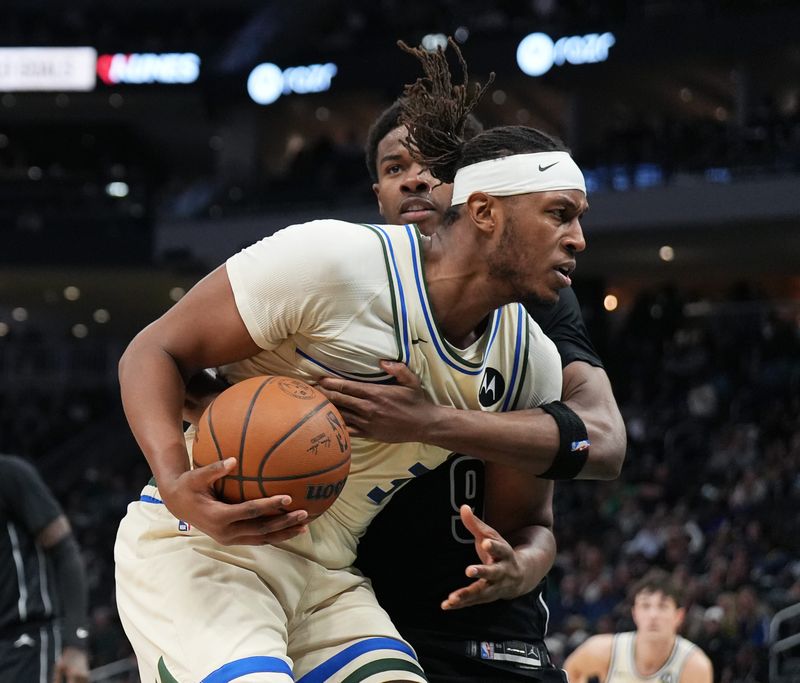
Aside from pivoting the franchise away from immediate title contention and setting a new course around a mixture of salary filler and future draft picks, the Bucks will have to make decisions on Myles Turner and Bobby Portis Jr.
Both big men are great fits with and around Antetokounmpo and are proven players on a title contender. That would no longer be needed in Milwaukee. While the Bucks would probably not get draft capital for either player, they could move them out to contending teams for smaller contractual commitments and open minutes for younger options.
What if the Bucks don’t trade Giannis?
Even though the Bucks have room under the luxury tax to pay players, they are not currently a “cap space” team, so they would have to bring in players (and salary) via trades. And, that would mean they are in the market for an established all-star, or a player they believe is on the verge of such status.
That would likely mean sending out Kyle Kuzma and probably Portis to make a salary space work. Such a scenario would also mean the Bucks likely have to include a first-round pick or a future first-round swap as well.
This article originally appeared on Milwaukee Journal Sentinel: A look at Bucks’ roster, Giannis’ future, during critical offseason
Reporting by Jim Owczarski, Milwaukee Journal Sentinel / Milwaukee Journal Sentinel
USA TODAY Network via Reuters Connect