Events starting more than two years ago are at the core of efforts to remove Corpus Christi Mayor Paulette Guajardo from her position — a venture that’s led to dispute within the community, and among elected leaders, as attorneys wrangle over how, when or if a hearing should be held that would give the City Council the power to oust her from office.
The controversy that set the wheels of a removal hearing in motion goes back to $2 million in tax incentives awarded to hotel developers in April 2024, approved by a divided — but majority — vote of the City Council.

It began with accusations that developers had altered a screenshot of the U.S. Federal Emergency Management Agency’s website, using the image in a presentation on the proposal to construct a Homewood Suites hotel.
Developers have denied allegations that the screenshot was altered with intention to mislead officials — in at least one interview, describing it as a formatting error — and both law enforcement and administrative investigations concluded no criminal violations.
Residents petitioning for removal have linked the tax incentives for the hotel, and the circumstances surrounding their approval, to what they have asserted as misconduct or malfeasance by the mayor.
Guajardo, for her part, has denied all allegations of wrongdoing that have been made against her.
There are currently three legal processes underway that raise the tax incentives as a central subject: in addition to the removal proceedings, a pending lawsuit filed by a competing hotelier seeking to undo the council’s tax incentives vote, and a federal complaint filed by the mayor contending the removal proceedings lack due process.
The Caller-Times extensively researched more than two years of public documents, in combination with its own reporting, to build a timeline detailing the lengthy history of discussions leading up to the court cases and the upcoming removal hearing.
This article will be updated as new developments unfold. Here’s what you need to know about what came before the removal hearing, and what’s to come.
Timeline of events
April 13, 2022
A news release published by FEMA states that the agency’s local flood maps had been finalized and would become effective Oct. 13, 2022.
July 22, 2022
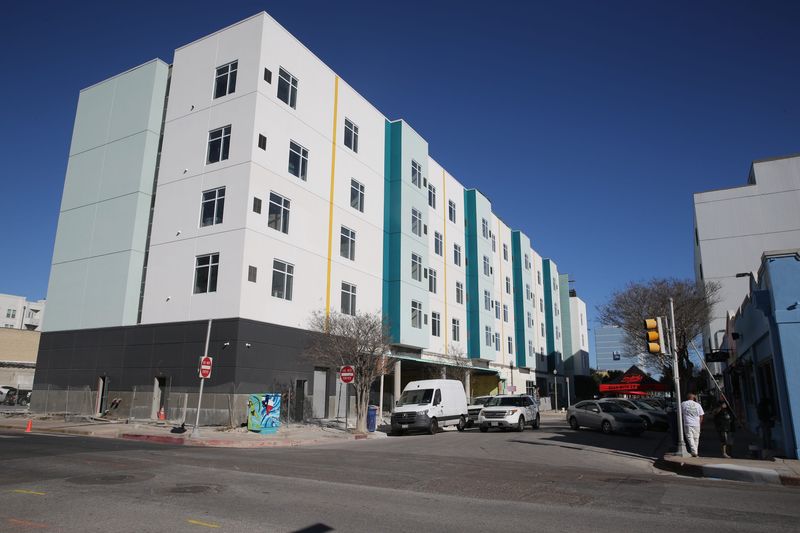
Development of the property near North Chaparral Street and Lomax Street is conceptualized as a hotel with about 120 rooms, according to a Dec. 11, 2023, presentation to a city economic development board. The hotel is planned to include a rooftop bar, retail space and an outdoor patio, a memo shows.
Oct. 13, 2022
Area flood maps go into effect.
February 2023
Developers with Elevate QOF LLC meet with staff from the city’s Development Services Department and are “made aware of the need to modify the design to accommodate the new flood requirements,” according to a City Council agenda memo, dated March 11, 2024.
Developers then “worked to modify the design to maintain the street level activation while meeting the FEMA requirements and develop a cost estimate for these modifications,” the memo shows.
“Street level activation,” as described in the document, includes retail, public space and outdoor dining areas, with costs to include “necessary floodwall and dry flood proofing to allow for consistent street level access.”
Dec. 11, 2023
A presentation on the hotel and proposed tax incentives is heard by the Corpus Christi B Corp., also known as the Type B board, which oversees distribution of sales tax incentives.
The presentation shown as part of a public hearing, led by architect Philip Ramirez — among the developers of the hotel — includes a slide showing a screenshot of a news release about the Oct. 13, 2022, effective date for new flood maps on FEMA’s website.
The date the news release was published — April 22, 2022 — and the release number do not appear on the slide. The FEMA requirements had not been anticipated when first developing the project, Ramirez said.
A portion of the funding request, he said, was for “aspects of the infrastructure that we had to build out in order to mitigate the floodplain issues,” while the other was to “build out the amenities on the first floor.”
Jan. 22, 2024
The Type B board approves a grant of as much as $2 million for the project, according to board minutes.
Leah Pagan Olivarri, then board president, states the funding is not for FEMA requirements but instead “mainly because we saw this as a kind of capstone project in the downtown area to spur other development.”
Feb. 20, 2024
The City Council votes 7-1 to approve the developer’s funding request on the first of two readings.
Guajardo and City Councilmen Roland Barrera, Gil Hernandez, Mike Pusley, Dan Suckley, Everett Roy and Jim Klein vote in favor.
City Councilwoman Sylvia Campos abstains and City Councilman Michael Hunter votes in dissent.
The presentation includes among its slides the same screenshot of FEMA’s website that was shown in the Type B board meeting, and the discussion during the City Council meeting largely revolves around FEMA requirements.
Ramirez is not present for the presentation, which is led by representatives of the Corpus Christi Regional Economic Development Corp.
February 2024 through April 2024
Investigations by city management determine that the image on the FEMA slide “had been altered as part of a ‘scheme,’” according to the presentation by the city auditor’s office on Sept. 9, 2025.
April 16, 2024
An email sent by City Attorney Miles Risley to city officials on Sept. 19, 2025, includes a PowerPoint attachment dated April 16, 2024.
The PowerPoint describes the ordinance that passed on first reading as for “costs associated with FEMA AE Flood Zone requirements and exterior upgrades for Homewood Suites by Hilton.”
According to the presentation, the second reading of the item had “been delayed to ensure the City Council has all the information on allegations.”
“City has informed the applicants of the allegations, but City Management wants all of the City Councilmembers informed of all of the allegations before voting, so the City Councilmembers are not surprised after or at the vote,” the presentation states.
April 23, 2024
The City Council approves the tax incentives on its second reading in a 5-3 vote.
Guajardo, Barrera, Pusley, Suckley and Roy vote in favor of the award.
Klein, Campos and Hunter vote in dissent. Hernandez abstains.
The second-reading verbiage differs from the first reading, stating that the incentive is for “street level retail, public space, and outdoor dining area activation including gray box and finish out including necessary floodwall and dry flood proofing to allow for consistent street level access.”
An agenda memo included in the meeting materials states Homewood Suites would serve “as a catalytic project in the heart of downtown that will activate almost an entire city block.”
While the description of the ordinance during the Feb. 20, 2024, meeting had largely focused on FEMA compliance, the focus should have instead been on “maintaining the street level retail activation consistent with the surrounding area by incorporating flood control aspects and the build out of the retail spaces,” the memo states.
In the same meeting, competing hotelier Ajit David — and later litigation plaintiff — shows council members “the altered screenshot,” according to a Corpus Christi Police Department’s PowerPoint presentation.
May 15, 2024
David submits a complaint to the U.S. Federal Bureau of Investigation, according to CCPD’s PowerPoint presentation.
August 2024
The city auditor’s office begins an investigation following receipt of allegations, according to the city auditor’s Sept. 9, 2025, presentation.
Sept. 30, 2024
David files a petition asking that a judge declare the city’s ordinance for the funding “void, invalid, and not enforceable,” based, in part, on an assertion that “it offends public policy to have allowed solicitation of City’s tax-payer dollars by use of an Altered Federal Document.”
The defendant listed is the city of Corpus Christi.
Nov. 18, 2024
City attorneys file an answer to the petition, denying “the material allegations” made in David’s petition.
Aug. 6, 2025
Guajardo is deposed as part of David’s lawsuit. She is one of several city staff members, City Council members and economic development officials who are questioned by David’s attorney over a series of months.
Aug. 7, 2025
An amended petition specifically lists Guajardo as a defendant, in addition to the city of Corpus Christi.
Aug. 21, 2025
The city auditor’s office issues a memo to the City Council recommending an independent external investigation into the tax incentives and Homewood Suites investigation.
Aug. 27, 2025
Elevate QOF LLC, the hotel developer, files a petition to intervene in David’s lawsuit. The company denies “any allegation and/or insinuation of wrongdoing” and seeks a judgment that the approval of the incentive is valid, proper and enforceable.
Aug. 29, 2025
A petition filed by resident Rachel Caballero, and signed by five registered voters, is submitted to the city, accusing Guajardo of misconduct or malfeasance related to the $2 million in tax incentives. In the document, petitioners assert that Guajardo was aware of allegations against developers of Homewood Suites but included an item on the council’s agenda to consider the tax incentives and also voted to approve them.
Sept. 9, 2025
The City Council votes to refer what is then described as the Homewood Suites fraud allegation to outside counsel for investigation.
The motion passes 4-1, with City Council members Eric Cantu, Kaylynn Paxson, Hernandez and Campos voting in favor. City Councilman Mark Scott votes in dissent.
Guajardo, Barrera, Roy and City Councilwoman Carolyn Vaughn abstain.
Sept. 10, 2025
CCPD detectives receive from a deputy chief a link to the City Council’s Sept. 9, 2025, meeting, according to an investigation report. The department’s “Integrity Team is organized to investigate,” according to the CCPD presentation.
Sept. 16, 2025
CCPD and Texas Rangers personnel meet with an FBI special agent, who states she is turning the case over following consultation “with the (U.S. attorney) who saw no violation of federal law,” according to the CCPD investigation report.
Sept. 23, 2025
The City Council authorizes $444,000 for legal representation of the city and Guajardo in David’s lawsuit.
Oct. 7, 2025
The majority of the City Council votes to hire outside attorneys who are not legally representing the city to conduct a separate investigation into the Homewood Suites situation.
Oct. 14, 2025
CCPD meets with the district attorney’s office, which “concluded the facts and circumstances in this instance do not constitute a criminal violation,” according to CCPD’s PowerPoint presentation.
Oct. 27, 2025
The Type B board votes to hire legal counsel.
Nov. 25, 2025
CCPD detectives interview Ramirez.
Ramirez states that he created the PowerPoint presentation quickly and did not review it before sending it, according to an accounting of the interview in the police report.
There had not been an “intent to deceive anyone; it was just a formatting error,” Ramirez told the police, according to an interview summary in the report.
The point of the slide had been the Oct. 13, 2022, date, he said.
The investigation report states later that “it is very probable that the missing dates and release number was not a formatting error, but who would be able to testify with 100% certainty that it wasn’t.”
“It is hard to believe that the document was transferred onto a PP and somehow the two dates and the release number disappeared,” it states.
There had not been an allegation of quid pro quo, according to the report.
Dec. 16, 2025
The district attorney’s office states that it will not be taking the case, according to the police department’s investigation report.
Feb. 17, 2026
The City Council sees presentations on the investigations related to the Homewood Suites tax incentives — one by CCPD and the other by Daniel Ray, the attorney who had been hired for an external review of the situation.
CCPD personnel relay the conclusions they had reached, as described in the investigation report, and address questions on why the case had been closed.
“The investigative team was unable to establish probable cause or otherwise substantiate any violation of applicable State or Federal criminal law,” one slide states. “Accordingly, the investigation is hereby deemed closed, with no further criminal inquiry warranted at this time.”
Ray, in an executive summary of his outside legal investigation, tells the council that although it appeared the screenshot had been altered, he had not found criminal wrongdoing in how the funding was secured — and that there had been “no prosecutable criminal fraud or forgery that’s been established.”
“The record may reflect poor judgment in presentation practices — up to and including intentional alteration of one of the slides — but the legal threshold for criminal fraud and forgery in a criminal setting has not been met,” he said.
Ray also recommends process improvements, including that in the future, requestors provide sworn certification “that specifically covers the accuracy of all representations about regulatory timing, eligibility practices and any claimed new requirements.”
March 11, 2026
Vaughn, Cantu and Hernandez request in a memo that an item about the removal petition be placed on the agenda.
March 13, 2026
Caballero files articles of impeachment — essentially the asserted charges against the mayor — shown as signed by an additional six residents.
The documents allege, in part, that Guajardo had perjured herself during her deposition in David’s lawsuit.
Guajardo denies the allegations.
March 24, 2026
The City Council considers the petition and articles of impeachment, voting 5-3 to take the next steps for a removal hearing, choosing a meeting in April to set dates for preliminary and procedural matters.
Vaughn, Cantu, Hernandez, Campos and Paxson vote in favor, while Barrera, Roy and Scott vote in dissent.
Some of the council members voting to continue in the process state that they feel compelled by the City Charter to proceed with a removal hearing and assert a hearing will be the best way to promote transparency.
Some opponents to advancing the petition question whether a removal hearing will be a distraction from the water crisis and criticize choosing a hearing to address the petition instead of other options that had been available.
Other options available include referring the case to the ethics commission, dismissing the complaint or taking no action.
April 8, 2026
John Flood, an attorney representing Guajardo, sends a letter to the City Council urging that it “reconsider its decision to move forward with any proceeding,” indicating the possibility of “unnecessary litigation.”
“The next election is a little over six months away, and the voters will be able to decide whether or not anyone should be removed from the City Council,” he wrote.
April 13, 2026
Doug Allison, David’s attorney, sends a letter to the council counter to Flood’s missive.
In his letter, Allison asserts the investigations had led to “insufficient evidence to criminally prosecute” the developer, but that “no one has investigated Mayor’s misconduct and malfeasance that are the subject of the Articles of Impeachment pending Mayor’s removal.”
He alleges that Guajardo “abandoned her Mayor’s oath, broken all public trust, and lied after having sworn to tell the truth and nothing but the truth.”
“Clearly, there is an abundance of well-corroborated evidence that shows Mayor’s misconduct and malfeasance, and thus a public hearing is warranted,” Allison contends.
April 13, 2026
Guajardo files a federal complaint against the city of Corpus Christi, alleging “procedural and substantive due process” concerns associated with the removal proceedings, including the potential for suspension prior to a hearing.
The documents assert that the council is “proceeding despite the absence of sufficient evidence of wrongdoing,” and that the proceedings are “being advanced in circumstances where the only plausible basis is political motivation rather than legitimate governmental objectives.”
The complaint on its last page discloses that Guajardo, in a final hearing, will seek judgment for compensatory damages, attorneys’ fees, court costs and “pre-judgement and post-judgment interest at the highest rate allowable by law.”
City-hired attorney Hal George, in response, files documents contending that the mayor has been aware of the petition and its status since August.
George, in the city’s filing, requests that Guajardo “take nothing by her suit.”
April 13, 2026
U.S. District Judge George C. Hanks Jr. signs a temporary restraining order barring the council from suspending Guajardo in the April 14 meeting.
April 14, 2026
The City Council votes 5-2 to set May 19 for pretrial proceedings, which are expected to include consideration of witness lists, motions and filings.
Voting in the affirmative are Vaughn, Hernandez, Cantu, Paxson and Campos. Barrera and Scott vote against, and the mayor and Roy abstain.
The council certifies the submitted articles of impeachment and adopts rules and procedures for the hearing based on those used in the city’s only removal hearings in its history: those of Jack Dumphy in 1981 and Frank Mendez in 1987.
Mendez was removed; Dumphy was not.
April 15, 2026
Hanks does not approve a preliminary injunction requested by Guajardo, ordering attorneys representing the city and Guajardo to meet before the April 27 expiration of the temporary restraining order.
Guajardo’s attorneys, addressing the judge, relay due process concerns, while city attorneys argue that the concerns were speculative and premature.
In an order, Hanks writes that he has concerns that “this case is not ripe and that, accordingly, the Court lacks subject matter jurisdiction over it.”
April 23, 2026
Guajardo’s attorneys file an amended complaint, adding five council members — Vaughn, Hernandez, Cantu, Campos and Paxson — as defendants in the federal court case.
“The five City Council members’ acts in starting an impeachment proceeding in violation of governing law are ultra vires acts that strip them of official immunity and require that they be individually named in any legal challenge,” Flood writes in an email to the Caller-Times.
April 27, 2026
Hanks does not approve a second temporary restraining order, and the order that had been issued earlier in the month expires at 5 p.m.
The judge sets a date for a hearing on Guajardo’s request for a preliminary injunction.
May 5, 2026
Flood files a motion for the City Council’s pretrial hearing, arguing that four council members who participated in consideration of the tax incentives either recuse themselves or be disqualified from being part of the tribunal that will decide whether Guajardo is removed.
The motion, if ultimately accepted, would apply to Barrera, Hernandez, Campos and Roy.
Guajardo’s attorneys in documents contend there are questions about impartiality, and also state that there is potential the four council members will be called as witnesses.
May 11, 2026
City officials file a motion to dismiss the federal court case.
The documents, in part, address the question of the council members serving on the jury, raising “the Rule of Necessity.”
The rule, in this context, means that the only body that can participate in overseeing the hearing is the City Council, and that “failure to apply the Rule of Necessity would have a contrary effect by denying some litigates to a forum,” George asserts in the filing. “Even if called as witnesses, council members are not deprived of deliberating in the removal proceeding,” the documents state.
May 12, 2026
The City Council votes to issue a default letter to developers of the Homewood Suites hotel, citing alleged “misleading material representations made to the Type B Corporation.”
The idea, in part, is to relay the city’s ethical posture, according to council members who support the motion.
Opponents point out that the agreement is between the Type B board and developers — not the council.
The default letter triggers a 60-day period to cure the complaint.
Council members voting in favor of sending the letter are Hernandez, Vaughn, Cantu, Paxson and Campos.
Scott and Barrera vote in dissent, and Guajardo and Roy abstain.
Ramirez’s attorney, Jeff Lehrman, describes continued discussions on the situation as “politically motivated.”
Allegations have been “proven baseless through hundreds of thousands of dollars of investigations by private lawyers and law enforcement,” he tells the Caller-Times.
May 13, 2026
Stephen McMains, an attorney representing council members named in Guajardo’s lawsuit, files a motion to dismiss in the federal case.
He also raises the Rule of Necessity.
There’s no “underlying reason” for the council members to be called as witnesses by Guajardo, other than that they had participated in the votes on the tax incentives, he writes.
“This would lead the impeachment section of the Charter essentially toothless,” McMains asserts in the documents. “Any time a council member wanted to perpetuate a fraud, all they would have to do is say they would call the other members who went along with their fraud as witnesses and nullify the tribunal. This is an absurd result and why the Rule of Necessity would have to be examined.”
May 14, 2026
Guajardo’s attorneys file a memo supporting the proposed preliminary injunction in federal court.
In it, they write that it “is unlawful for material witnesses to act as judges and jurors in a legal proceeding in the state of Texas and the United States.”
“The arbiter cannot determine whether Mayor Guajardo knowingly engaged in misleading the council members without examining what the Council Members Barrera, Roy, Campos and Hernandez members themselves understood, believed, discussed, relied upon, and observed during the legislative process,” the memo states, contending that the Rule of Necessity does not apply to witnesses.
The documents also assert that under verbiage of the City Charter, those subject to a removal hearing are council members — not the mayor.
“Whether Corpus Christi’s City Charter vests its City Council with the authority to remove the mayor from office is a question of law for this Court to decide. It does not,” the filings state. “The Charter consistently and deliberately distinguishes between the office of ‘mayor’ and that of ‘council member,’ and its removal provision reaches only the latter.”
May 15, 2026
The city secretary’s office posts records online that will be considered as part of the pretrial hearing.
Among them are motions by Allison, shown as petitioners’ attorney, suggesting a filing schedule that culminates in a proposal of June 22 as the date for the removal hearing to begin.
He advocates in a separate filing that the rules adopted by the council be amended as a commitment “to assuring Mayor Paulette Guajardo receives due process of law” in the proceedings.
In the filing, Allison states that while petitioners are confident that procedures for the removal hearing “meet or exceed all due process requirements” of state and federal laws, modifications to the rules are recommended “only out of an abundance of precaution.”
Recommendations include removal of the city attorney’s office as an adviser in the hearing and instead allowing the presiding officer to “confer with legal counsel of his/her choosing” — an approach that could “address the City Legal Department’s possible conflict of interest,” Allison asserts.
Among proposals are deleting a portion of the rules that would permit council members to examine or call witnesses and eliminating a portion that provides that the council — not only the presiding officer — have the ability to decide whether some evidence is submitted by vote.
In addition to the previous filing on recusal or disqualification, Guajardo’s attorneys submit a motion to strike the articles of impeachment, asserting that “claims against the mayor are conclusory,” without “providing fair notice of what crime or fraudulent acts were committed.”
Guajardo’s attorneys note that the word “crime” is shown in quotation marks in the articles of impeachment but argue that the document does not state “that crime in a meaningful way.”
Both sides also file their witness lists — Guajardo’s spanning four pages and petitioners’ three.
Each states that they would have the right to call additional witnesses or not call witnesses whose names appear on the list. The mayor’s list includes roughly 60 names, to include past and present council members; past mayors; past and present city staff, including City Manager Peter Zanoni; the developers; U.S. Federal Bureau of Investigation agents; Texas Rangers; the district attorney’s office; petitioners and CCPD personnel, including Chief Mike Markle; as well as David and Allison himself.
The petitioners’ list shows 20 names — many the same witnesses as those shown on Guajardo’s list, such as specific CCPD personnel, the district attorney’s office, select council members, Zanoni, past and present city staff, and the developers.
Summonses for documents and records, filed by Allison, include requests for the mayor’s text messages from December 2023 through April 2024, and the same from developers.
May 18, 2026
The planned date for a preliminary injunction hearing in the federal case.
May 19, 2026
The planned date for the pretrial hearing in the city’s removal proceedings.
Kirsten Crow covers city government and water news. Have a story idea? Contact her at kirsten.crow@caller.com.
This article originally appeared on Corpus Christi Caller Times: Timeline shows events around requested removal of Corpus Christi mayor
Reporting by Kirsten Crow, Corpus Christi Caller Times / Corpus Christi Caller Times
USA TODAY Network via Reuters Connect