If sand waves were sound waves what song would be in the air now?
What stinging tune could split this endless noon and make the sky swell with rain?

In a swirl of metaphor, Suzanne Vega wove a philosophical inquiry around the time of the first Gulf War, entitled “Song of Sand.” Some may recall that war’s clear-headed objectives defined by President George H.W. Bush, and executed under the military leadership of Colin Powell who was memorably concise: “Our strategy to go after this army is very, very simple. First, we’re going to cut it off, and then we’re going to kill it.”
Suzanne Vega imagined a land struck by drought and famine, with a people looking desperately to the sky for a sign of salvation while a dust bowl blows around them (a haboob in our case).
She then wondered how this image could serve as metaphor for something far more abstract. What is drought and famine in the life of a person or a polity? How might the artist strike like a sorcerer and make that sky swell with life-giving rain? What exactly does rain indicate in this metaphor?
For the protesters in Iran, whose ranks were brutally killed, captured, and tortured in recent months, for those who lived fearfully or fled the endless noon that followed the fundamentalist revolution of 1979, the bombs earlier this month fell like the song’s metaphorical rain, come to wash away the old regime and water the ground for a new one to grow.
President Trump had promised them as much. “The hour of your freedom is at hand,” he told them on Saturday, Feb. 28.
“When we are finished, take over your government,” Trump said. “It will be yours to take. This will probably be your only chance for generations.”
During last summer’s bombings of Iran’s nuclear facilities, an Iranian exile told me in bitter undertones, “at least something has happened to these murderers.” Last month another exile said, “this is the best day of our lives.”
It is now become a long-standing moral premise for American military action in the Middle East that George H.W. Bush chose not to follow through with an overthrow of Saddam Hussein in 1991, and thereby left anti-government activists to be murdered.
But he did not actually promise the anti-Saddam Shia militias that he would. He did not want to see a Lebanon-ization of that country,” as his secretary of state, James Baker, explained it plainly. “We do not want to see a power vacuum there … At the same time, we think many people would not shed any tears if there were a change in the government there.”
This restrained managerial approach emphasized a world legal order based on national sovereignty. Saddam Hussein’s armies had invaded Kuwait, and the Gulf War simply undid that invasion.
An uprising might have followed a decapitation of Hussein’s regime, or another crackdown by his corrupt heirs and hangers-on, and either way it was unlikely to emerge as a stable secular democracy in response to an American invasion.
In her “Song of Sand,” implying the nature of the unstated stain in a companion piece called “Blood Sings,” Suzanne Vega posed a timely question:
If war were a game that a man or a child could think of winning,
What kind of rule could overthrow a fool and leave the land with no stain?
As the Soviet Union fell, and the United States emerged unrivaled as a global power, George H.W. Bush ushered in a period that essentially finished the work of World War II, of a cooperative vision of global peace and prosperity anchored by American military and financial power.
The main goal was to deflect a then-distant possibility of rivalry with China by drawing it into this vision, a goal largely accomplished by the end of his son’s presidency.
In the interim, Osama bin Laden pulled off the deadliest terrorist attack in modern history. The attack on the World Trade center was, however, only symbolic.
Despite the tragedy of death and destruction, it did not change the American-led world order. It was not at all clear then, let alone in retrospect, that a war against stateless terrorists would be best accomplished by regime changes that violated the system of sovereignty reaffirmed in the first Gulf War.
As Colin Powell put it with his signature concision: “If you break it, you own it.” Did we not do Osama bin Laden’s dirty work in overthrowing Saddam Hussein, one of al Qaeda’s sworn enemies? Is not Afghanistan once again ruled by the Taliban? Is not Syria now ruled by an al Qaeda ally? bin Laden’s ISIS heirs emerged to form a fundamentalist state drawing in some of the same people on the same ground vacated by Saddam Hussein’s tyranny.
It is only now, after 20 years of toil and blood, that Iraq has settled into a fragile democracy, one that could easily fall into the hands of the Shia cleric who once battled American armies in Baghdad.
An entire generation grew up in a vast region at war, where religion is the ultimate source of legitimacy. Despite the brutal veto power of the clerics of the Guardian Council, hitherto led by Ali Khamenei under the Shia title of Ayatollah until his death in a targeted bombing this weekend, Iran has possessed a more diversified economy and more robust political institutions, symbolized by regular elections and changes of power at the level of the presidency, than any state in the Persian Gulf.
In place of an Ayatollah who had alienated much of its own public, prompting courageous internal protests that came at great human cost, we have created a martyr out of Khamenei, whose afterlife could be as uncompromising as his actual life. The office of ayatollah will not vanish. The land will not remain without stain. And now we own it.
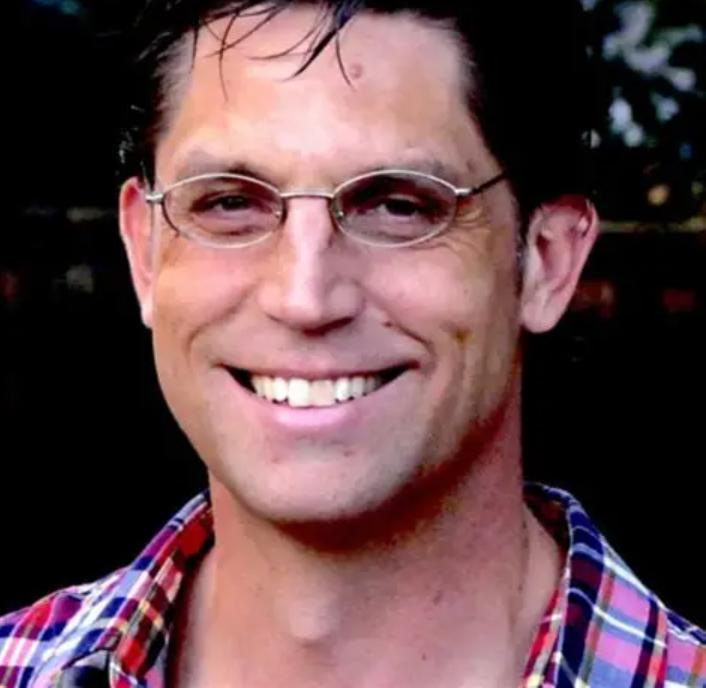
Paul Bjerk is a professor of history at Texas Tech.
This article originally appeared on Lubbock Avalanche-Journal: Texas Tech history professor’s perspective on Iran action | Opinion
Reporting by By Paul Bjerk, special for the Avalanche-Journal / Lubbock Avalanche-Journal
USA TODAY Network via Reuters Connect