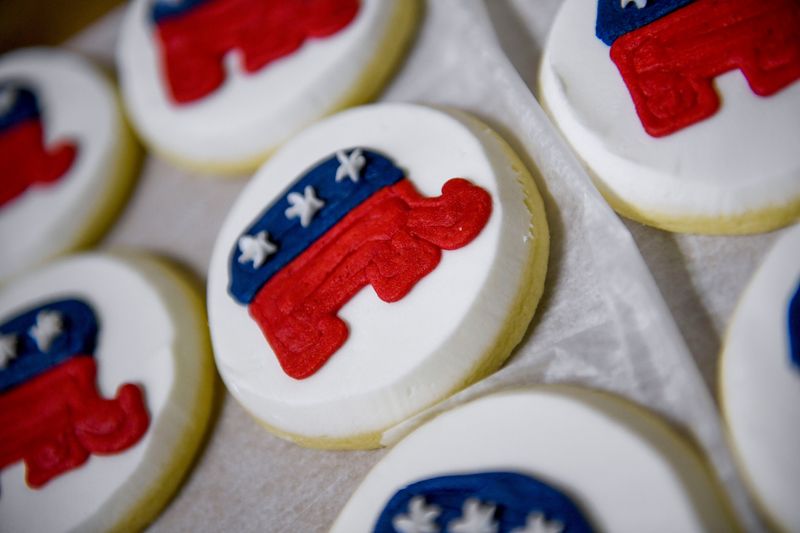
We are once again in the party primary season. In a large number of Texas races, the Republican primary results are effectively the general election results. Hopefully, Republican primary voters will carefully evaluate the candidates to determine a candidate’s character and fitness for public office.
Voters in 2024 voted a solid Republican majority into the Texas House. Most Republican voters likely expected the Republican majority to elect a politically powerful House Speaker. The 2025 Texas legislative session, Representative Dustin Burrows of Lubbock, a Republican, sought and received the almost unanimous support of Texas House Democrats to be House Speaker. He deftly combined these votes with a minority of Republican House members to capture the Speakership.

Based upon Burrows pre-Speaker election statements, he signaled an appeal for Democrat support by promising to use the House Speaker’s authority to secure the right of the minority (Democrats) to be heard and participate. Burrows did not explain his source for this “right,” its specific meaning, or why appointing Democrats to key committee positions and access to additional taxpayer funding was required. A large number of Republican voters strongly oppose Texas Democratic party principles, and efforts to enhance Democrat party power was not popular among many Republicans.
I have previously analogized Burrows and his cohorts’ actions to those of the Bud Light beer fiasco of a few years ago. (AGN, February 20, 2025). In that case, the “marketing experts” in the “Bud Light” corporate (AB InBev) marketing department sought to appeal to a segment of the population holding substantially different values from of its core customer base. According to both news reports and a former high level company marketing executive’s book, Last Call for Bud Light, the “experiment” intended to expand market share was a costly failure.
Similarly, the “Bud Light” Republicans appeared to intend to expand their influence by appealing to Democrats who held substantially different political views from the Republican voter base. Surprisingly, the Texas outcome was a little different. Despite the similarities, the “Bud Light” Republicans or at least some of them managed to grab a personal victory from the probable jaws of defeat.
There was Republican backlash in the form of Republican Party censure threats, but these have not been successful for the most part. For example, Burrows and almost all the other “Bud Light” Republican representatives are running unopposed or without serious opposition in the current Republican primary. According to Texas Ethics Commission (TEC) online records, Burrows received campaign contributions of over $3,700,000.00 from July 1, 2025, to December 31, 2025. This is several times more than he received in his races before he became Speaker.
Representative Ken King of Canadian voted for Burrows. Burrows appointed him as the House State Affairs committee chair and has received a $25,000 campaign contribution from
Burrows (TEC). A Republican Party resolution (October 7, 2025) severely criticized King for blocking Republican priority legislation, e.g. eliminating taxpayer funded lobbying. According to TEC records, King has now received over $530,000.00 in campaign contributions since July 1, 2025, and his one Republican primary opponent has not reported any.
Republican victories during the sessions were not supported by newfound Democrat friends. For example, the House Journal for the vote on the “school choice” legislation, shows substantial Democrat opposition. In the 2025 Second Special Session House Democrats left the state, refusing to appear for part of the session. As they intended, their absence denied the House a quorum necessary to enact a Republican favored redistricting bill and delayed passage of other legislation for 2 weeks.
The Republican Party and Republican moneyed insiders are ineffective to enforce loyalty upon Republican candidates. Thus, it appears Republican primary voters are on their own. Below are guidelines voters may find useful.
Candidates who appear to embrace lofty sounding goals or are vague about their background and specifically what and how they will address real issues may only be in it for themselves. As we learned, the personal success achieved by some “Bud Light Republicans” did not translate into success for the voters.
Brad Yock, a Canyon, Texas, resident, is a lawyer who holds a master’s degree in political science. He has taught college level courses in state and local government and frequently researches and writes about Texas and U.S. political topics. He is the published author of legal and political articles and opinions. He does not belong to any organization other than the Texas State Bar and the College of the State Bar.
This article originally appeared on Amarillo Globe-News: Republican ‘Bud Light’ experiment, a personal success story | OPINION
Reporting by By Brad Yock, Special to the Amarillo Globe-News / Amarillo Globe-News
USA TODAY Network via Reuters Connect