Several Lubbock City Council seats are up for election on the May 2 municipal ballot. One of those seats oversees several well-established neighborhoods like Tech Terrace, Maxie Park, Bowie among others.
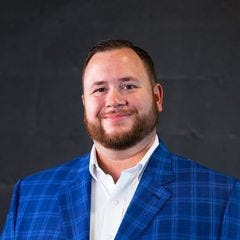
David Bruegel is one of three candidates for the District 3 council seat. He is a local real estate broker and outgoing chair of the Lubbock County Republican Party.

In an effort to get to know the candidates in this race, the Avalanche-Journal sent out a questionnaire to all of the candidates to learn their platforms and priorities.
Here are Bruegel’s answers to the questionnaire, as early voting is from April 20 – April 28. Election Day is May 2.
Q: The hyperscale data center proposal for northeast Lubbock was rejected by Planning and Zoning and then withdrawn. The developer plans to resubmit. Lubbock already has the highest per-capita water use of any major Texas metro and depends on the Ogallala Aquifer. What criteria should the city require before approving a project of this scale, and should the city require mandatory water and energy consumption disclosure from data center operators?
A: Conserving Lubbock’s water for future generations is one of my top priorities. We cannot allow data center projects that will drain our most valuable natural resource. The only data center projects I will consider are those that will verifiably recycle water through the system in an efficient way and generate a substantial economic benefit to our community.
Q: LEDA’s CEO said the project would bring significant tax revenue and jobs. Critics, including some District 3 residents, say the same land could generate more long-term revenue under its current residential and commercial zoning — and that northeast Lubbock has historically absorbed more than its share of industrial development. How do you weigh the economic upside against the concerns of the residents nearest the site?
A: The concerns of nearby citizens must be addressed when these projects are brought to the table. All our neighborhoods, not just the most affluent, need to be supported.
Q: The city, like other governing entities, is facing budget constraints, and recently, the city dissolved impact fees. Last year the city also saw shortfalls in sales tax collections and lost dollars from LCAD. Given that the 2026 budget already required a tax rate higher than the no-new-revenue level just to maintain current services and the growing size and population of the city, are you for or against raising the tax rate? Explain your reasoning.
A: Property tax increases are a last resort to fund our government. From my experience observing local governments for the past decade these increases are frequently not necessary and careful budgeting and planning can prevent them.
Q: Lubbock’s crime rate has dropped, but staffing hasn’t kept pace with population growth, and both Lubbock Police and Lubbock Fire Rescue have raised concerns about competitive pay for recruitment and retention. The FY2026 budget funded raise pools equivalent to roughly 4% for both departments. How many additional sworn officers and firefighters does Lubbock need, and how will you pay for them without raising taxes — or would you raise the tax rate for this reason?
A: The Lubbock Police Department needs more patrol officers on shift to keep up with the growing city. This will be one of my top priorities during budget season. Lubbock’s Fire Department is currently rated at ISO level 1. The City Council must prioritize maintaining this strong ranking by supporting the fire department as the city grows. ISO ratings are not only important for the safety of the citizens, they also help reduce insurance premiums for homeowners.
Q: The First Friday Art Trail generates tourism, foot traffic, and economic activity downtown — exactly what Hotel Occupancy Tax funding is designed to support. In 2024, the council cut that funding over content concerns, then restored it with new restrictions requiring grantees to avoid issues of a divisive or controversial nature. Who at the city defines “controversial,” and is that standard enforceable without becoming viewpoint-based censorship of taxpayer-supported speech?
A: I have attended the First Friday Art Trail numerous times and I plan to continue attending. A vibrant art and cultural scene is highly valuable to our community. The 2024 funding cut came as a result of inappropriate content. It is imperative that the projects and initiatives the city funds reflect and uphold the integrity of its citizens. Common sense and common decency are both important considerations in public funding.
Q: Mayor Mark McBrayer has made the Civic Center renovation a signature priority with potential components of a public-private partnership. Public-private partnerships in Lubbock have a mixed record, with some projects stalled and others completed only after being scaled back. Do you support this project as currently envisioned, and where do you see the greatest financial risk to Lubbock taxpayers if any of those private funding sources underperform?
A: The Civic Center expansion could be a wonderful opportunity to support central Lubbock while enhancing an excellent resource for the whole community. I am very intrigued by the project and will continue to closely follow the proposal as it continues to be discussed. All public-private partnerships must start with clear, contractual expectations and strong accountability.
Q: Outgoing Councilman David Glasheen identified dangerous dogs as a major quality-of-life concern for District 3 and the city. What is a major quality of life concern you see for your district and the city, and how will you measure your success in addressing the issue?
A: Councilman Glasheen has made great progress on addressing the dangerous dog issue. If elected, I plan to continue this work by ensuring our animal services department has the resources needed to manage these matters well. An additional issue of importance is preserving our central Lubbock park system for the next generation. One of the things that makes District 3 so special is the parks we enjoy with mature trees, walking trails, sports facilities, and playa lakes. I plan to focus on maintaining these assets for the next generation of Lubbockites to enjoy.
Q: Rental properties — particularly student rentals tied to Texas Tech — have steadily expanded southward into traditionally owner-occupied District 3 neighborhoods, raising concerns from longtime homeowners about property upkeep, code enforcement, parking, and neighborhood character. What is your position on how the city should balance property rights for landlords and students with the concerns of established homeowners in your district?
A: Fairly enforced ordinances are one of the keys to maintaining healthy neighborhoods in central Lubbock. Overgrown lawns, junk furniture, abandoned vehicles, and other similar issues must be quickly addressed by our code enforcement department.
Q: District 3 is home to some of Lubbock’s most established neighborhoods — Tech Terrace, the Maxey Park area, and the corridors around Coronado and Monterey high schools. These areas have aging streets, alleys, water and sewer lines that are decades old, and infrastructure needs that don’t always fit neatly into a road bond package. How do you ensure your district gets its fair share of the city’s maintenance and capital budgets when the headlines and bond dollars tend to follow new construction in southwest Lubbock?
A: I have served twice on the City of Lubbock’s bond advisory committee as a representative for District 3. Road bonds can be an appropriate means of funding new roads and road rebuilding projects. Since District 3 is unlikely to need substantial new roads in the coming years I will continue to look for opportunities like the 34th Street rebuild that was recently completed. As a member of the road bond committee I advocated for additional improvements to 34th Street which have since been completed between Quaker Avenue and Slide Road. In the coming years 50th Street is also likely to need major improvements and this is already on my radar.
Q: If elected, what is one issue you would make priority number one for city resources to address in District 3, and how would you work with the other council members to pass your agenda for the district while supporting their agendas for their respective districts?
A: There are many important issues that I plan to address if elected to serve the people of central Lubbock. I believe the most important issue is funding for public safety: our police and fire departments. We must support these men and women as they work to keep Lubbock a safe place to live.
Mateo Rosiles is a reporter for the Lubbock Avalanche-Journal and USA TODAY Network in Texas. Got a news tip for him? Email him: mrosiles@usatodayco.com.
This article originally appeared on Lubbock Avalanche-Journal: Learn about Lubbock District 3 candidate David Bruegel’s platforms
Reporting by Mateo Rosiles, Lubbock Avalanche-Journal / Lubbock Avalanche-Journal
USA TODAY Network via Reuters Connect