Editor’s Note: Jack Becker is the editor of Caprock Chronicles and is a Librarian Emeritus from Texas Tech University. He can be reached at jack.becker@ttu.edu. Today’s article is the second of a five-part series by frequent contributor Chuck Lanehart, Lubbock attorney and award-winning history writer. These articles were originally published by The History Press in Chuck’s book, “Evolution of the Texas Plains,” in 2023, published here with permission.
I worked as a teenage grunt roustabout in the Texas Panhandle during the summers of 1969-1971. These are my memories of the oil patch.

My roustabout boss was Ken. Ken was an interesting fellow. I was a six-foot, 200-pound, well-conditioned football player. He was maybe 5’8” and 150 pounds, and 20 years my senior.
Early on, he demonstrated his dominance. He ridiculed the poor performance of my Pampa Harvester Football team and what a bunch of weaklings and losers we were, having gone 2-20 the previous two seasons.
Ken challenged me to a sort of duel.
He produced a ten-pound sledgehammer, extended his arm horizontally, held the hammer vertically in one fist and—without bending his elbow—used his wrist to slowly lower the face of the sledge to his nose, then returned it to its original vertical position.
He said if I could not match his performance, I owed him my lunch, which my mother had lovingly prepared that morning and packed in my brand-new lunch bucket. I could barely manage to hold the sledgehammer upright with my extended arm, and I surrendered my lunch to Ken.
I fully expected Ken to wolf down Mom’s delectable sandwiches, but to my surprise, he backed off, and I kept my lunch pail. I hated the guy.
Over the next three summers, my relationship with Ken evolved, and by the end, we were buddies. But it took me a while to become accepted as “a hand,” a step above a grunt roustabout. By 1971, I could do the sledgehammer trick.
Every morning, Ken and I hopped into a three-quarter-ton pickup truck laden with oilfield tools and equipment.
Our first stop was usually downtown Pampa, where we visited the icehouse and filled our water cooler with a big block of ice. Then, we headed to the coffee shop. The one favored by Ken’s people was on the southwest side of town, on the Amarillo Highway.
At the coffee shop, I learned a lot. There, we joined Ken’s people, other roustabouts and oilfield workers, usually at a big corner booth.
I learned to enjoy strong black coffee while trying to avoid the second-hand cigarette smoke everyone else produced. I learned how to curse effectively.
I learned a bit about storytelling, and I learned plenty about the oil “bidness.”
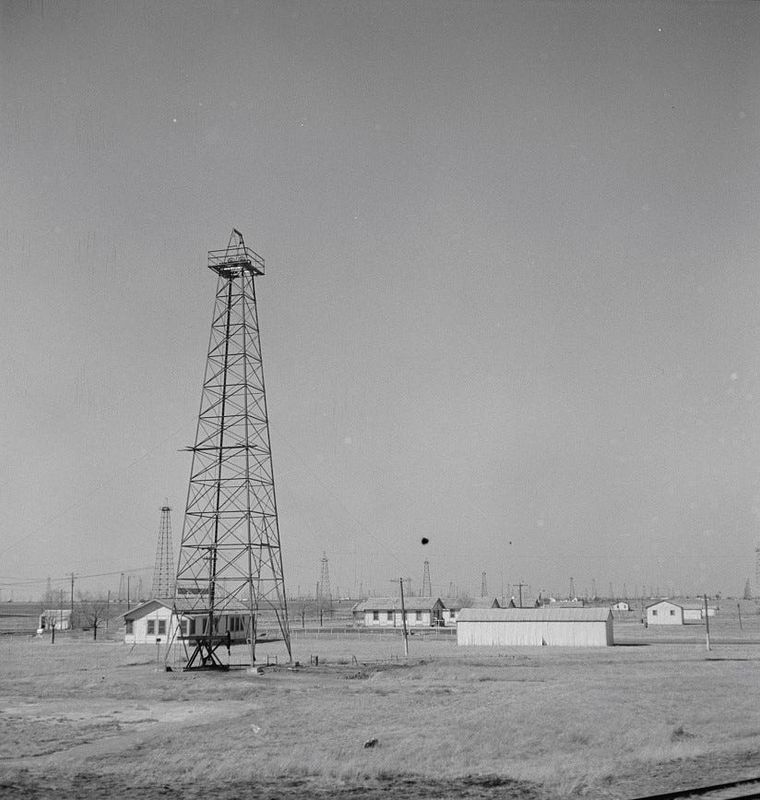
After our morning coffee break, there seemed to be a thousand possible job destinations, and a thousand different tasks to be completed. Oilfields surrounded Pampa for many miles in all directions.
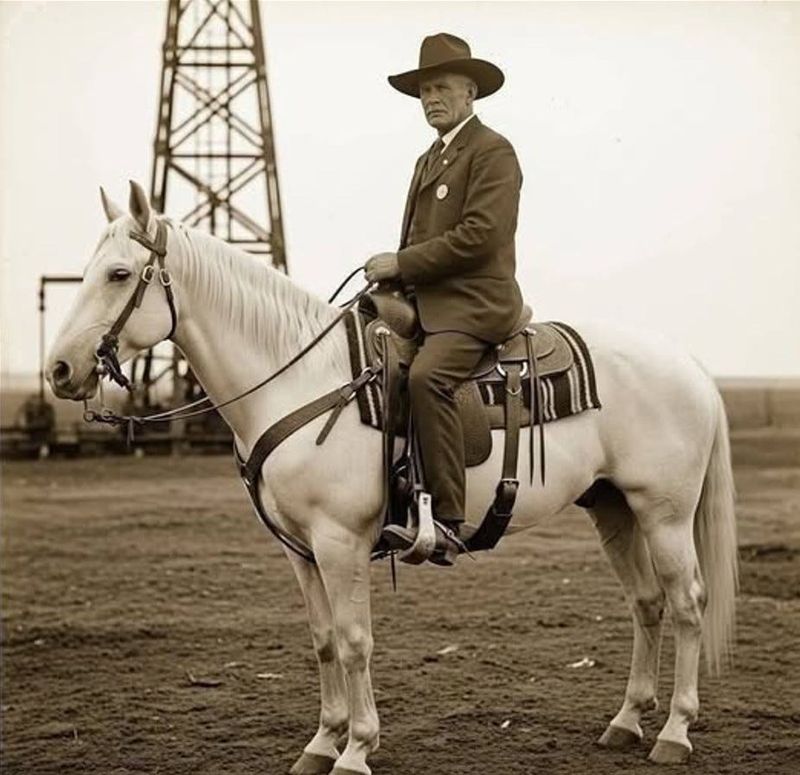
The Texas Panhandle was first identified as a potential fossil fuel resource in 1904, but exploration did not commence until 1917 in Potter County. In 1921, Gulf Production Company drilled a hole in Burk Burnett’s 6666 Ranch in Carson County, just west of Pampa (The 6666 Ranch also included land in King, Hutchinson and Sherman Counties.)
The Burnett No. 2 produced 175 barrels of oil per day (worth about $3.5 million per year in 2026 dollars). The gusher helped validate findings of natural gas in 1918 and led to major discoveries in nearby Borger and Pampa in 1926. Some 180 million barrels of oil have been produced in Carson County since 1921.
Soon, oil derricks were popping up like mushrooms across the Panhandle. Gray County’s first well, completed in 1925, was located five miles south of Pampa, and it continues to produce oil today. In 1926 alone, 110 separate corporations were organized to develop area oil and gas leases.
Pampa became a boom town, with its population increasing from 960 residents in 1920 to 10,470 in 1930, a 900 per cent population growth rate, one of the largest growth rates in the United States. The Panhandle area has produced 1.4 billion barrels of oil since 1921.
By 1969, Pampa had reached its peak in prosperity and population (24,664 in 1960), and my guess is there were eight gazillion oil properties—pump jacks, drilling rigs, tank batteries, pipelines—within a half-day drive of the town, our primary roustabout territory.
Our four-man crew disembarked in two pickups. I was usually a passenger in Ken’s pickup, and my fellow grunt
roustabout Gene Thompson was a passenger in Alan’s pickup.
Alan was the “swamper,” Ken’s full-time, year-round assistant. I remember Alan’s remarkable ability to work hard every day, doing the same grunt work Gene and I were doing, and at the end of the day, Gene and I would be covered in grease, dirt and oil, but Alan would be remarkably clean. Ken stayed clean too, but as the boss, he chose to direct—not engage in—the messy jobs.
Gene was the son of the company’s lawyer, and I was the son of the company’s geologist, so Ken and Alan thought of us as soft, snotty-nosed, privileged kids, and we were treated accordingly. I believe our fathers told them not to give us any slack, and no slack was given.
Part 3 of this series will be published at a later date.
This article originally appeared on Lubbock Avalanche-Journal: Caprock Chronicles: Confessions of a roustabout in the Texas oil patch, pt. 2
Reporting by By Chuck Lanehart, special for the Avalanche-Journal / Lubbock Avalanche-Journal
USA TODAY Network via Reuters Connect