“I must study war and diplomacy so that my children may study mathematics and science so that their children may study art and philosophy,” wrote John Adams as he explained his sense of duty and how he had a responsibility to make life better for his descendants.
Adams served as an attorney, judge, diplomat, and eventually president. He helped craft the Declaration of Independence. His work made him an important figure in the American Revolution and the early years of the nation.

Who was John Adams?
John Adams was born just outside Boston in October 1735, the oldest of three sons. His father was a farmer, shoemaker, deacon, and served in the militia. Years later, Adams would write how much he respected his father and how he helped shape the future president.
In 1751, he enrolled at Harvard and graduated in 1755. Adams learned Greek and Latin and enjoyed reading the works of Greco-Roman scholars in their original languages. He briefly worked as a teacher before studying to be a lawyer, along the way earning a masters degree from Harvard, and passed the bar in 1759.
His reputation as a lawyer grew, and Adams became increasingly outspoken against British policies, condemning the Stamp Act, British attempts to restrict the right to jury trials, and Parliament giving customs officials the right to break into colonists’ homes without a search warrant.
He sometimes represented slaves suing for their freedom in Massachusetts courts. In 1764, he married Abigail Smith, with whom he would have six children.
The two would have many lively intellectual conversations, and during his travels wrote each other discussing everything from the revolutionary cause to women’s rights.
In 1770, the British asked Adams to defend the troops accused of murdering five colonists during the Boston Massacre.
His reputation as a critic of the British was well-known, but he was also known for his sense of honor.
He had the charges dismissed for all but two soldiers, who were both found guilty of manslaughter.
That year, he served a term in the Massachusetts legislature.
In 1774, he became a delegate to the First Continental Congress as colonists protested the increasingly heavy-handed British policies. He returned to the Second Continental Congress the next year as fighting erupted between Britain and the colonies. In 1775, he also began serving as a judge on the Massachusetts Superior Court.
He returned to Philadelphia as the Continental Congress discussed independence.
He was chosen to be on a committee of five men – including Thomas Jefferson, Ben Franklin, Robert Livingston, and Roger Sherman – to draft what became the Declaration of Independence. Most of the work that was approved on July 4, 1776, was Jefferson’s but Adams had made his influence known.
In 1777, he went to France to help Franklin negotiate an alliance.
In 1780, he went to Holland to secure an alliance as well.
In 1782, he was named ambassador. He served with Franklin with the negotiations that ended the American Revolution with the Treaty of Paris in 1783. He served as U.S. Ambassador to Great Britain from 1785 to 1788.
In 1788, he was elected the first vice-president, to serve under President George Washington. He would cast 50 tie-breaking votes in his role, a record that stood for decades.
In 1796, he ran as the Federalist candidate for president in the nation’s first partisan election for the office.
He won the election against Jefferson, but Jefferson became vice-president because the electoral college at the time gave the vice-presidency to the runner-up.
Adams would be the first president to live in Washington, D.C, and occupy the White House. Much of his term in office was occupied by tensions with France as their own revolution grew increasingly chaotic.
The once-warm relationship had deteriorated nearly to the point of war over the French blockade of England.
In the end, Adams decided that peace was the best policy for America and as the “Quasi-War” ended in 1798, eventually forged a new peace agreement with France.
Though his opponents accused him of being a monarchist, Adams believed in the separation of powers in government and for public accountability for officials.
“Power must be opposed to power,” he wrote. However, in 1798, he signed the explosive Alien and Sedition Acts into law, which effectively made it illegal to criticize the government.
Ten men were convicted, and Adams’ opponents united against him.
In the bitter 1800 election, Jefferson triumphed over Adams. This time, the electoral college made Aaron Burr the vice-president.
Though stung by the defeat, he quietly left the White House in 1801 before Jefferson assumed office. Adams would later say of the presidency, “No man who has ever held the office of president would congratulate a friend on obtaining it.”
In 1812, Adams and Jefferson revived their friendship; and the two enjoyed a warm correspondence for the remainder of their days.
In 1818, Adams’ wife Abigail died after 54 years of marriage.
Adams lived to see his oldest son, John Quincy Adams, elected to the presidency in 1824.
The two would be the only father-son duo to be president until George W. Bush became president in 2001.
On July 4, 1826, the young nation celebrated the fiftieth anniversary of the Declaration of Independence. Though a joyous day across America, both John Adams and Thomas Jefferson died on the same day.
The last words of Adams were about his old friend Jefferson. His death at age 90 would be the longest lifespan of any president until the twenty-first century.
In spite of his fears that he was not appreciated or would not be remembered, dozens of schools, streets, communities, counties, and parks have been named in his memory.
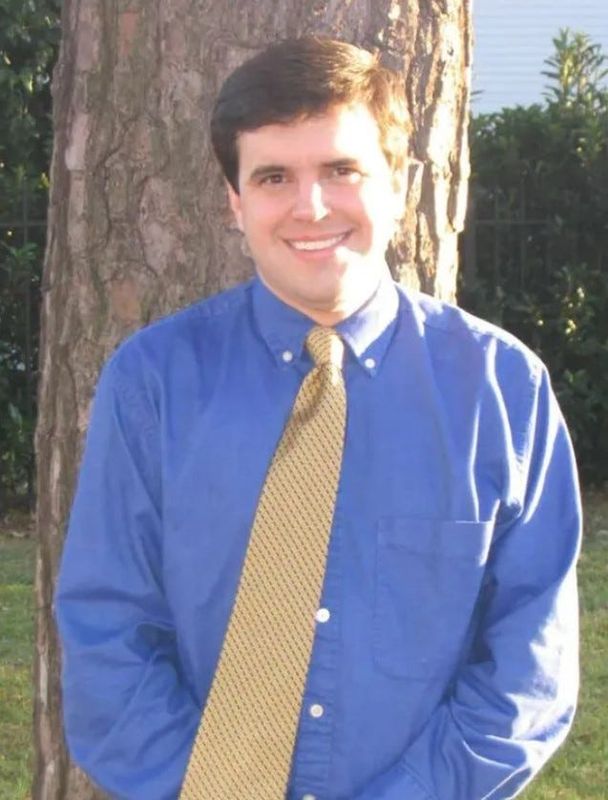
Ken Bridges is a writer, historian and native Texan. He holds a doctorate from the University of North Texas. Bridges can be reached by email at drkenbridges@gmail.com.
This article originally appeared on Lubbock Avalanche-Journal: Bridges Texas History looks at John Adams’ role in American Revolution
Reporting by By Ken Bridges, special for the Avalanche-Journal / Lubbock Avalanche-Journal
USA TODAY Network via Reuters Connect
By Ken Bridges, special for the Avalanche-Journal | USA TODAY Network