

Editor’s note: This is the second installment of a two-part series. The first part is available on reporternews.com.
OPLIN — Somewhere along the Space Coast, there’s an Atlas missile in a junkyard. Is that the most Florida thing you’ve ever heard or what?

But for the Atlas Missile Museum of Texas, a real missile in the silo would be just the thing. The only hitch, how to get it here? You sure can’t fly it.
“The transportation was going to cost around $100,000, and they kept jacking the price up,” recalled Bruce Townsley, the owner of the museum’s silo about 20 miles southeast of Abilene.
“As we got closer to finalizing the deal with the owner, he got squirrely, and it just went south from there,” Townsley said.
Fortunately, a unique substitute did present itself. But as I still tried to wrap my head around the idea of a rocket rusting away atop a pile of Buicks and old Chevys, Townsley explained the versatility of the Atlas.
Flying fuel tank
Modern rockets pack everything inside their bodies, but with the Atlas, all of that was hung on the outside — or as was the case in the Mercury program, stacked on the nose.
So what filled the entire rocket? Fuel, nearly 250,000 pounds of it. It occupied two balloonish tanks surrounded by a metal skin not much thicker than that of a soup can.
“The whole missile was 80 feet tall, roughly, and 10 feet in diameter,” Townsley said, “and empty, weighed 18,000 pounds, which is nothing.”
The outward pressure of the fuel supplied the overall strength of the missile’s body, without it the rocket would collapse on itself. But while the RP-1 kerosene could be stored in the rocket for extended periods, the highly volatile and super-cold liquid oxygen had to be pumped in right before launch.
The rest of the time, the tanks were pressurized using inert nitrogen so the airframe could maintain its shape. Aside from some internal ribs, there were no supporting struts inside the missile.
Waste not, want not
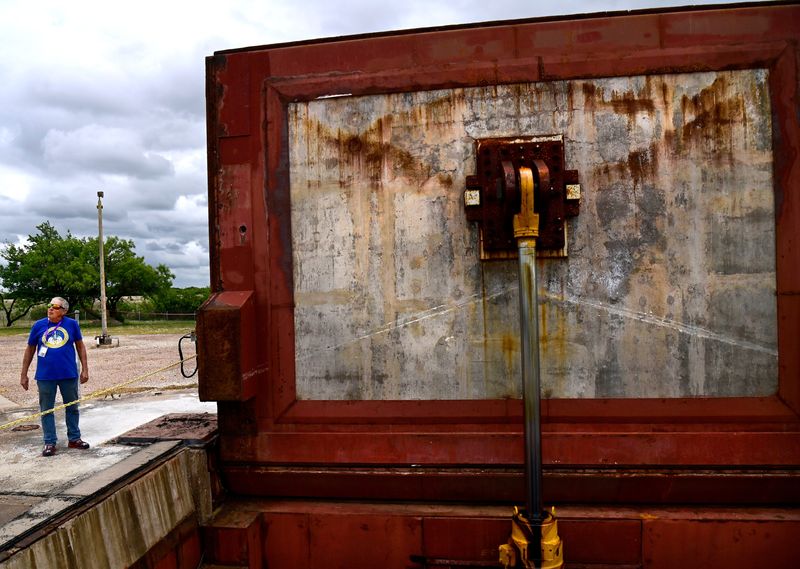
The 12 Atlas missile silos that ringed Abilene never launched in the three years the program was active. Neither did any of the six other Atlas systems across the country. All were mothballed by mid-1965.
But that’s not to say the missiles were never used, however.
Upon decommissioning, all Atlas missiles were retrieved and put into storage at Vandenburg Air Force Base in California. The silos were eventually sold to folks like Townsley.
“The interesting thing about our particular missile is in 1978 it was used to launch the very first GPS satellite into orbit, Navstar 1,” said Scott Voss, a museum board member.
In fact, the Atlas saw a full life long after its days as the nation’s defender.
“They made 300 Atlas missiles, and they used all of them for satellite and Mercury launches,” Townsley said.
Go ask Alice. She’s 80-feet tall
When it came to the museum’s solution for finding a missile to put back in the silo, the eventual solution weirdly echoed the original rocket.
Townsley credited former Abilene City Council member Steve Savage, who also owns a missile silo near Anson.
“Steve had the idea to look up a balloon-maker and have an inflatable made,” Townsley said, admitting that at first he wasn’t exactly taken with the idea. “But I kept thinking about it, and I thought, well, you know, maybe there’s something to this?”
After a bit of research a company was located and the balloon made.
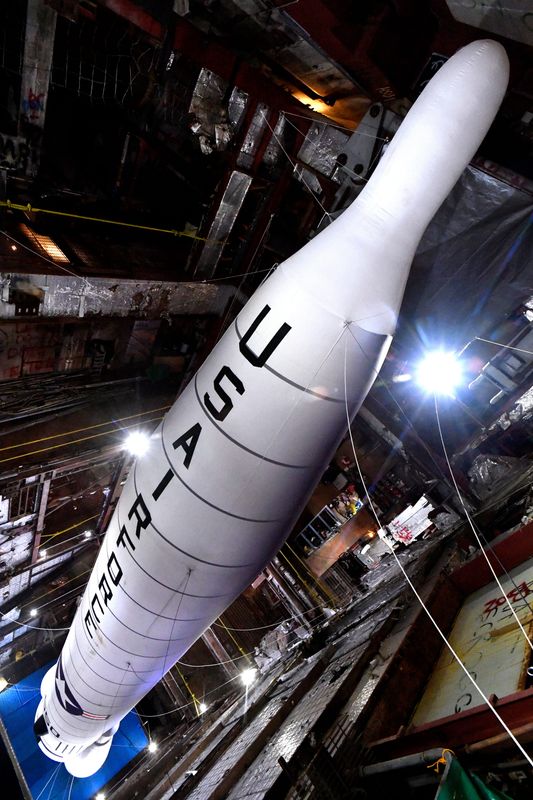
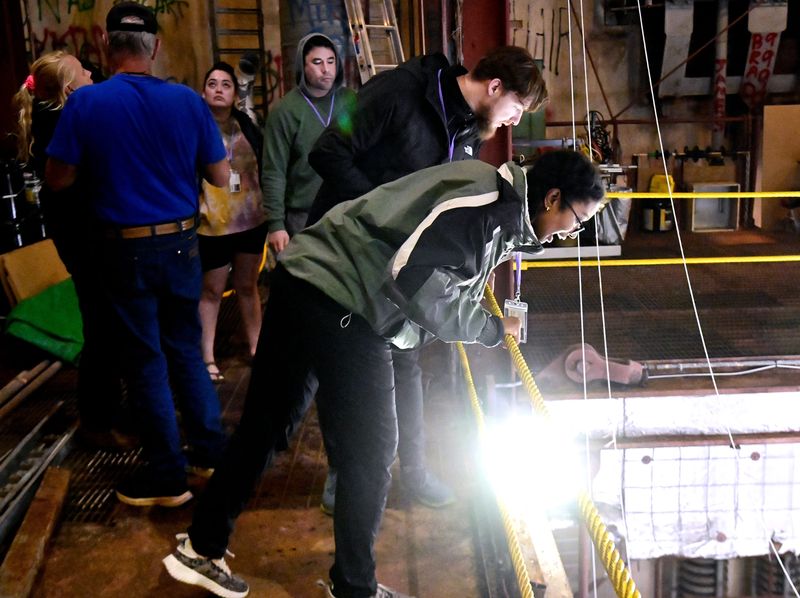
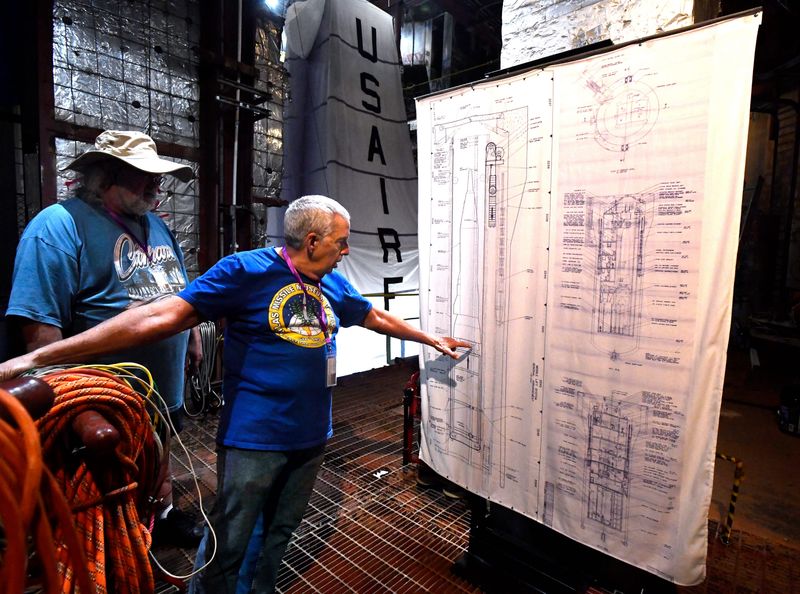
Townsley said they named the inflatable Alice, “because Alice the Atlas kinda has a nice ring to it,” and have since hung it in the silo. Cables keep it in place even when deflated though when it is filled, it matches the size of the missile that originally stood in that same spot.
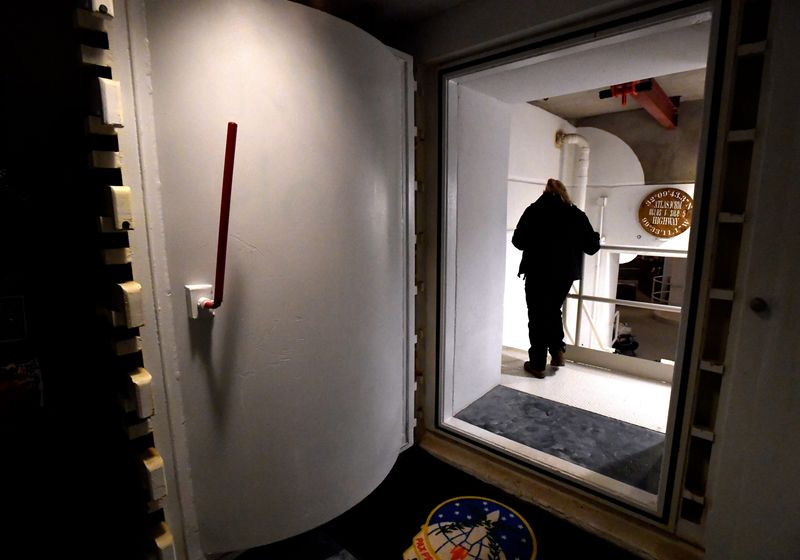
Even with its gantry and metal supports, the silo is a big open space. So, when they installed the inflatable, Townsley was surprised by how much smaller it made the silo feel.
“It was really a weird visual,” he said. “It was sort of like when you buy a house and you have a big living room, and then you put your couch in it, and the living room just shrinks.”
The irony here is that in structure and in size, Alice and her metallic predecessor have one specific thing in common.
Townsley said the balloon made him think more about the real Atlas missile.
“That was something that did not occur to me until after we got Alice,” he said. “The real Atlas missile was also an inflatable although it was skinned with stainless steel and not Oxford cloth.
“But it was held rigid with internal pressure just like the inflatable.”
On the surrounding silo walls, graffiti from the missile base’s days as a teen getaway can still be seen. Whoever wrote “Reagan Bush 88” ironically highlighted not just the silo’s age, but the Cold War era that birthed it.
“It isn’t the accepted way of getting your history, but it is one way to get it,” Townsley said, chuckling.
This article originally appeared on Abilene Reporter-News: Alice the Atlas fits the bill for Oplin silo | Exclusive
Reporting by Ronald W. Erdrich, Abilene Reporter-News / Abilene Reporter-News
USA TODAY Network via Reuters Connect
By Ronald W. Erdrich, Abilene Reporter-News | USA TODAY Network
