Just about every Cincinnati history book mentions that Cincinnati was originally called Losantiville.
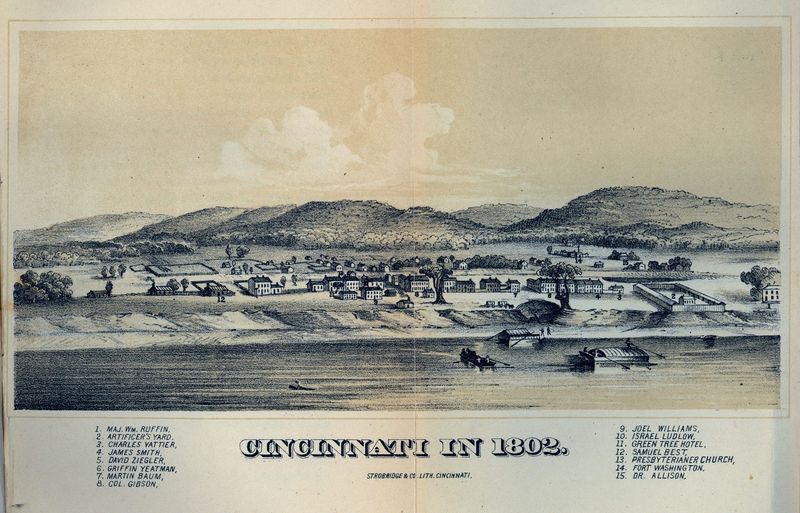
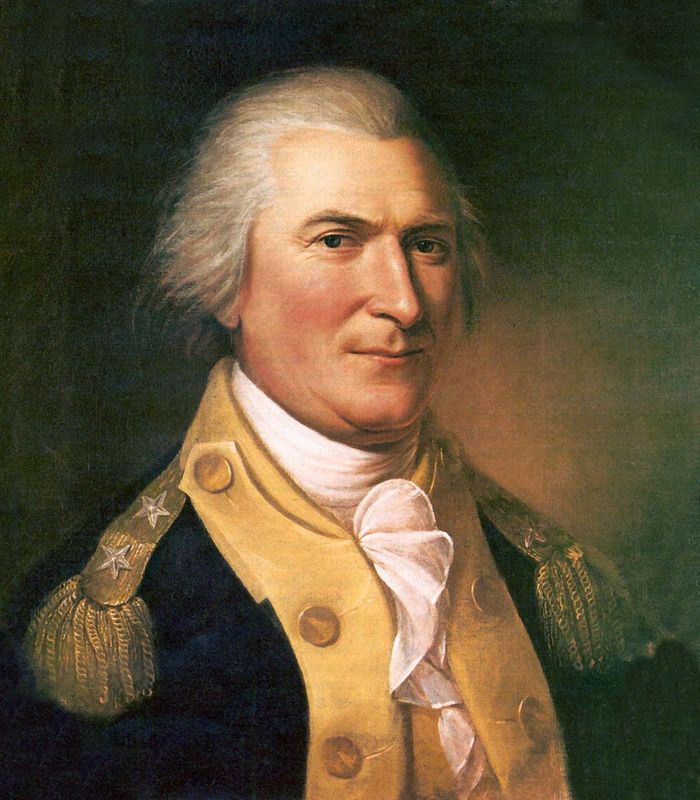
We learn that on Jan. 2, 1790, Gen. Arthur St. Clair, governor of the Northwest Territory, formed Hamilton County and inspected Fort Washington, but he disliked the name Losantiville. So, he changed it to Cincinnati, in honor of the Society of the Cincinnati, an organization of Revolutionary War officers, including himself, who upheld the ideals of Roman general Lucius Quinctius Cincinnatus.

But I recently found an article, “Israel Ludlow and the Naming of Cincinnati,” written by Henry Benton Teetor in 1885, that throws some doubt about that version.
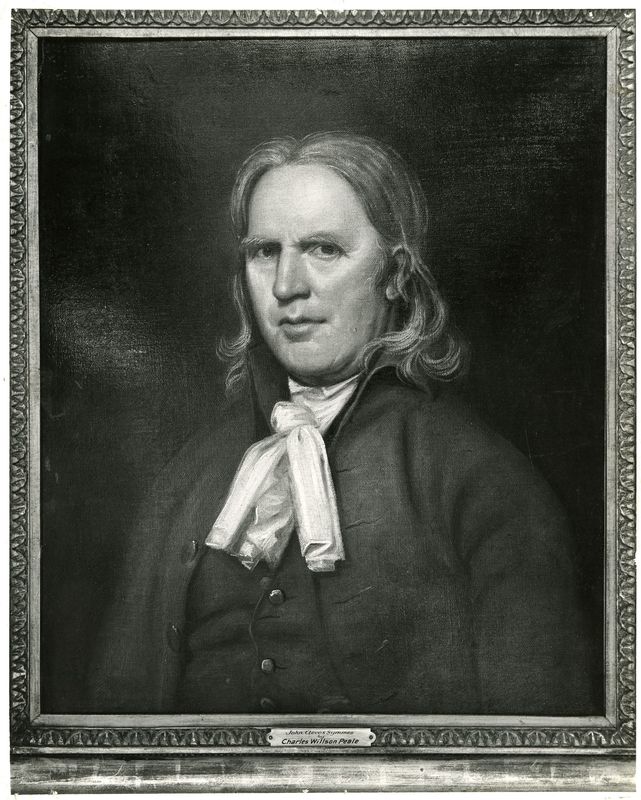
Matthias Denman, Robert Patterson and John Filson were partners in a new settlement to be established along the Ohio River on lands bought from John Cleves Symmes in 1788. Filson, a surveyor, drew up a plat, and named it Losantiville. He put together syllables from different languages to mean “the city opposite the mouth of the Licking River.”
Filson disappeared in the woods in October 1788 while surveying near the Great Miami River. He was presumed killed by hostile Shawnee. His share in the venture was then sold to Israel Ludlow.
Teetor argues Filson’s Losantiville plan died with him. Ludlow joined Denman and Patterson in a new agreement, though Ludlow’s plat was modeled on Filson’s. The settlers arrived at their new home Dec. 28, 1788. (Even that date is questioned.)
‘Losantiville will become extinct’
A year later, St. Clair arrived and officially changed the name. Teetor wonders what authority St. Clair had to do that.
“Would St. Clair change the name of a town, of his own motion, in which he had no property interest, which he never saw until the day before he issued his order creating the courts, without consulting the proprietors? He would have no right to do so,” Teetor wrote.
Symmes, who was there for the occasion, wrote to his friend on Jan. 9, 1790: “Governor St. Clair arrived at Losantiville … The Governor has made Losantiville the County town by the name of Cincinnata, so that Losantiville will become extinct.” (He preferred that spelling, but was overruled by popular usage.)
So, Symmes acknowledges the name Losantiville. Then, in a letter June 19, 1791, he takes credit for the name change himself: “The design I had in giving that name to the place was in honor of the order of the Cincinnati …”
Perhaps Symmes or Ludlow had suggested the name to St. Clair. Teetor argues that in the course of naming the town the county seat, St. Clair simply approved the name the locals were already using.
Was Cincinnati used earlier?
So, is there proof the name Cincinnati was used before St. Clair arrived?
Some early documents mention Losantiville and Losantiburg, suggesting the name had not yet been settled. Historian Charles Cist quoted original settlers who called the town Cincinnati from the beginning.
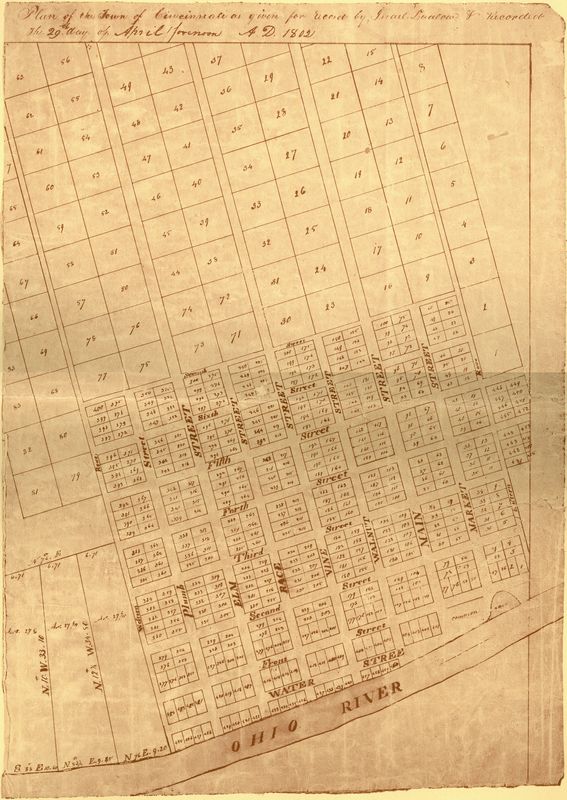
Ludlow planned the town in January 1789, but the plat was not filed until it was made necessary by law in 1802. His map was part of a legal case Judge Jacob Burnet recalled in a letter to Cist in 1844 (published in “The Cincinnati Miscellany”).
“The facts came out that there had been a previous project for laying out a town, the name of which was to have been Losantiville, but that project fell through,” Burnet wrote.
The judge contended that Ludlow’s plan constituted a new project, which the proprietors agreed to in the winter of 1788, “bearing on its face the name Cincinnati.”
The plan Ludlow filed was labeled “Plan of the town of Cincinnati as given for record by Israel Ludlow & recorded the 29th day of April forenoon A.D. 1802.” Burnet says Ludlow would not have falsified the plat by placing a different name on it.
Burnet wrote, “It was necessary to prove the correctness of the plat recorded by Ludlow, which affirmed Cincinnati to be the true, original, and only name of the town.”
What is the truth? Does it really matter? In the end it’s a footnote. But it’s interesting how difficult it is to prove something we thought we all knew.
This article originally appeared on Cincinnati Enquirer: Was Cincinnati never called Losantiville? We may never know the truth
Reporting by Jeff Suess, Cincinnati Enquirer / Cincinnati Enquirer
USA TODAY Network via Reuters Connect
By Jeff Suess, Cincinnati Enquirer | USA TODAY Network