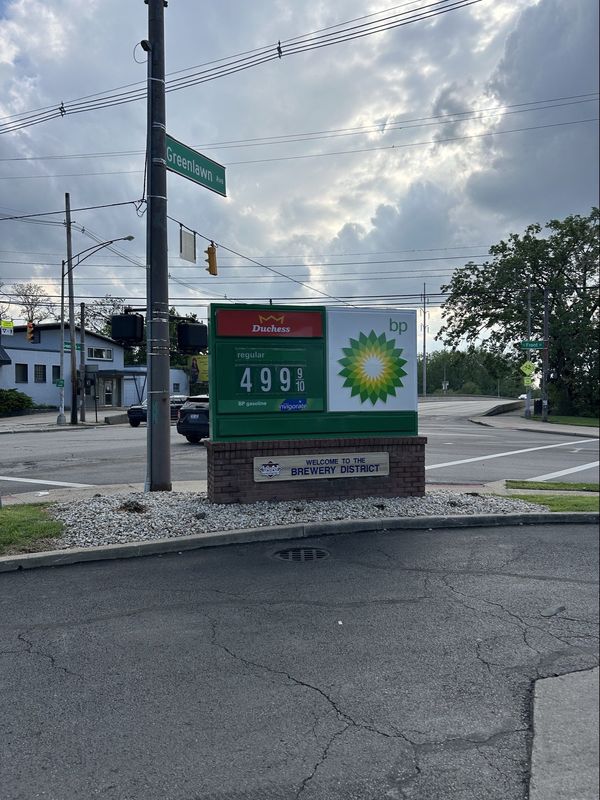
Gas prices in Ohio are now at their highest since the summer of 2022 and are expected to soon break records as the war in Iran stretches into its third month.
In fact, Ohio’s average gas price per gallon is $4.46, but many stations in the Columbus area are sporting $4.99 price tags, which is just 7 cents away from the state record of $5.06 per gallon in June of 2022, a few months after Russia first invaded Ukraine.

Ohio’s average is 16 cents higher than the national average as of April 30, according to AAA’s fuel tracker, and a 20 cent jump in just 24 hours. In a week’s time, prices have spiked almost 60 cents.
This time last year, Ohio’s average was $3.16 as the state did its seasonal transition into summer blend fuel, per AAA.
Columbus’ average is even higher than the state’s, with an average of $4.49 per gallon as of April 30. Last year’s average was $3.22, according to AAA, and the average on April 29 was $4.26, making for a 23 cent leap in a day. The city’s highest recorded average was $5.07 in June 2022.
GasBuddy lists the April 30 average still higher at $4.60.
Ohio’s prices are only expected to rise even higher this week and are likely to break those 2022 price records, according to Patrick De Haan, head of petroleum analysis for fuel tracker GasBuddy. Factors include regional refinery issues, typical price cycling practices and the war in Iran.
But prices are rising so rapidly that De Haan admitted on social media that GasBuddy’s algorithms cannot keep up with them.
Ripple effects of war
Gas prices first began rising in February, when the United States and Israel attacked Iran.
In retaliation, the Iranian government closed the Strait of Hormuz, a key waterway for transporting oil, causing global upset and crude oil prices to jump. The closure has continued to be a point in ongoing, though sparse, negotiations with Iran and the U.S. has blockaded Iranian ports.
President Donald Trump has indicated that any end to the war is months away, and Americans and other countries have felt the brunt of its $25 billion cost. Inflation is also rising due to spiking oil prices.
Jamie Dimon, CEO of JPMorgan Chase, whose regional headquarters is located in Columbus, said that the Iran war could keep inflation higher for longer or push the U.S. into stagflation, or a period of high inflation, weak economic growth and rising unemployment persisting at the same time.
Business and consumer issues reporter Samantha Hendrickson can be reached at shendrickson@dispatch.com
This article originally appeared on The Columbus Dispatch: Trump’s war in Iran could push Ohio gas prices past Ukraine war’s peak
Reporting by Samantha Hendrickson, Columbus Dispatch / The Columbus Dispatch
USA TODAY Network via Reuters Connect