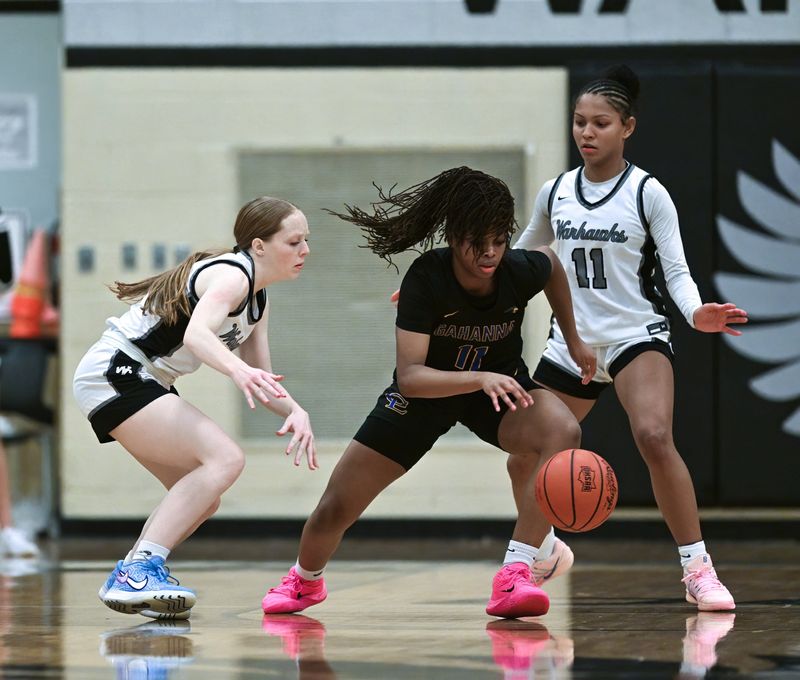
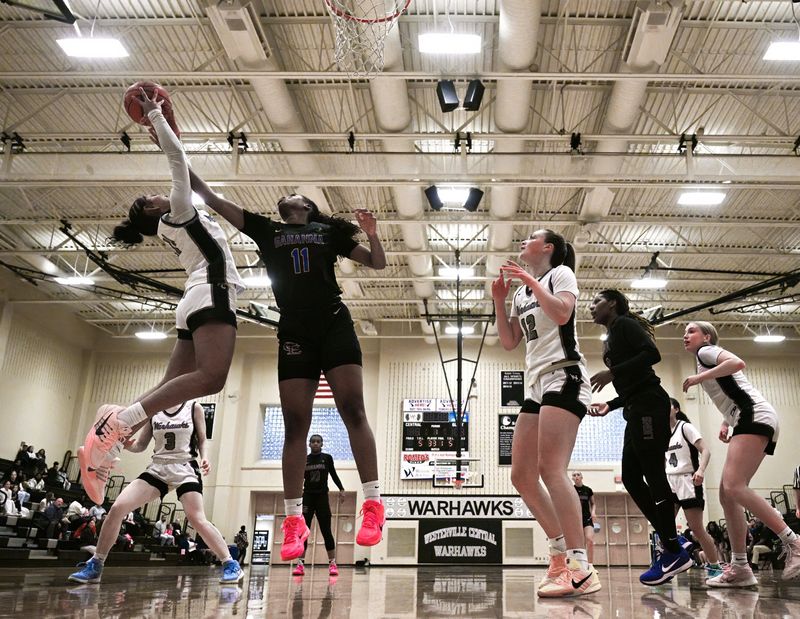
A recent article from the National Federation of High School Associations cites a 2024 study entitled “The Prevalence of Stress Amongst High School Students”, noting that 91 percent of high school athletes report high levels of stress from balancing academics and personal responsibilities.
These numbers are troubling because mental and emotional health in sports are now mainstream issues that have triggered changes at the local and federal levels. But students of color, especially young Black girls, are sharing their experiences with mental health to demand more support from their coaches, parents, and other adults in their lives.

Kaylee Jackson,16, is an advanced dual sport athlete at Gahanna Lincoln High School.
She spoke to the importance of a supportive coach, noting that when a good coach pours into you, it pushes you to try harder. “ If athletes don’t have the right coach, they seem to quit pretty early, which can ruin any chance they have at being successful,” Jackson said.
Coaches play a critical role in helping athletes reach their athletic potential. But more importantly, coaches and other adults are expected to help students figure out how to achieve their goals in balanced, healthy ways. Research proves that too often, the former is prioritized to the detriment of the students, and most impacted by this are students of color, especially Black and Brown girls.
For Black female athletes like Jackson, sports are an escape from the burdens of academic, social, and family life.
Taking care of the body and the mind
Sports are a form of discipline and a means of maintaining mental health. A Women In Sports study reported that 68 percent of Black girls said sports help maintain their physical well-being, citing the importance of health and taking care of their bodies at an earlier age.
In fact, physical sports prompt many young Black female athletes to see professional sports as a possibility. But unfortunately, the lack of consistent support and access to mental health care diminishes that dream exponentially in many athletes of color.
Addyson Holt is a 15-year-old volleyball player in Columbus, where she’s played for five years.
A committed athlete, Holt earned a spot on the Ohio Valley Region 14 National team. She spoke to the immense pressure of performing at a high level and navigating the school experience in ways non-athletes do not.
“After their school or work day, most kids can just go home,” Holt said. “But, when you’re an athlete, you have to show up and help your team regardless of your current mental state. Coaches are counting on you to do what you’re supposed to do. Meaning you have a bigger responsibility that’s outside of yourself.”
Machines on autopilot
Without the appropriate context-setting, statements like that could easily make a young person feel that their needs aren’t as important as the team’s success.
Both students remembered feeling they should function as machines, moving on autopilot to perform the task at hand, even if it meant neglecting their mental well-being.
That experience is not unique; it is a part of the legacy of Black women and girls being seen as valuable based on their output.
The Women in Sports study notes the pressure Black girls feel in wanting to meet the expectations of their coaches and teammates while dealing with racism, misogyny, and other forms of injustice playing out in society. That same report shows that this mindset leads 48 percent of Black female athletes to fall out of love with their sport by their adolescent years. This looks like students continuing to play while disenchanted, and or quitting altogether.
Finding identity off the field or court
Experts and athletes alike agree that learning who you are outside of sport is vital for an athlete’s mental freedom.
“Most athletes who start young begin loving the game,” Holt said. “But you’re young, so your world is small, especially when you’re not involved in a lot. So you find an identity by pouring your all into something you love.”
This is especially true for Black girls in predominantly white sports.
Both Holt and Jackson shared moments when they tried to over-prove themselves because they felt held to a higher standard than their teammates, noting that the pressure was challenging, but they tried to harness it positively.“Pressure teaches you how to act in certain situations that aren’t always ideal. If you never have pressure, then you never know who you really are,” said Holt.
Student athletes generally know they are expected to perform athletically and academically, and that they must contribute as members of their families and friend groups. But research and stories like those from Holt and Jackson prove that understanding a situation is one thing, and navigating its complexity is another.
Student athletes, especially those from marginalized communities, deserve more support from coaches, parents, and other adults to ensure the sports they love don’t cost them their mental health, emotional well-being, or the freedom to figure out who they are outside of sports.
This piece was written by Brianna Moore for Columbus Journalists in Training, a program sponsored by the Columbus Dispatch and Society of Professional Journalists Central Ohio Pro-Chapter and Columbus Association of Black Journalists for Columbus City Schools students. Moore is a student at Columbus Alternative High School. She was a member of CCS Voice.
This article originally appeared on The Columbus Dispatch: Student athletes aren’t ‘machines on autopilot’ | Student project
Reporting by Brianna Moore, Columbus Journalists in Training / The Columbus Dispatch
USA TODAY Network via Reuters Connect