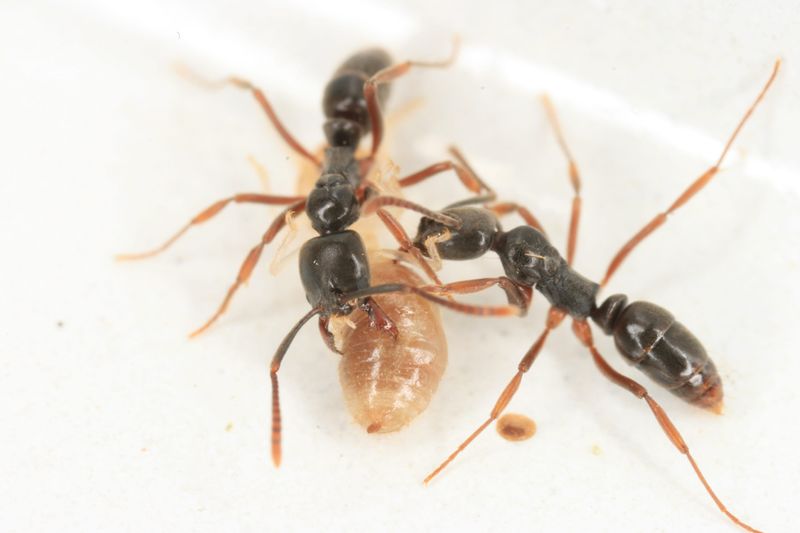
A species of invasive stinging ants is on the rise as they hit peak season in the summer. Asian needle ants deliver a painful and venomous sting capable of causing allergic or even life-threatening reactions.
Native to Asia, the insects are known as Brachyponera chinensis (roughly translated as “short, wicked ant from China”) and have since spread to the U.S. with documented sightings in 20 states, including Ohio. While tiny, the ants can also infest homes and disrupt natural environments by excluding native ant species and termites.

Asian needle ants reach their yearly peak activity in June and July. Here’s what to know before they arrive.
What are Asian needle ants? Are they common in Ohio?
Asian needle ants are a species of carnivorous ants native to China, Japan and the Koreas, according to USA TODAY. These dark brown ants have been found to live in colonies in leaf litter and rotted logs but can also be found inside potted plants, underneath wood piles, and in lawns. The “needle” part of its name refers to its stinger.
While they are difficult to track, Asian needle ants have been found in Ohio with at least four reported sightings, per antmaps.org. More than a dozen other states have reported Asian needle ant sightings.
Ohio State University’s Buckeye Yard and Garden confirmed the non-native stinging ant species in Southwest Ohio. The ants can nest inside landscape mulch, compost bins, homes, kitchens and dumpsters.
Are Asian needle ants the same as fire ants?
No. Unlike fire ants, Asian needle ants are smaller, less aggressive and will try to avoid humans, however, most stings occur when someone accidentally places their hands in nests or on the ants, according to NC State University Entomology. The pressure causes them to deliver a defensive sting that can last for hours or even days.
How to prevent an Asian needle ant infestation
Experts recommend wearing thick gloves when handling outdoor items like mulch to help prevent stings. Eliminating nesting sites is also advised, including reducing moisture-heavy areas in and around your home and sealing entry points, according to Orkin.
Should you encounter a colony of Asian needle ants, protein-based insecticide baits can also be used, though the method isn’t foolproof.
Asian needle ant sting symptoms
According to the U.S. Department of Agriculture, Asian needle ant stings can include the following symptoms:
This story was updated to add a gallery.
This article originally appeared on Cincinnati Enquirer: Stinging, invasive Asian needle ants are in Ohio. Here’s where, why they’re a problem
Reporting by Alex Perry, Cincinnati Enquirer / Cincinnati Enquirer
USA TODAY Network via Reuters Connect