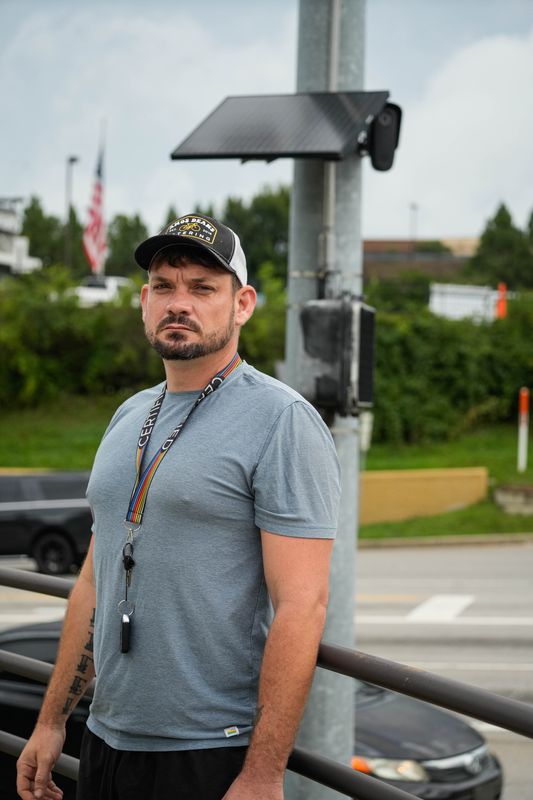
Keith Johnson was watching a YouTube video in his West Side Cincinnati home when he learned about Flock Safety, a privately owned network collecting license plate data from cameras installed across the country.
The video mentioned a community-run site called Have I Been Flocked, which lets people search their license plate to see if they’re in the database.

Johnson ran his plates. His car was there, as was the reason police searched for it: “Terminated employee.”
Johnson had recently lost his job at a Jewish community center in Amberley Village. He wasn’t accused of a crime and hadn’t been back to the property. But after his termination, community center leaders told police they were concerned he might return. Officers ran a background check and searched Flock, finding Johnson’s car hadn’t been seen in the village for at least a month.
To police, the search was routine.
“Anybody could be a potential threat,” Chief Richie Wallace said. “It’s just a matter of searching the database.”
Johnson is one of millions of Americans whose vehicle records appear in Flock’s database without being accused of a crime. His experience reflects a broader debate playing out across Greater Cincinnati as police departments expand their use of Flock Safety’s license plate reader network. Law enforcement agencies credit the system with helping solve crimes and locate suspects. Critics say it has also become a tool for tracking people who are not accused of wrongdoing.
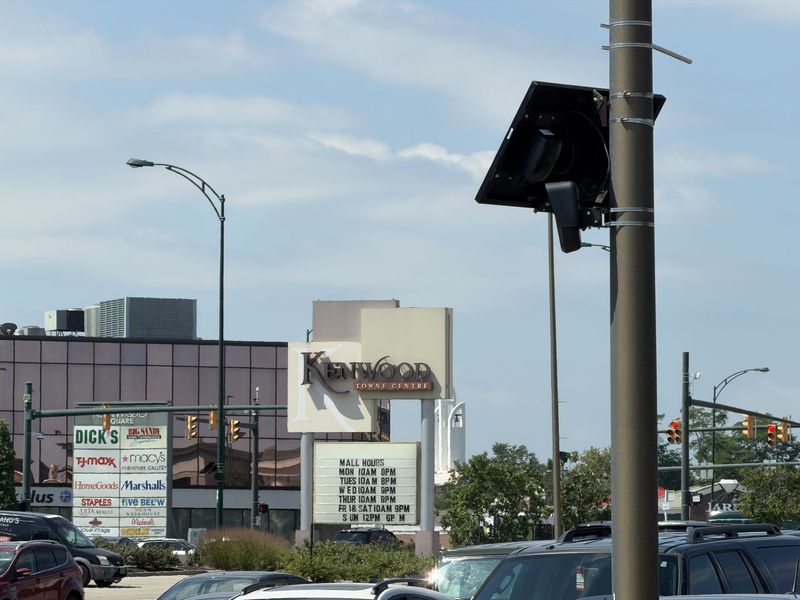
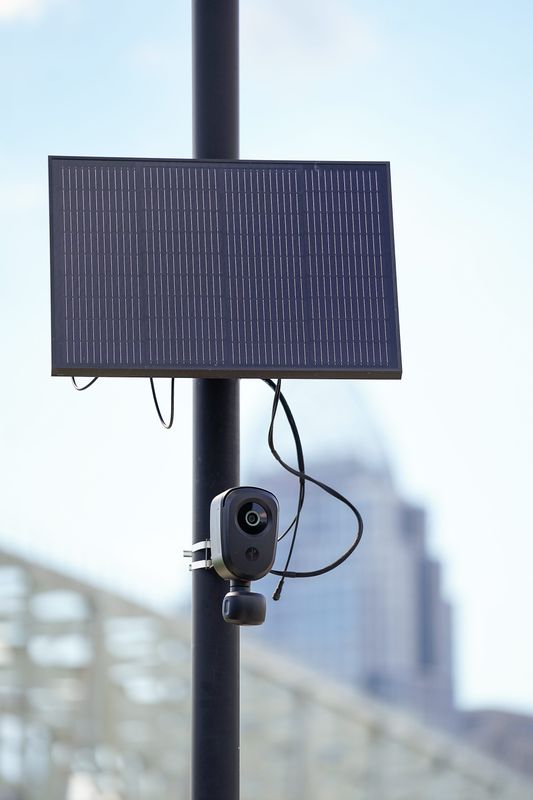
An Enquirer review of police records found that most of Greater Cincinnati’s 106 police departments use license plate readers, and nearly all rely on Flock’s technology. Cameras now line major roads and neighborhood entrances. More than 1,100 operate across the region and police aren’t the only ones installing them. They’re popping up outside shopping centers, on college campuses and in community subdivisions, feeding millions of vehicle sightings into a shared database.
As the technology spreads, so has the backlash. Privacy advocates have launched campaigns against Flock, U.S. Rep. Thomas Massie has proposed federal legislation to limit warrantless government use of license plate reader data, and residents across the region have pushed local officials to reject or remove the cameras.
On one end of the opposition are conservatives worried about government overreach and intrusions into citizens’ private lives. On the other end are liberals skeptical that data Flock collects for local authorities will be used to further President Donald Trump’s immigration agenda.
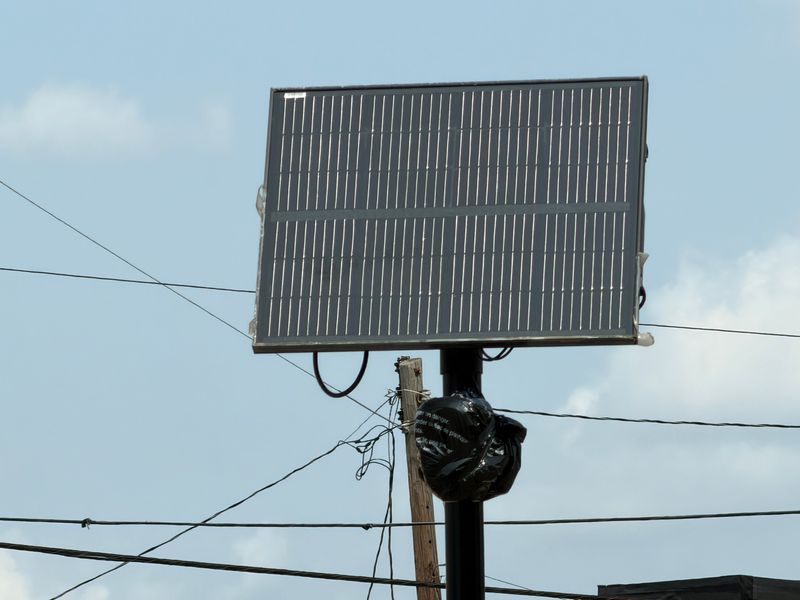
In a few cases, opposition has escalated beyond public meetings and political debate, with authorities accusing people of vandalizing or destroying Flock cameras. Yet policies governing searches, retention and access vary widely. Civil liberties advocates say a system designed for public safety has evolved into a powerful surveillance network with few consistent safeguards.
Flock’s network is growing, so is concern
License plate readers are not new. What sets Flock apart is its vast, interconnected database. That’s been an attractive feature for police departments, which are installing new cameras every day.
Every vehicle that passes a Flock camera is photographed. The system records license plate numbers, vehicle makes and models, and even distinguishing characteristics such as bumper stickers or visible damage. Those records are then stored and made searchable by participating agencies.
At Cincinnati/Northern Kentucky International Airport alone, law enforcement agencies from across the country conducted more than 868,000 searches of Flock data in a three-week period, illustrating both the scale of the network and how frequently officers rely on it.
Billions of license plates nationwide are entered into Flock’s database every month, according to the company’s reports. Unlike older systems that check plates against wanted lists in real time and then discard the information, Flock stores data so it can be searched later.
Kenton County Commonwealth’s Attorney Rob Sanders said it is “a very useful tool for law enforcement,” pointing to investigators’ use of license plate readers in two high-profile homicide cases in Covington: a daytime execution-style shooting and a robbery-murder of a 60-year-old man walking home from work.
The same feature police praise most, critics say, is also the source of the greatest concern.
In Dayton, Ohio, city officials suspended their Flock program after a police commander allowed immigration officials to search through their license plate data. A police officer in South Carolina was fired after using the Flock database to look up his ex-partner’s car. Ohio officers in Reynoldsburg and Columbus are also under investigation for Flock misuse.
Flock says every search requires a documented reason and data is deleted automatically after an agency-set retention period.
Until recent changes in response to privacy concerns, Flock deleted data after 30 days unless a department set a shorter or longer retention period. Now, the company is recommending agencies set a 7-day period, though it acknowledges every community will continue to choose the retention period that best fits for them.
An Enquirer review found many local departments do not specify retention limits in their policies. Those that do specify a retention limit generally set it at 30 days.
Many departments’ policies also require audits of the system on a “regular basis,” without defining how often those reviews must occur.
“We believe public safety, privacy, and Fourth Amendment rights can and must coexist,” a Flock spokesperson said in a statement to The Enquirer. “We understand there are questions around data and privacy and we welcome these conversations because we believe public safety technologies are powerful tools best used in concert with strong policy, accountability, and oversight mechanisms.”
To Chad Marlow, ACLU senior policy counsel, the problem isn’t just misuse by local and federal authorities, it’s the system’s intended use: tracking every vehicle in the country and storing the data for a month or longer.
“They’re the spot-on definition of a surveillance company,” Marlow said. “A company that watches the masses and collects data on them for the government’s use.”
The consequences of officers misusing Flock have extended far beyond their jurisdictions, fueling skepticism even in communities that have never adopted the technology. Harveysburg Police Chief George Schlub said Flock offered the community a free trial, but the village’s council declined after learning about Dayton’s data-sharing controversy.
“When departments like Dayton abuse Flock, it’s natural that’s going to feed into regular paranoia with people,” Schlub said. “Everything Flock offers is extremely positive, but because of this perception, it’s a tool I don’t get to use.”
A deadly encounter
Critics argue misuse is only one concern. They also worry about what can happen when a Flock alert sets law enforcement actions into motion. One of those concerns is the potential for dangerous encounters between citizens and police.
“There have been unfortunately many, many, many instances of plates being misread and people finding themselves staring down the barrel of a gun,” Marlow, of the ACLU, said.
A deadly encounter in Evendale in 2025 illustrates how a license plate reader alert can trigger consequences far beyond a traffic stop, even when the technology itself works as intended.
Investigative records show a Flock camera in West Chester Township flagged a stolen vehicle, prompting officers to pursue it into Evendale near Interstate 75. After the occupants abandoned the vehicle and fled, police began searching the area.
A Lockland officer saw 48-year-old Samuel Mumyarutete walking along the interstate. He was not connected to the stolen vehicle.
Mumyarutete was fatally shot in a confrontation with the officer while wielding a metal pipe, a shooting the Hamilton County Prosecutor’s Office ruled justified.
“It kicked off this entire wild chain of events,” said Mike Allen Jr., an attorney hired to represent Mumyarutete’s family, referring to the original Flock alert. His family told authorities he struggled with mental health issues and didn’t speak English.
Mumyarutete had immigrated to the United States with his six children in 2024 after fleeing conflict and instability in central Africa. Less than a year later, he was dead.
“All these different things went totally sideways,” Allen said. “It’s painful, kick-to-the-gut-level irony.”
Many factors contributed to the encounter, Allen said. But without the original Flock hit, he believes, Mumyarutete may never have crossed paths with police that day.
‘Get the Flock Out’
As Flock’s network expands, so does the opposition.
The ACLU has launched a campaign urging communities to tell the company to “Get the Flock Out,” arguing that the cameras create a mass-surveillance system capable of tracking people’s movements on an unprecedented scale. There are also websites tailored to people who want to know if their plate number has been logged or queried in Flock’s database.
The pushback is increasingly reaching local governments. Fort Mitchell began removing its Flock cameras in mid-August. And Newport ended its Flock trial in July, citing the results of the pilot, public feedback and a recent U.S. Supreme Court decision which holds implications for authorities accessing location data without a warrant.
Even a recent success using the technology in a shooting investigation did little to ease concerns among opponents.
Elsewhere, some have been taking the issue beyond public meetings, with social media guiding the way.
“Don’t point a laser at a Flock camera,” one social media post sarcastically suggested. Another offers a step-by-step guide on how to take down a Flock camera “for educational purposes only.”
In June, a Union Township man took down a Flock camera down the street from his house, police say. Only a few weeks later, Butler County deputies found two of their Flock cameras had been sawed in half.
Flock has dismissed much of the criticism. Chief strategist Rahul Sidhu has characterized opposition as a “mass disinformation campaign,” arguing that Americans routinely share location information through smartphones and other technologies.
“They would rather that the 10,000 adults and kids we helped find last year stayed missing, as long as they felt more private in public places,” Sidhu wrote on social media in June.
Weeks later, Flock founder and CEO Garrett Langley took a different tack. On Aug. 13, he announced new safeguards for inaccurate alerts being given to police, officers abusing the system and departments’ data being unknowingly misused by other agencies.
“These changes reflect years of work and deliberation. They are not the end of that work, but simply the continuation of our commitment to both safety and privacy,” Langley said. “We are not perfect, so we will keep listening, improving, and building a better standard for public safety technology together.”
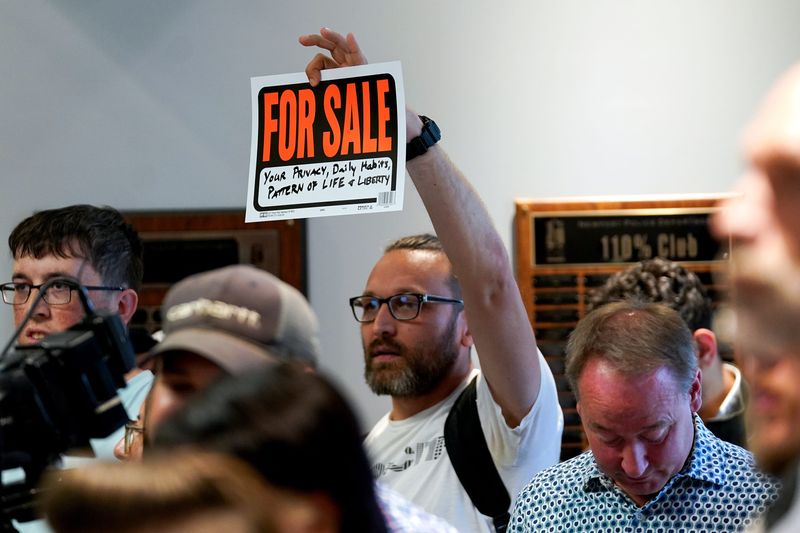
During a packed July 8 town hall in Newport, residents and others jeered as a Flock representative responded to concerns about surveillance, cybersecurity and the potential for misuse by local and federal authorities.
The opposition crossed political and ideological lines. Conservatives wary of government overreach and progressives focused on civil liberties found common ground in their skepticism of the camera network.
“I have the utmost faith in our police department,” Greg Wagner, 70, a lifelong Newport resident, said. “I just don’t believe we need Flock cameras in this city.”
This article originally appeared on Cincinnati Enquirer: More than 1,000 Flock cameras watch Cincinnati area. Resistance is growing
Reporting by David Ferrara and Quinlan Bentley, Cincinnati Enquirer / Cincinnati Enquirer
USA TODAY Network via Reuters Connect


By David Ferrara and Quinlan Bentley, Cincinnati Enquirer | USA TODAY Network