As he entered the Ohio Senate, a young Mike DeWine made a promise: He would help revive the death penalty.
“This is the first step towards fulfillment of my campaign pledge to return a strong system of justice to the state of Ohio,” DeWine said, according to a Jan. 12, 1981, article published in the Greenfield Daily Times.

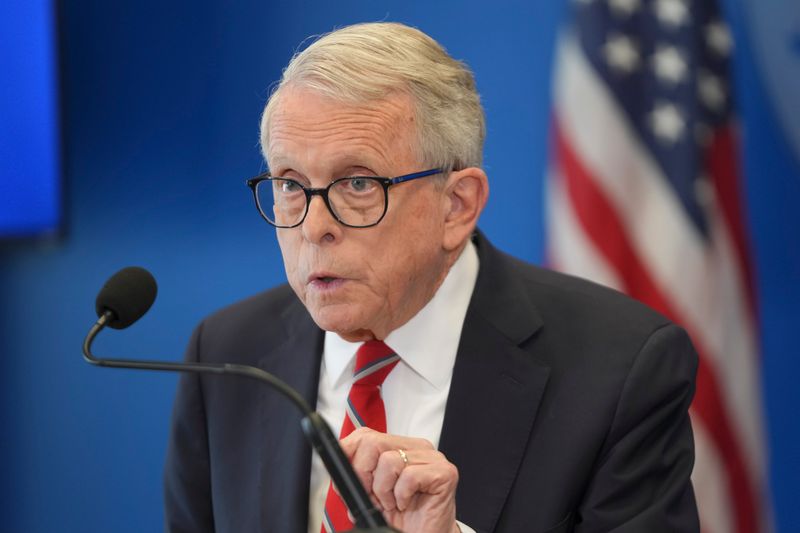
That’s a far cry from the governor who, 45 years later, wants Ohio to abolish capital punishment. DeWine made the long-awaited announcement on June 16, saying he no longer believes the death penalty is a deterrent for murder.
His comments weren’t a surprise to anyone paying attention. Shortly after becoming governor in 2019, DeWine paused executions because a judge had deemed Ohio’s lethal injection process cruel and unusual. They never resumed, and he began to publicly doubt the system’s efficacy.
Still, DeWine’s reversal marked a dramatic shift for the former lawmaker who spearheaded Ohio’s death penalty law, then defended it in court as attorney general. And it sets him apart from Republicans in other states, particularly Florida, who are driving a nationwide uptick in executions.
“I think it’s the people who have the closest vantage point of the system and how it works and who actually have to carry it out, those are the folks that have the biggest concerns,” said Kevin Werner, executive director of Ohioans to Stop Executions.
DeWine’s evolution on Ohio death penalty
No Ohio elected official has interacted more with capital punishment than DeWine.
DeWine began his public service as Greene County prosecutor. He never prosecuted a death penalty case because state law at the time had been declared unconstitutional. But he said that role helped him understand the devastation of crimes like homicide and rape.
As a state senator, DeWine co-sponsored the 1981 legislation that brought executions back to Ohio. He served as lieutenant governor under former Gov. George Voinovich, who signed legislation to allow lethal injection as an alternative to the electric chair. In Congress, DeWine advocated for the federal death penalty.
His proximity to the issue only increased when he became attorney general in 2011. That job required DeWine to pursue indictments and defend Ohio in lawsuits over its lethal injection protocol. He also helped bring charges in the Pike County massacre − a case that sticks with him to this day.
“These are horrible, horrible cases,” DeWine said June 16. “Your heart has to go out to the victims and to their families. A separate issue: how we as a society decide to deal with it.”
As governor, DeWine began to wonder if capital punishment is the right approach.
The average wait time on death row is 22 years, according to a report by former Ohio Attorney General Dave Yost, and 41 people died by suicide or natural causes. By the end of 2025, judges had scrapped 89 death sentences because of legal errors.
DeWine, a practicing Catholic, backed the death penalty in 1981 because he believed it would prevent future crime. He said he can no longer make that case. Citing the same data, he argued the system is too slow and doesn’t guarantee someone will be executed.
For him, the change of heart was more pragmatic than spiritual.
“When I voted for the death penalty, I considered myself pro-life. I was a practicing Catholic,” DeWine said. “I remain a practicing Catholic. I remain pro-life. I think the facts have changed.”
DeWine faces pushback from fellow Republicans
Now, DeWine is among a cadre of current and former state officials who have called on Ohio to repeal the death penalty.
Former Republican Attorney General Jim Petro joined the Ohio House in 1981 and voted for the death penalty law. At the time, Petro thought it served a purpose in heinous cases and wanted to represent his constituents who supported the practice.
That belief didn’t stick.
“You’re new. You want to do the right thing,” Petro told the statehouse bureau. “But over the years, I had a lot of misgivings about the death penalty.”
Opposition to Ohio’s death penalty is bipartisan, but it’s unlikely DeWine will spur lawmakers into action. Many Republicans blame DeWine for delays in the system and say he flouted the law by refusing to let executions proceed as scheduled.
Even his newly appointed attorney general, Andy Wilson, said the death penalty in some cases “is the only option that can bring a measure of justice and closure to the families of victims.”
“Ohio has paused executions with numerous reprieves for eight years,” Trumbull County Prosecutor Dennis Watkins said in a statement. “How can you deter murderers when you don’t execute them, and capital crime defendants get to appeal forever and many of those appeals are frivolous and costly?”
Ohio’s next execution is scheduled to take place on Jan. 13, 2027 − two days after DeWine leaves office.
State government reporter Jessie Balmert contributed to this report.
State government reporter Haley BeMiller can be reached at hbemiller@usatodayco.com or @haleybemiller on X.
Do you think Ohio should abolish the death penalty?
This article originally appeared on The Columbus Dispatch: How Ohio’s GOP governor went from pro-death penalty to wanting repeal
Reporting by Haley BeMiller, Columbus Dispatch / The Columbus Dispatch
USA TODAY Network via Reuters Connect
By Haley BeMiller, Columbus Dispatch | USA TODAY Network