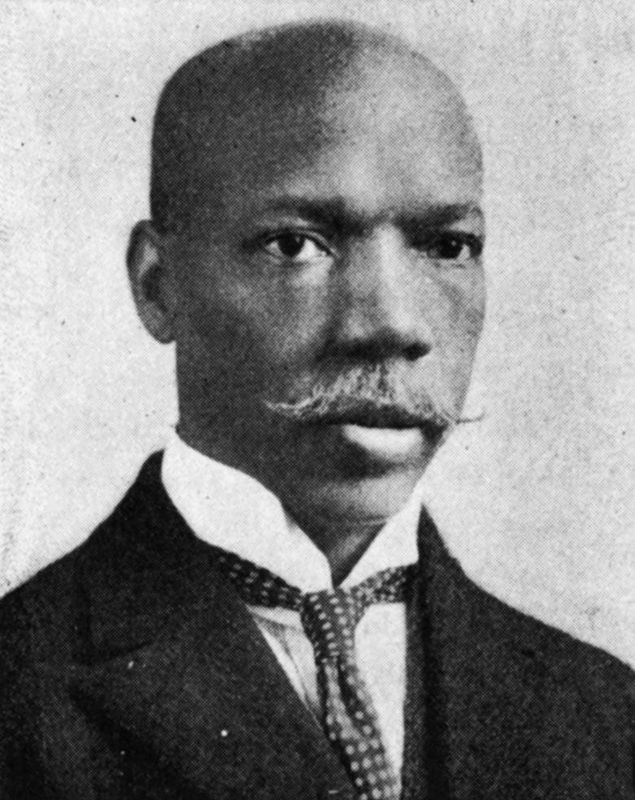
Wendell P. Dabney’s 1926 book “Cincinnati’s Colored Citizens” is an invaluable resource of the city’s Black history.
Dabney was the editor and publisher of The Union, a weekly Black newspaper, with immense knowledge of Cincinnati’s Black communities.

He saw a need to record that history and compiled church notes, recollections and traditions into a book “setting forth the history and achievements of the colored people of Cincinnati,” Dabney wrote.
In the century since the book’s publication, the availability of other resources such as digitized newspapers has helped to augment Dabney’s stories.
Here are two pioneers of Cincinnati’s police force that are remembered thanks to Dabney, with more information pulled from newspaper reports.
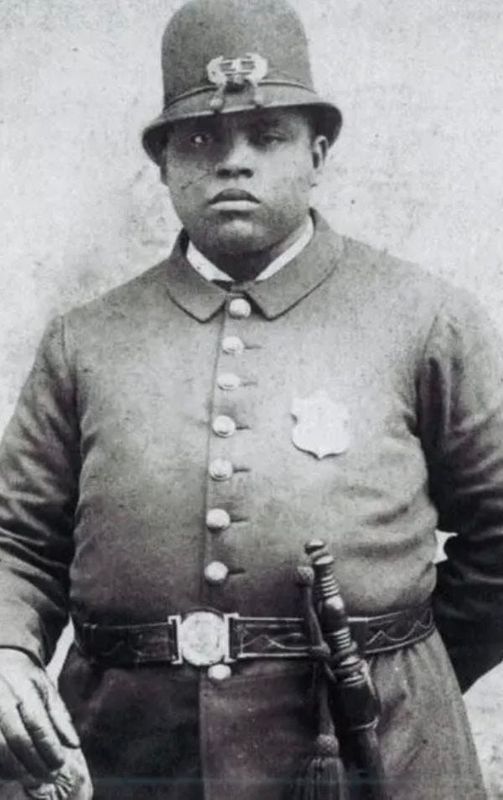
Henry Hagerman, Cincinnati’s first Black patrolman
Cincinnati’s police force hired Black employees as early as 1872 for jobs such as turnkey (who held the keys to the police lockup) or station house keepers.
In July 1885, police commissioners selected Hiram Carroll as the first Black patrolman of the Cincinnati police force, according to Enquirer reports at the time. He was to report for duty Aug. 1. However, on Aug. 3, the Cincinnati Post reported that Carroll was “discovered to be ¾ of an inch too short, and has been rejected.”
So, Henry Hagerman became the first, sworn in by Acting Chief Morton L. Hawkins on Aug. 10, 1885. The Enquirer described Hagerman as “a portly, fine-looking colored man,” assigned to Fourth and Race streets.
Dabney offered more context to Hagerman’s appointment.
Democrats, led by Enquirer publisher John Roll McLean, were in charge of Cincinnati city politics and the police department following the infamous courthouse riots in March 1884.
The Black community also had a split, as influential educator Peter H. Clark broke away to side with the Democrats. Hagerman was president of the “colored Democratic club.”
“The Democrats came in power and to spite the Republicans, put a colored man, Henry Hagerman, on the police force, and to spite Murat Halstead, editor of the Commercial Gazette, stationed him on the street in front of his office,” Dabney wrote.
The Commercial Gazette was a Republican newspaper with offices located at Fourth and Race.
Hagerman was not on the force long. He was dismissed in June 1886, told by police physicians to lose 100 pounds.
He instead rejoined his former singing quartet. “He is one of the finest bass singers in the country and organized a quartet that had no rival in America,” The Enquirer wrote.
Hagerman died of pneumonia Nov. 18, 1893, aged 32.
“During his service on the force he was efficient and faithful, and, although differing in his political belief from the majority of his race, he always commanded their respect,” The Enquirer wrote.
James Allen, the first Black officer to be named detective
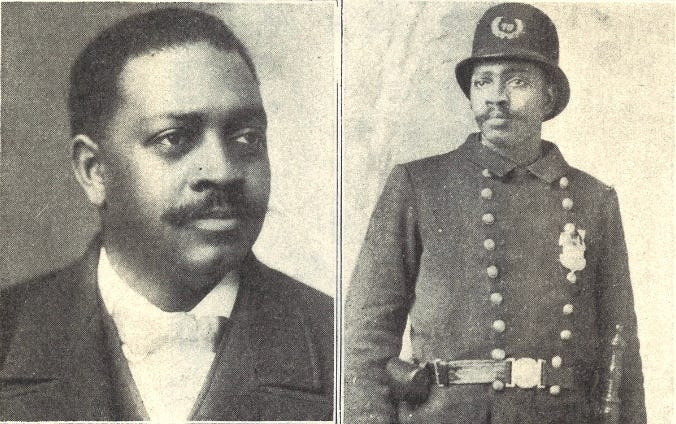
Other Black police officers followed in Hagerman’s footsteps, among them James A. Allen, who became the first promoted to detective.
Allen was born July 27, 1859, in Greenup County, Kentucky. He worked several years on steamboats on the Ohio River, then settled in Cincinnati where he worked as houseman, butler and coachman for Robert J. Morgan, the owner of the U.S. Playing Card Co.
When Morgan became president of the non-partisan Board of Police Commissioners in 1886, he used his influence to get Allen sworn in as a patrolman that same year.
Allen was assigned the toughest beat: Bucktown. The rough-and-tumble area east of Broadway between Sixth and Seventh streets on down to the river, where the poorest Whites and Blacks lived, was described by journalist Lafcadio Hearn as “a haunt of crime” and a “little Gomorrah” rife with poverty, theft and murder.
“Any policeman who ventured into Bucktown carried not only his club, blackjack and gun, but even his life in his hands,” Dabney wrote. “Allen laid around that district like Grant around Richmond.”
He wrote that Allen and his partner Miller, whose full name wasn’t documented, “cleaned up ‘Bucktown’ by sending most of its tough men and women to the hospital or workhouse.”
The Enquirer reported that on April 23, 1888, Chief of Police Philip Deitsch promoted Allen to detective, and that “his rapid advance is due to strict attention to duty and a fearless performance of the same.”
This is earlier than most sources report Allen made detective. Possibly because his first stint didn’t go well. He was accused of being drunk on duty, and in 1893 was found alone in a house with a married woman. Allen was demoted back to beat cop.
Mayor John Caldwell, promising to appoint a Black detective, promoted Allen again in October 1894. It took until the following March for police commissioners to approve Allen and Billy Bulmer, both Black, as detectives.
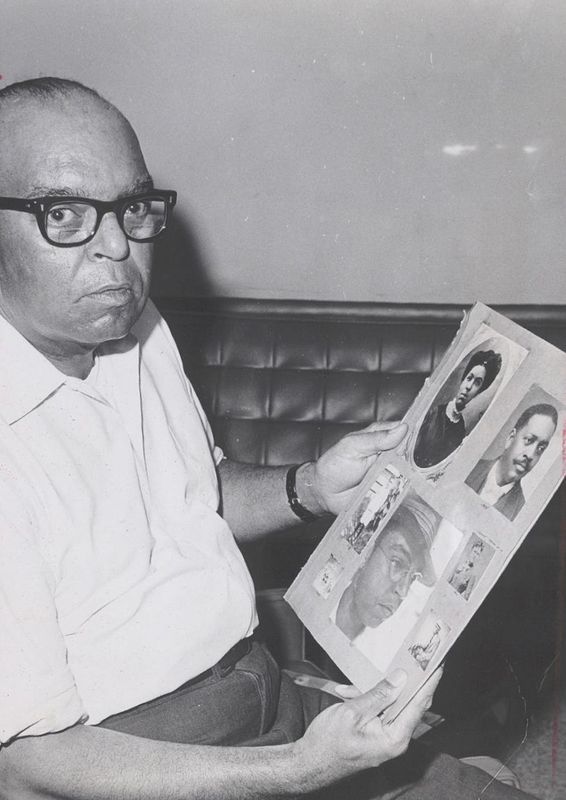
James Allen Jr. shared memories and a scrapbook of his father with The Enquirer in 1970. “Dad was considered a tough, hard-fighting cop, but was also known as a bon vivant and social lion,” Allen Jr. said.
Allen retired in 1916, and died Jan. 19, 1922, aged 62.
Additional sources: Enquirer, Cincinnati Post and Cincinnati Commercial archives; Cincinnati Curiosities by Greg Hand; Find a Grave; Fox19; Greater Cincinnati Police Museum.
This article originally appeared on Cincinnati Enquirer: How Cincinnati’s first Black police officers rose the ranks
Reporting by Jeff Suess, Cincinnati Enquirer / Cincinnati Enquirer
USA TODAY Network via Reuters Connect