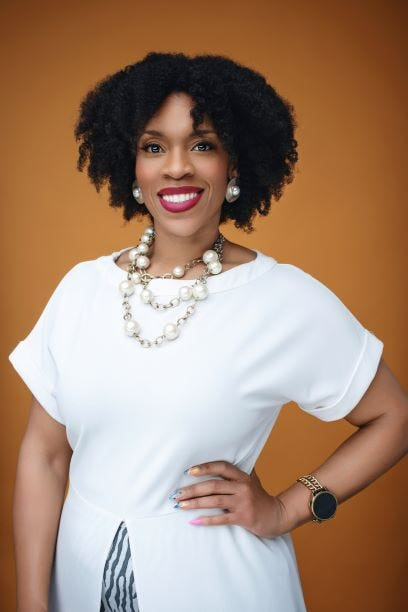
Melissa Crum is an inclusion coach, leadership strategist and founder of Mosaic Education Network.
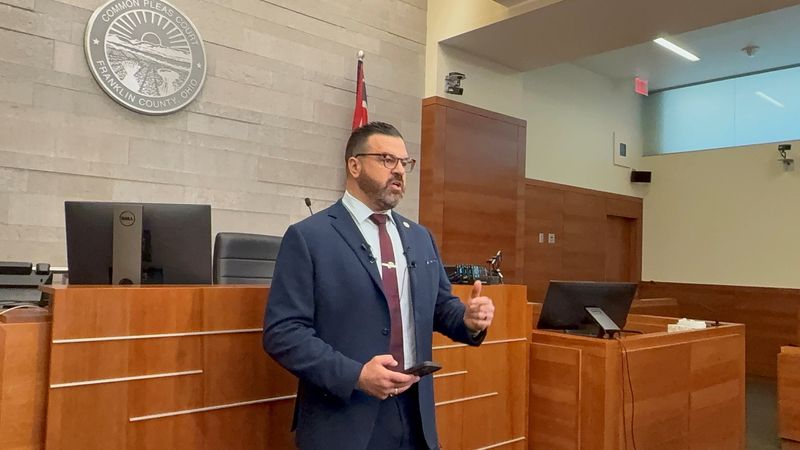
Local Fraternal Order of Police President Brian Steel’s response to the conviction of Jason Meade reveals why conversations about inclusion, equity and accountability matter far beyond workplace trainings or public statements.

These values are tested most when systems are asked to hold power accountable.
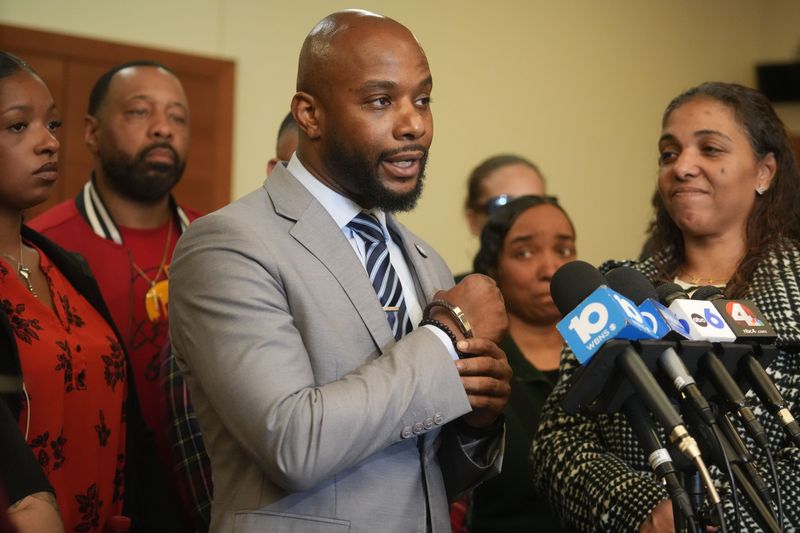
Instead of centering his post-verdict comments on Casey Goodson’s life, the grief of his family, or the importance of rebuilding trust with the community, Steele rejected accountability and attacked Sean Walton, an attorney for Goodson’s family and the president-elect of Columbus’ NAACP chapter.
Goodson Jr. was the 23-year-old Black man Meade, then a Franklin County deputy, shot six times – five times in the back – while entering his grandmother’s home carrying sandwiches in December 2020.
A jury on May 7 convicted Jason Meade of reckless homicide.
The message behind ‘poverty pimp’
Meade’s conviction matters because historically, police officers are rarely held criminally accountable for taking lives, even when communities have demanded justice for years.
Steel criticized Walton’s clothing, calling him a “poverty pimp,” and suggested that “nobody gained anything” from the conviction.
But accountability is not anti-police. Accountability is necessary for public trust.
The phrase “poverty pimp” is especially revealing.
The term refers to someone who exploits marginalized communities for personal or political gain while pretending to advocate for them. But using that phrase against Walton indirectly acknowledges something important: There is a marginalized group experiencing harm that requires advocacy and protection.
Why accountability matters
Walton did not create that reality.
He worked within the legal system available to families seeking justice after losing loved ones to police violence.
In the United States, criminal convictions and financial settlements are often the only forms of accountability families can pursue.
If that feels insufficient or transactional, that frustration should not be directed at grieving families or the attorneys representing them. It should force us to examine the limitations of the system itself.
What is also striking is what Steel chose not to engage. He did not meaningfully engage Walton’s nuanced story about his grandfather being shot by a police officer who allegedly lied about the incident, while another officer reportedly told the truth and helped save his grandfather’s life, only to later face devastating consequences for breaking the silence.
That distinction matters.
A badge should not place anyone above accountability
Inclusion and equity are about creating systems where truth can be told safely, harm can be acknowledged honestly and accountability is treated as part of integrity rather than betrayal.
Too often, conversations about race and policing are dismissed as divisive. But equity requires us to examine patterns honestly. While Steel mentioned “sh*t bags” who kill police officers and community members “every day,” those people are often held accountable for their action. Policers often are not. These are patterns that real inclusion and equity focus on.
And despite claims that “nobody gained anything,” the community did gain something important from this verdict: acknowledgment that a badge should not place someone above accountability.
That matters.
If policing is going to continue holding immense authority in this country, then communities deserve systems that value transparency, truth-telling and human life.
We should want more officers willing to tell the truth, more protections for those who speak up against misconduct and fewer families forced to spend years proving that the life of someone they loved mattered.
Inequities live in the dark.
Real inclusion and equity work shines a light and requires to look closely with bravery no matter how uncomfortable it may be. Anything else is performative.
Public trust cannot exist where accountability is treated like an attack instead of a responsibility.
Melissa Crum is an inclusion coach, leadership strategist and founder of Mosaic Education Network, where she helps organizations build inclusive workplace cultures through art, research, storytelling and reflective practice. She specializes in leadership development, equity, communication and organizational culture change.
This article originally appeared on The Columbus Dispatch: FOP president’s ‘poverty pimp’ remark after Meade trial crossed line | Opinion
Reporting by Melissa Crum, Guest Columnist / The Columbus Dispatch
USA TODAY Network via Reuters Connect