Ohio’s 88 county courthouses stand as enduring centers of law, community and history, as explored in a new Supreme Court of Ohio documentary marking America’s 250th anniversary.
The film, “Where Justice Settled: The Story of Ohio’s 88 County Courthouses,” traces how these buildings evolved from frontier gathering spaces into lasting civic landmarks, according to a community announcement.

From frontier outposts to county anchors
In Ohio’s earliest years, courts did not operate in formal buildings. Proceedings were held in log cabins, taverns and borrowed rooms, where communities gathered to settle disputes, record land deals and establish order.
As counties formed across the state, the need for permanent public spaces grew. By 1851, all 88 counties had been established, each with its own courthouse serving as the center of local government and justice.
These buildings became visual symbols of stability and public life, reinforcing the idea that law should be accessible and visible to the people, according to the announcement.
Buildings designed to reflect civic values
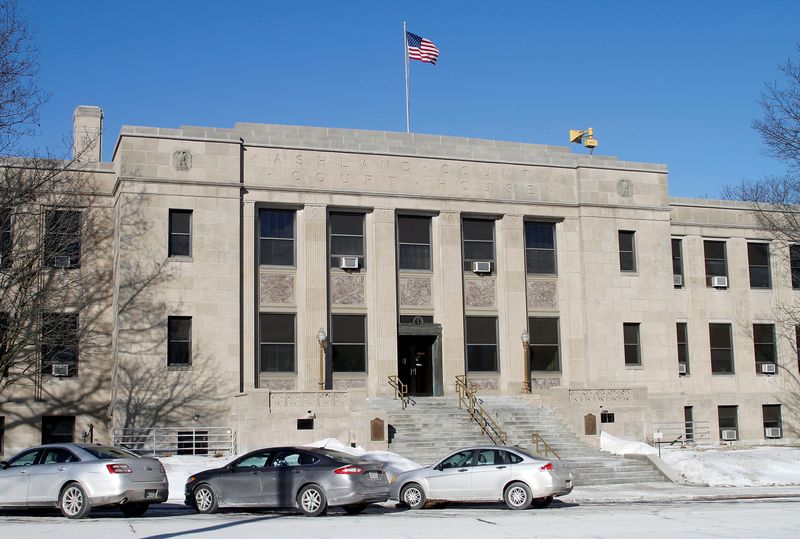
Ohio courthouses were often built to stand out within their communities. Constructed from stone, brick and locally sourced materials, they were intended to convey permanence and strength.
The spaces inside carried equal symbolic weight. Courtrooms were designed for public visibility, underscoring the principle that justice should be carried out openly. Decisions made within these walls shaped communities and reinforced the rule of law.
Local character shapes each courthouse
While courthouses share a common purpose, each reflects the community it serves.
In Holmes County, where a large Amish population lives, features such as built-in hat racks and accommodations for horse travel reflect local customs. In Harrison County, traditions tied to coal mining influence events on the courthouse square, including community festivals tied to the region’s industrial past.
Courtrooms themselves vary widely. Some remain largely unchanged for more than a century, while others include unusual design elements, such as movable jury boxes that bring participants closer to proceedings, according to the announcement.
Artifacts reveal daily life and history
Many courthouses also preserve historical objects that illustrate past practices.
Items such as jury wheels used for random selection, 19th-century coin changers and reinforced safes designed to protect public funds offer insight into earlier eras. Other artifacts reflect unique moments in local history, including preserved evidence from Prohibition-era cases.
These collections highlight the courthouse as more than a legal venue, serving as a record of community life.
Where law, conflict and public life meet
Before modern media, courthouses were among the primary places where residents could witness public proceedings, sometimes drawing large crowds.
Stories from across the state show how unpredictable these moments could be. In one case, dogs brought to court as evidence could not be identified, leading to a collapsed case. In another, a condemned individual received a last-minute reprieve from a governor as a crowd looked on.
Courthouses have also been sites of conflict. In Fayette County, bullet holes remain from a confrontation between a mob and the National Guard in the late 19th century. In Cincinnati, the Hamilton County Courthouse became the center of a violent 1884 riot.
Natural disasters have tested these structures as well. A 1974 tornado in Xenia damaged the Greene County Courthouse but left it standing, reinforcing its role as a symbol of resilience.
Community gathering places beyond the courtroom
Despite their legal purpose, courthouses also serve as central hubs for community life.
Courthouse squares host parades, holiday decorations, festivals and public observances, bringing residents together year after year. Inside, daily functions continue, including marriages and civil proceedings that affect residents’ lives.
These roles demonstrate how courthouses connect civic duties with community traditions.
Preserving Ohio’s judicial legacy
The documentary highlights the importance of preserving these buildings, many of which were constructed using materials and methods that could not easily be replicated today.
While laws and communities continue to evolve, the courthouses remain constant symbols of justice and public service, according to the announcement.
As Ohio marks a milestone anniversary for the nation, the film presents the courthouses as both historical landmarks and active institutions that continue to shape communities across the state.
This story was created with the assistance of Artificial Intelligence (AI). Journalists were involved in every step of the information gathering, review, editing and publishing process. Learn more at cm.usatoday.com/ethical-conduct.
This article originally appeared on Ashland Times Gazette: Documentary explores history of Ohio’s 88 courthouses
Reporting by Jane Imbody, Wooster Daily Record / Ashland Times Gazette
USA TODAY Network via Reuters Connect
By Jane Imbody, Wooster Daily Record | USA TODAY Network