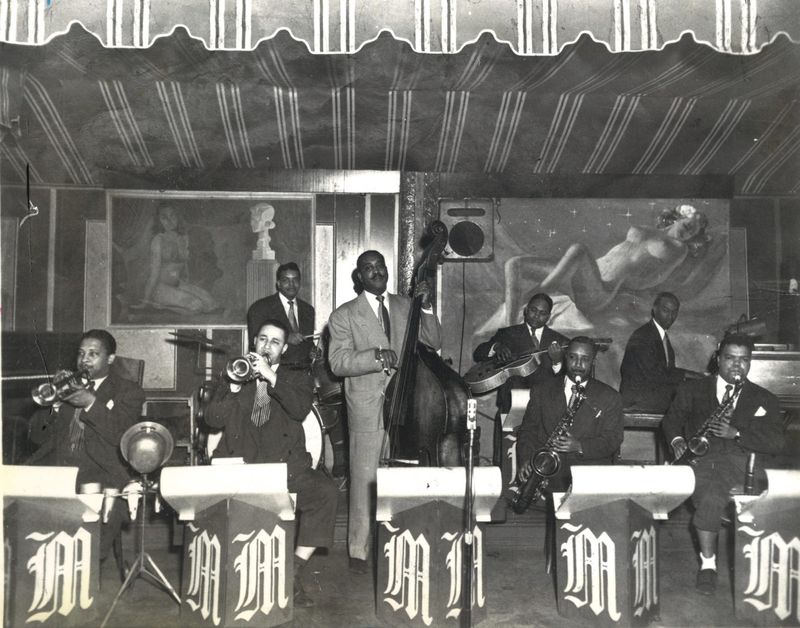
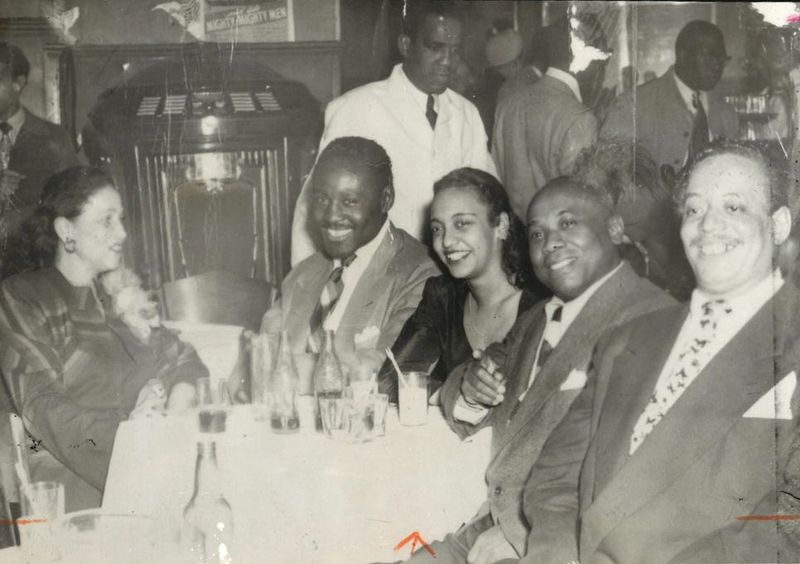
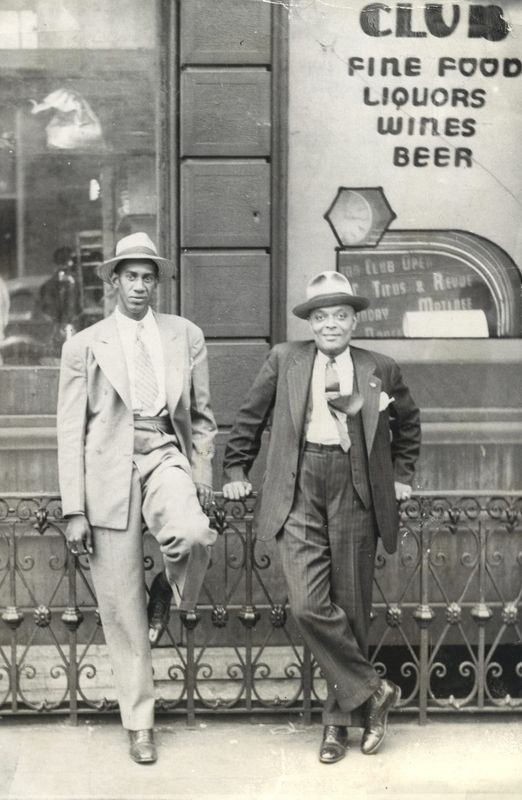
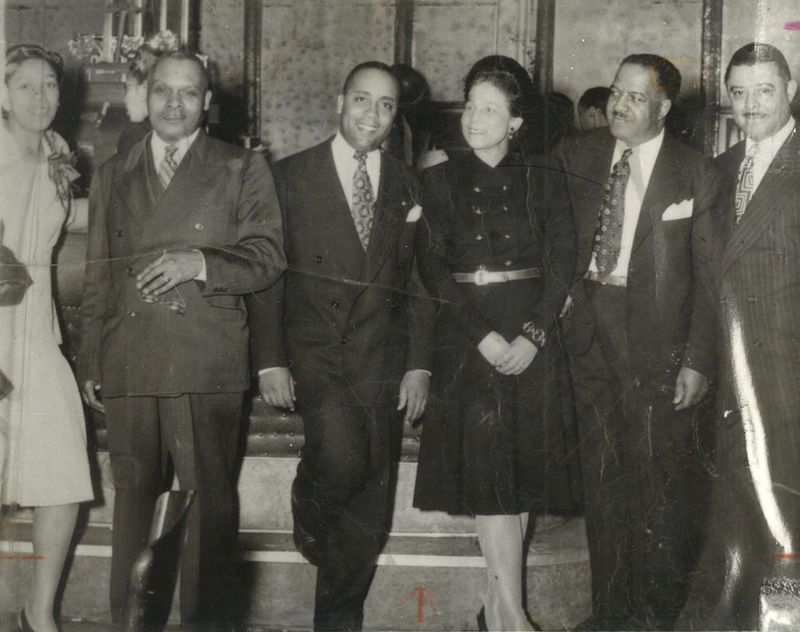
Hepcats and rug-cutters danced the night away at the Cotton Club in the 1930s to 1950s.
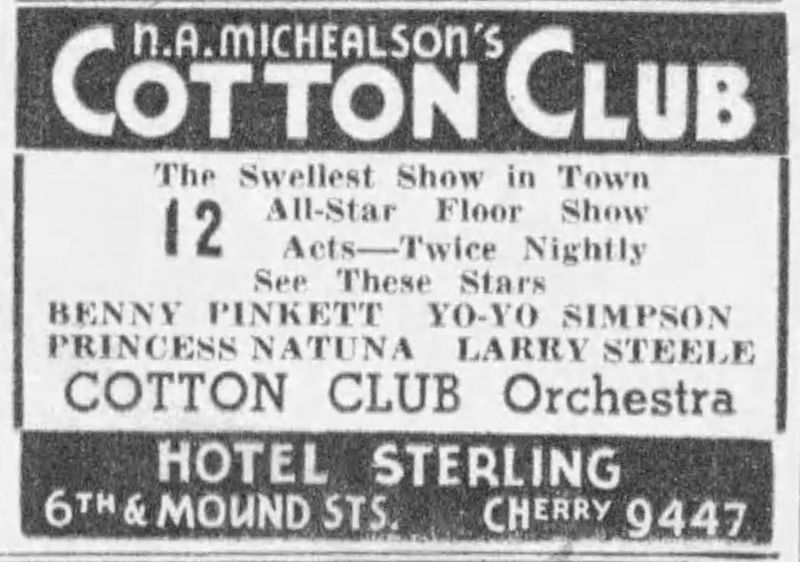
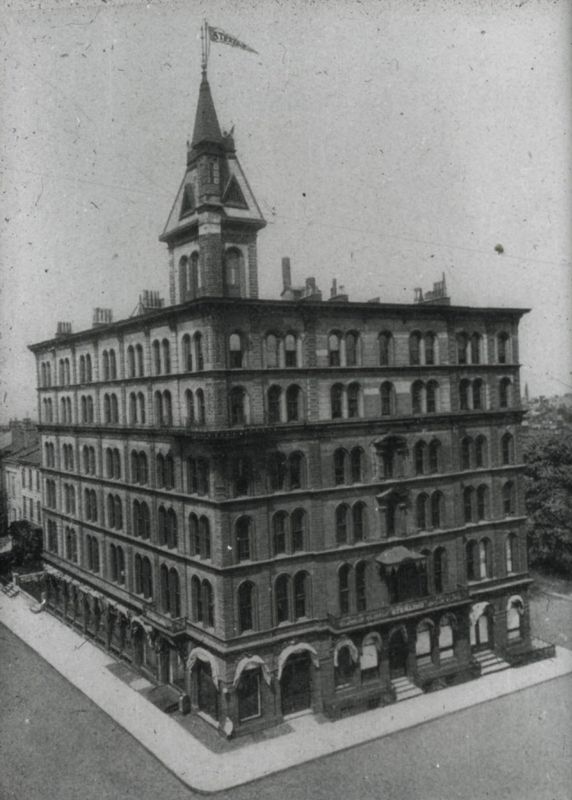
The nightclub was on the first floor of the Hotel Sterling, Cincinnati’s largest Black hotel, located at Sixth and Mound streets, what was then the heartbeat of the West End.

The West End hotspot, named for the Cotton Club in Harlem, hosted the most famous names in jazz and big bands: Count Basie, Duke Ellington, Pearl Bailey, Fats Waller.
History researcher Cissie Hill set the atmosphere of the Cotton Club in her terrific feature article published in The Enquirer Magazine in 1981:
“Inside everything was magic. Lights flickered across the walls, reflected from the turning glass ball that always hung from the ceiling. Elegant women, wearing hats and corsages, and well-dressed men, with wide, hand-painted ties, sat at white-clothed tables.
“All eyes were on the dance floor, where Bea Morris and her partner, Popeye Maupin, were jitterbugging. Popeye lifted Bea above his head one moment and, the next, slid her down and beneath his legs – her back inches above the floor. Gradually, more couples filled the dance floor. Soon the room was alive – swirling – filled by the swing beat of Monty ‘Frog’ Morrison’s band.”
Cincinnati’s only racially integrated nightclub in the 1930s
The Cotton Club opened in 1933 (the first notices in newspapers appeared that September) when Nathan A. Michelson converted the Hotel Sterling ballroom into a nightclub.
That December, Wendell Dabney, editor of the Black newspaper The Union, wrote: “The Cotton Club has become an institution of this city! The Sterling Hotel has taken on new glory since this popular amusement resort became its leading feature.”
Every other Monday began a new stage show at the club with comedians, magicians, musicians and dancers.
On Saturday nights, when dance clubs at Moonlite Gardens and Castle Farm closed at 2 a.m., the musicians would slide down to the Cotton Club to play until dawn. It was a breeding ground for musicians, many of whom went on to play for King Records, including H-Bomb Ferguson, Tiny Bradshaw and Hank Ballard.
The Cotton Club was what was known as a brown and tan club, meaning it catered to a Black and mixed-race audience but also white jazz buffs and celebrities in town. Heavyweight champ Joe Louis often visited with his friend Ezzard Charles. Actress Mae West came accompanied by Cincinnati Mayor James Stewart.
“The Cotton Club was the only racially integrated night club in town in those days,” Hill wrote. “There, blacks and whites could sit together and talk; it would have drawn hostile stares, if not open outrage, anywhere else in Cincinnati. This was a segregated city in the ’30s and ’40s.
“Although black entertainers could play Castle Farm … they could not be entertained there.”
The Cotton Club was the rare place in Cincinnati where Black folks could be both on stage and in the audience. The visiting Black musicians could also stay at Hotel Sterling, unlike the other hotels in town where they played.
The elegant, Renaissance-style Hotel Sterling began in 1869 as the Carlisle House, then the St. Clair Hotel in 1882, an inn for railroad travelers on the Cincinnati, Hamilton & Dayton line. It was renamed the Sterling in 1899.
Michelson, who immigrated from Russia as a child, bought the Hotel Sterling in 1919 and converted it into a hotel and cabaret specifically for Black patrons. He got into some hot water over selling liquor during Prohibition but kept the joint hopping.
After Michelson died in 1936, the Cotton Club was leased to Henry Ferguson, a leader in the local NAACP chapter and owner of Ferguson Cabs, while Lee Rainey booked the acts. Ferguson’s wife, Lulu Belle, took over after he died in 1946.
Building demolished for the freeway
The demise of the Cotton Club coincided with the city’s interest in obtaining huge sections of West End to be razed for a freeway and an industrial area. The densely-packed residential area known as the Kenyon-Barr district was home to more than 25,000 families, the majority of them Black, and included the block at Sixth and Mound streets.
In 1955, the IRS filed a tax lien against the Cotton Club, which owed $10,459 in taxes. The club was seized and its assets sold at auction to Herman Menke, owner of the Hotel Sterling. But the hotel was in the right-of-way for the planned Millcreek Expressway (now Interstate 75).
The city of Cincinnati reached an out-of-court settlement with Menke to pay $155,000 for the hotel building. It was razed in 1961 to make way for the freeway entrance on Sixth Street – the same fate as the Sixth Street Market.
The heart of the West End was bulldozed for warehouses and traffic lanes.
There is nothing left of the Cotton Club today – just a few photographs and memories. Some of the music lives on in records by artists who performed there. But the legacy still lingers in the history of West End.
This article originally appeared on Cincinnati Enquirer: Cotton Club nightclub was once the heartbeat of Cincinnati’s West End
Reporting by Jeff Suess, Cincinnati Enquirer / Cincinnati Enquirer
USA TODAY Network via Reuters Connect