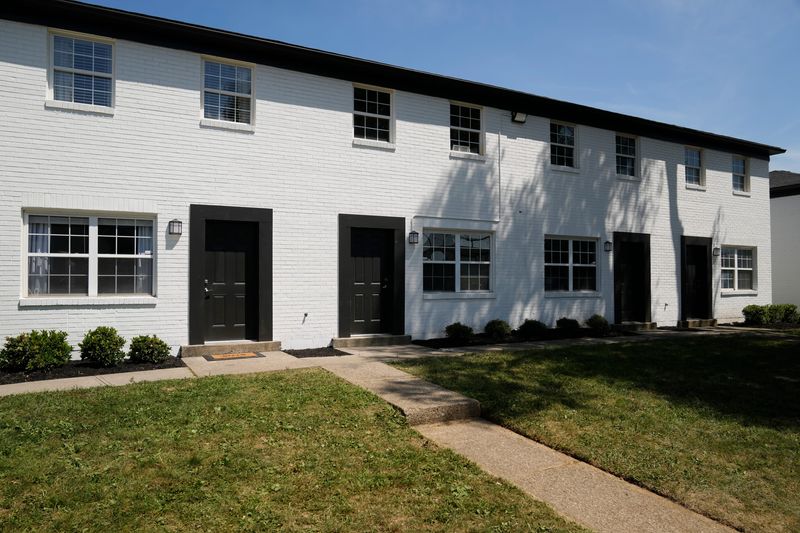
Columbus City Councilmember Nick Bankston wants to hold landlords accountable and is championing a proposal that would require property owners to register all apartments and rental homes in the city.
Bankston says a rental registry would allow more proactive rental inspections, preventing some emergency evacuations like the infamous evacuations of hundreds of tenants at Latitude Five25 towers in 2022 and at Colonial Village apartments in 2023. Property owners would be required to list local contacts who are responsible for maintenance. A registry would also provide data on how many rental units the city has and their conditions.

The Columbus City Council has considered creating a rental registry multiple times before. If Bankston succeeds this time, Columbus would join Cleveland and Cincinnati, which implemented registries in 2024 and 2020, respectively.
“We want to make sure that we’re being proactive and ensuring that the places that folks are renting are healthy and safe for families,” Bankston said. “I truly believe that housing is a human right, not just simply a commodity.”
Multiple residents and proponents spoke in favor of a rental registry at a council hearing Bankston held Sept. 16.
“Often times, tenants facing unsafe living conditions do not know who to contact to request repairs. A large portion of Columbus residential rental properties is owned by out-of-state investors and corporations,” said Melissa Benson, an attorney with the housing team at Legal Aid of Southeast and Central Ohio. “Having access to that basic information is crucial to living in a safe home.”
Apartment Association says county’s registry is enough, auditor disagrees
Landlords in the city have historically opposed a city rental registry. Columbus Apartment Association President Don Brunner, who also serves as president and CEO of the BRG Realty Group, opposed the ordinance at the hearing. He said the cost of registering will ultimately be passed on to renters, making housing less affordable.
“We all share the same goal of safe, quality housing,” Brunner said. “This ordinance is white labeled as a rental registry, but it goes farther beyond that, creates unnecessary duplication, cost, and risk for both housing providers and renters.”
Brunner said the city has not demonstrated the need for an additional registry on top of Franklin County’s existing one.
The county has had a rental registry since 2008 that was set up by Ohio law, but its enforcement mechanisms are weak and many landlords don’t register, Bankston said. The fine for not registering is $150, so there’s “no teeth,” he said.
Fines and the potential for civil and criminal penalties under the city’s proposal would incentivize compliance where the county registry cannot, Franklin County Auditor Michael Stinziano said in submitted testimony.
Previously, Bankston and other council members had hoped to use fees from a rental registry to fund affordable housing. But Deputy City Attorney Lara Baker-Morrish said at the hearing that Ohio law would only allow those fees to pay for items relevant to maintaining the registry, like inspections.
Bankston said he hopes to hold another council hearing by the end of October, at which time he’d provide draft legislation, and get an ordinance passed by the end of 2025.
What would a rental registry in Columbus do?
The proposed ordinance would require landlords to register all rental properties with the city and pay an annual fee of $40 per unit with a maximum of $5,000 per property. Property owners would have to provide details like contact information for the owner and for a “local operator” who could respond to emergencies at a property 24/7.
Currently, code enforcement in the city is complaint-driven. But under the proposal, rental properties with more than four units would need to provide proof of annual third-party inspections to ensure functional heating and cooling systems and fire protection systems and hot water.
Large properties older than 30 years with a history of emergency code violations would be subject to enhanced inspections and required to submit plans for bringing the property up to code.
In his testimony, Stinziano encouraged the city to go further by adopting measures that other cities already have. Cleveland, for example, requires proof of current property tax payment and proof that an LLC is registered and in good standing with the Ohio Secretary of State.
Cincinnati collects data on average rents by unit size, which would improve rental market transparency, Stinziano said. Cincinnati also has a tenant portal for complaints and communication with registry administrators, he noted.
A rental registry would not apply to short-term rentals on websites like Airbnb or Vrbo. Those properties already must get permitted through the city. Councilmember Emmanuel Remy has said he would look into strengthening oversight of short-term rentals, which have been the scene of several shootings since 2021.
The most recent was a July shooting during a large party at a short-term rental on Wilson Avenue. One person was killed and five others were injured.
Government and politics reporter Jordan Laird can be reached at jlaird@dispatch.com. Follow her on X, Instagram and Bluesky at @LairdWrites.
This article originally appeared on The Columbus Dispatch: Columbus again considering a rental registry to hold faraway landlords accountable
Reporting by Jordan Laird, Columbus Dispatch / The Columbus Dispatch
USA TODAY Network via Reuters Connect