The Enquirer recently reported on a new analysis by Campaign Zero and the Hamilton County Public Defender’s Office showing that Cincinnati police stop Black residents at substantially higher rates than White residents.
The report will predictably reignite a familiar debate. Those critical of strong policing will point to the numbers as evidence of systemic bias. Those supporting the police will argue that the data fail to account for crime patterns, calls for service, victim descriptions and officer deployment. Both sides will mobilize their constituencies. Both will claim the numbers prove their case.

City leaders should resist the temptation to do the same. The issue is too important to become another political battleground.
The context behind concentrated enforcement
Over the past decade, Cincinnati has invested billions of dollars and enormous civic energy into revitalizing Downtown, Fountain Square, Over-the-Rhine and The Banks. Those investments have helped transform the urban core into a destination for residents and visitors. But repeated shootings and highly publicized violence have also shaken public confidence. Residents, visitors and business owners understandably want safe streets and visible police protection.
When violence occurs, citizens do not ask for fewer police. They ask for more.
Since the pandemic, departments across the country have shifted resources away from routine traffic enforcement and toward violent crime response and public-order policing. Officers spend less time issuing traffic citations and more time responding to shootings, disorder complaints and calls for service.
Where police work changes, police contacts change.
Observable violations drive traffic enforcement. Geographically, citizen complaints, witness descriptions and investigative priorities drive violent crime response. Certain neighborhoods experience a disproportionate share of violent crime. Residents in those communities are also the most frequent victims of that violence and deserve the same security as every other part of the city.
When shootings occur, police are expected to work those neighborhoods aggressively. Witnesses are interviewed. Leads are pursued. Officers are assigned to the areas where crimes have occurred. Families want those responsible identified and brought to justice.
That is not over-policing. It is the response citizens demand when violence occurs. And concentrated enforcement inevitably produces concentrated police encounters.
Preserving both safety and public trust
None of this means the Campaign Zero report should be dismissed. The disparities it identifies deserve serious attention, as do concerns about fairness and accountability. But neither should city leaders pretend these numbers exist in a vacuum.
Communities demand stronger policing where violence is most severe. Businesses demand security in entertainment districts. Residents want accountability for shootings. Political leaders respond by concentrating police resources where the problems are greatest.
It should not be surprising that concentrated policing produces concentrated contact. Nor should it be surprising that, on a national basis, a shift away from routine traffic enforcement and toward violent crime response has altered the patterns of who encounters police.
The challenge facing Cincinnati is not choosing between public safety and racial equity. It is preserving both. That requires honesty from city leaders.
The Campaign Zero report should not become a vehicle for mobilizing competing political constituencies. It should instead prompt a more serious conversation about how to maintain public confidence, protect neighborhoods and commercial districts, and ensure that effective policing is also fair policing.
Cincinnati has confronted difficult issues before. It can do so again. But only if we stop using every report to reinforce pre-existing beliefs and start confronting the complicated realities that lie behind the numbers.
Dennis Doyle lives in Anderson Township and is a member of the Enquirer Board of Contributors.
This article originally appeared on Cincinnati Enquirer: Cincinnati police stop data deserves more than politics | Opinion
Reporting by Dennis Doyle, Opinion contributor / Cincinnati Enquirer
USA TODAY Network via Reuters Connect
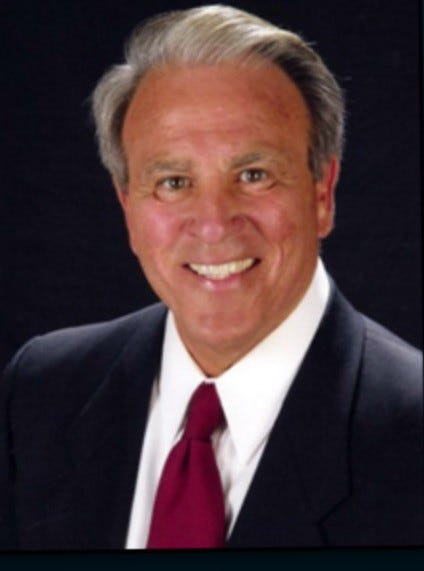
By Dennis Doyle, Opinion contributor | USA TODAY Network