In law school, professors hammered home the foundations of our legal system, principles our forefathers carefully designed and enshrined: respect for precedent, judicial independence, meaningful public accountability, and finality in criminal cases. These are not abstract ideas; they are the guardrails preventing courts from becoming tools of politics or power.
Recent rulings from Ohio’s Supreme Court have shattered that foundation. In three high-profile decisions over the past two years, the conservative majority has overturned long-settled precedents, drawing sharp condemnation from legal scholars, editorial boards and attorneys. This is judicial activism by another name.

Shutting the courthouse doors (December 2024)
In State ex rel. Martens v. Findlay Municipal Court, the court overruled its 1999 Sheward decision and its “public-right” exception to standing. That doctrine lets citizens challenge unconstitutional laws or government actions of great public importance without proving personal injury. Law school taught us standing ensures real disputes. But it also taught us that democracy needs real checks on legislative overreach.
By discarding Sheward, the court insulated lawmakers from accountability and slammed the door on public-interest litigation. Critics rightly called it a major blow to access to justice.
Politicizing the bench (April 2026)
In Disciplinary Counsel v. Rudduck, the majority struck down a 70-year judicial conduct rule banning sitting judges from endorsing political candidates, now making Ohio an outlier state on this issue. The court cast this as a First Amendment protection. Justice Patrick Fischer’s dissent nailed the problem: The ruling came “without any input from, or notice to” the parties, the bar, judges, or the public, and ignored established law.
In law school, we learned that judges must appear impartial. The old rule preserved public trust that decisions flow from law, not partisan loyalty. Now, judges can openly campaign for politicians. Lawmakers have responded with resolutions demanding the ban’s restoration. This isn’t free speech; it’s the erosion of an independent judiciary.
Tilting justice toward prosecutors (July 2026)
In the recent 4-3 State v. King decision, the court overturned a 1987 precedent that treated a trial judge’s post-verdict acquittal, an exceptional judicial ruling used to correct a jury’s guilty verdict, as final. Prosecutors can now seek appellate review to reinstate convictions deemed faulty by the trial judge. Law school emphasized jury verdicts, trial-court discretion, and protections against repeated government prosecution. Finality matters for the system’s integrity. Attorneys warn this disproportionately empowers the government, erodes traditional trial protections and undermines constitutional safeguards.
A dangerous pattern
These rulings share a clear theme: discarding decades of precedent to expand power for the legislature, partisan judges, or prosecutors while weakening checks, impartiality, and individual protections. Stare decisis is not optional; it delivers the predictability and stability Ohioans deserve. When a court repeatedly discards settled law for preferred outcomes, public faith in justice collapses.
I took an oath to uphold Ohio’s Constitution with integrity, independence, and courage. That means applying the law as written, respecting prior courts’ wisdom and keeping politics out of the courtroom. It does not mean rewriting rules to fit the moment.
Everyone in Ohio deserves better. This is not what I learned in law school, and it’s not the Supreme Court we need.
Judge Marilyn Zayas serves on the Ohio First District Court of Appeals and is a candidate for the Ohio Supreme Court.
This article originally appeared on Cincinnati Enquirer: 3 Ohio Supreme Court rulings reveal a troubling judicial pattern | Opinion
Reporting by Marilyn Zayas, Opinion contributor / Cincinnati Enquirer
USA TODAY Network via Reuters Connect
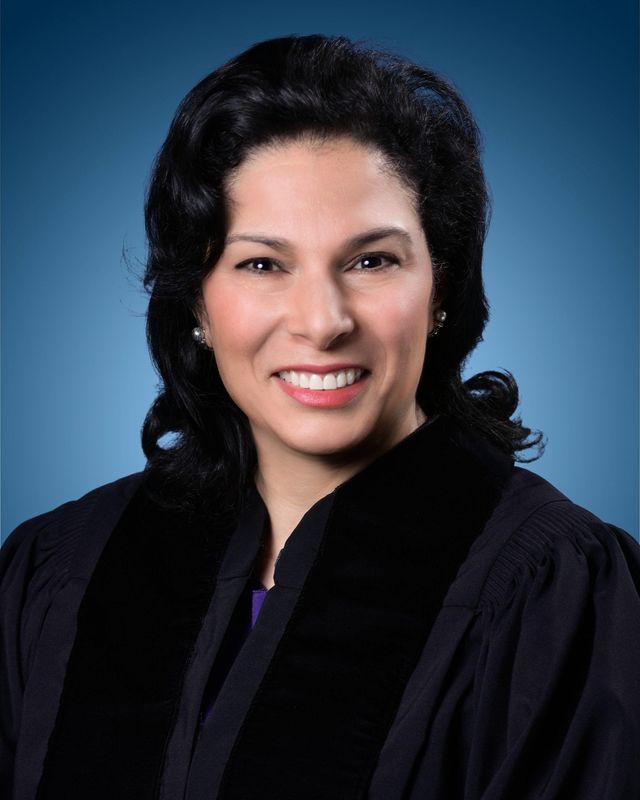
By Marilyn Zayas, Opinion contributor | USA TODAY Network