New York’s rent stabilization law intended to protect tenants from unreasonable rent hikes without bankrupting landlords.
But a recent decision by the Westchester County Rent Guidelines Board has left both tenants and landlords dissatisfied and calling for the state to overhaul the system. Their saga was also part of the complex web of issues driving New York’s housing affordability crisis.

In June, Westchester’s rent guideline board approved a 2% increase for one-year leases and 3% for two-year leases signed between Oct.1, 2025 and Sept. 30, 2026. The new rates will apply to some 28,000 rent-stabilized apartments across 21 Westchester County municipalities.
The vote came after months of surveys, public hearings, presentations aimed at striking a balance: safeguarding tenants from excessive increases while allowing property owners to maintain their buildings and earn a reasonable return.
But the outcome angered some tenant groups that had pushed for a rent freeze, citing in part a need to offset the burden of overall inflation on their household budgets. Landlords also argued the modest increases will prevent them from making essential capital improvements to the properties.
Outcry from landlords on rising costs
Rent stabilization stems in part from a state law that generally covers residential buildings built between 1947 and 1974 with six or more units. Municipalities can opt into the law, known as the Emergency Tenant Protection Act, if their apartment vacancy rate is below 5%, at which point a rent guidelines board is launched to set allowable increases.
In Westchester, 21 municipalities have adopted the law. Nearly 88% of the county’s rent-stabilized apartments are in Yonkers (42%), Mount Vernon (22%), New Rochelle (17%) and White Plains (7%).
While the market-rate rents for a one-bedroom in Westchester soared 34% between 2019 and 2024 — from $1,463 per month to $1,934 — average rent-stabilized apartments lagged behind at $1,640 per month. Annual increases for stabilized units have hovered about 2% since 2019, with a rent freeze on one-year leases in 2020.
Landlords say that ongoing modest caps don’t keep pace with their rising costs.
Alana Ciuffetelli, chair of the apartment owners advisory council at Building and Realty Institute of Westchester and the Mid-Hudson Region, said it’s becoming nearly impossible to keep buildings safe and well-maintained.
“We see more buildings slipping into disrepair because their owners are trapped between regulatory overreach and economic neglect,” Ciuffetelli said. “This model is unsustainable and eventually we’re all going to pay the price.”
A survey of 420 buildings, including 12,736 rent-stabilized units, found a cost to income ratio excluding interest and depreciation of 63.3% in 2024, with insurance costs alone rising 15% from 2023-2024.
A rent-stabilized apartment in Port Chester delays capital improvements
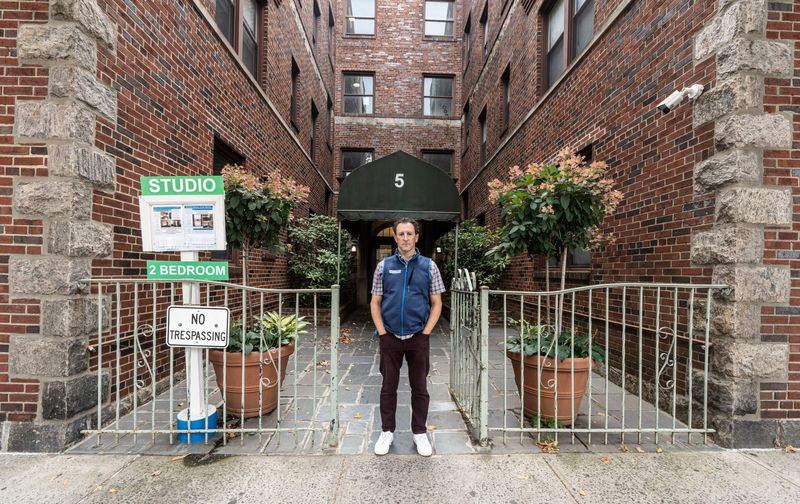
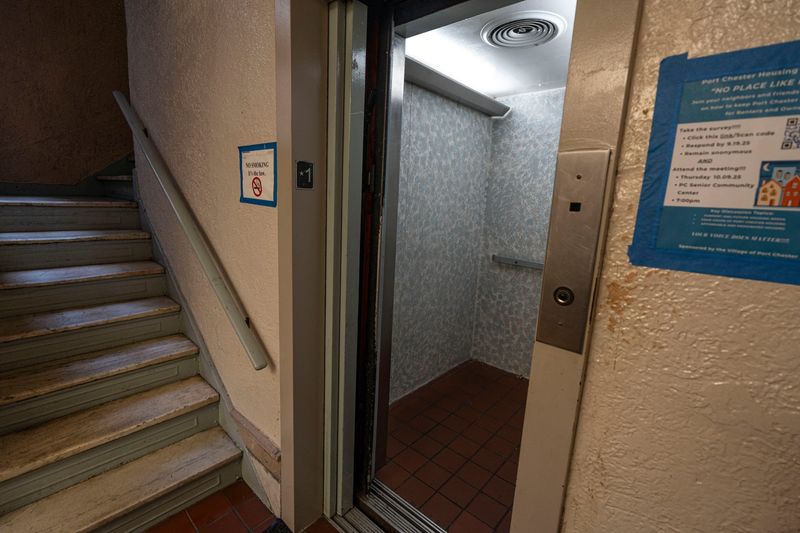
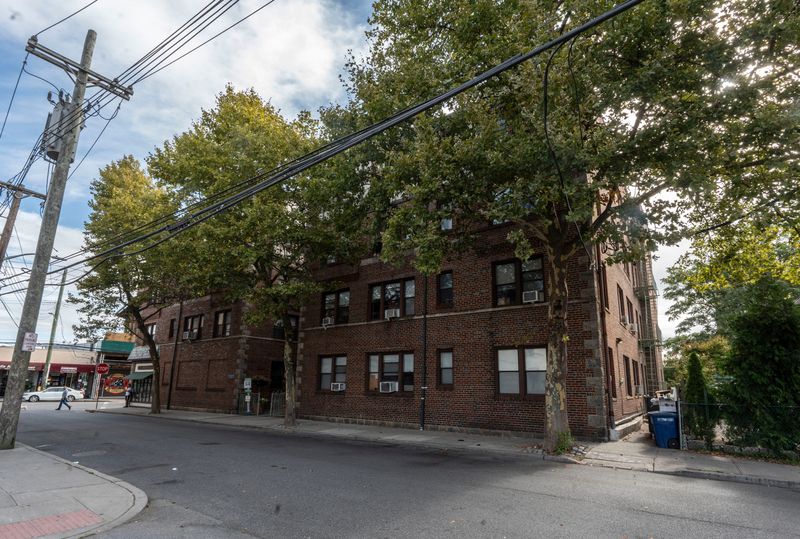
In a four-story rent-stabilized building in Port Chester, the elevator has broken down three times this year. Owner Howie Ravikoff said he has had to postpone a roughly $40,000 replacement because of rising expenses and limited rent revenue. His insurance premiums have surged 300% in five years, he said.
“All these buildings, by the nature of being rent regulated, are old and they’re getting older by the day. This is why it’s so expensive to run them,” Ravikoff said.
The fully occupied 29-units building has seen little turnover in recent years, with monthly rents ranging from $500 to $2,300. Ravikoff said shrinking margins have left him considering selling, though he worries about depreciation. He hopes the government will offer incentives such as tax breaks, capital improvement grants or lower insurance costs to help make the numbers work.
Still, he tries to make the space feel like home. Working with a $200 decorating budget, he lined a hallway wall with dozens of 45 rpm records arranged as an art piece. In another hallway, traffic and construction signs — from stop signs to no trespassing notices — double as decor.
“We have restricted revenue and increasing costs,” Ravikoff said. “It’s a difficult consideration: do we wait to see if something gets better in the future or take the loss today and get out of the risk?”
Tenants call for a rent freeze
For tenants, the rising cost of living has been crushing, especially in Westchester’s major cities where most rent-stabilized apartments are located.
About 54% of households in Mount Vernon, Yonkers and New Rochelle spend more than 30% of their income on rent and nearly one in four households earn too little to afford rent above $875 a month, according to Mount Vernon United Tenants, a nonprofit that assists renters.
Genevieve Roche, interim executive director of Mount Vernon United Tenants, said the board should have frozen the rents, asserting owners are still earning profits while tenants face mounting affordability challenges.
“Landlords have to be willing to accept a lower percentage of profit,” Roche said. “Rent-stabilization is not intended as a market-rate investment. The purpose is to cover costs, allow a reasonable profit and keep rents as low as possible.”
Longstanding debate on systemic problems
Rent control remains a hotly debated issue across New York. In the recent New York City mayoral race, candidate Zohran Mamdani led the race partly because of his rent freeze promise and faced scrutiny for paying $2,300 for a one-bedroom while earning $142,000 as a state lawmaker.
Westchester, Rockland, Ulster and Nassau counties are the only four communities outside New York City that have adopted the state rent stabilization law. Unlike affordable housing programs in new developments, rent-stabilized units have no income-eligibility requirements.
Tim Foley, chief executive officer of Building and Realty Institute of Westchester and the Mid-Hudson Region, said the system requires state-level changes, including transparency on who occupies the units, tailored caps for different categories of landlords and clearer data projections for board members.
“The board members are operating within a broken system and they don’t have a lot of discretion in how to proceed,” Foley said.
The board is tasked with weighing the economic conditions of the residential market, including taxes, utility rates, maintenance, financing and cost of living.
Roche, a former member of the Westchester County Rent Guidelines Board, said members aren’t given enough time to deliberate. She supports creating separate categories for landlords based on the number of units they own.
“The board members work very hard. They digest a lot of information and make a very difficult decision every year,” Roche said. “I wish the process was laid out in a way to give them more time to evaluate testimony. Both landlords and tenants are frustrated because they don’t understand how the board members decide on the rate they vote on.”
A rent guidelines board is composed of two tenant representatives, two property owner representatives and five public members. In Westchester, members are nominated by the County Board of Legislators and appointed by the New York State Division of Homes and Community Renewal.
As of Sept. 23, the board had not responded to an inquiry regarding the rationale behind the decision.
Helu Wang covers economic growth, real estate and education for The Journal News/lohud and USA Today Network. Reach her at hwang@gannett.com.
This article originally appeared on Rockland/Westchester Journal News: Westchester rent-stabilization rates frustrate landlords and tenants. Can NY fix it?
Reporting by Helu Wang, Rockland/Westchester Journal News / Rockland/Westchester Journal News
USA TODAY Network via Reuters Connect