The crowd noise can no longer be ignored.
For at least the last decade, a system that allows private schools to compete for sectional and state championships alongside public schools where talent pools are restricted by district boundaries has been a source of debate.

There has been some yelling and screaming, too.
A string of proposals and counterproposals at the state level resulted in a New York State Public High School Athletic Association (NYSPHSAA) resolution earlier this year that Section 1 administrators insisted would have little impact on the issue of competitive fairness.
One way or another, changes are coming.
If administrators in Section 1 get their way, NYSPHSAA will be forced to go beyond the recently approved oversight committee many deem incapable of restoring a competitive balance and draw up plans for a playoff system that separates public and private schools.
If representatives from the 11 NYSPHSAA sections on Friday elect to go in a less controversial direction, Section 1 is likely to vote on a constitutional amendment that will leave four member schools with a difficult decision to make.
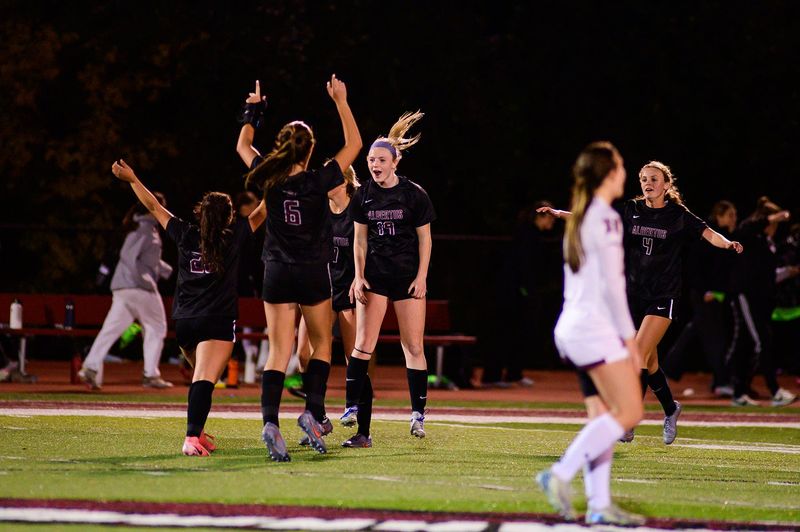
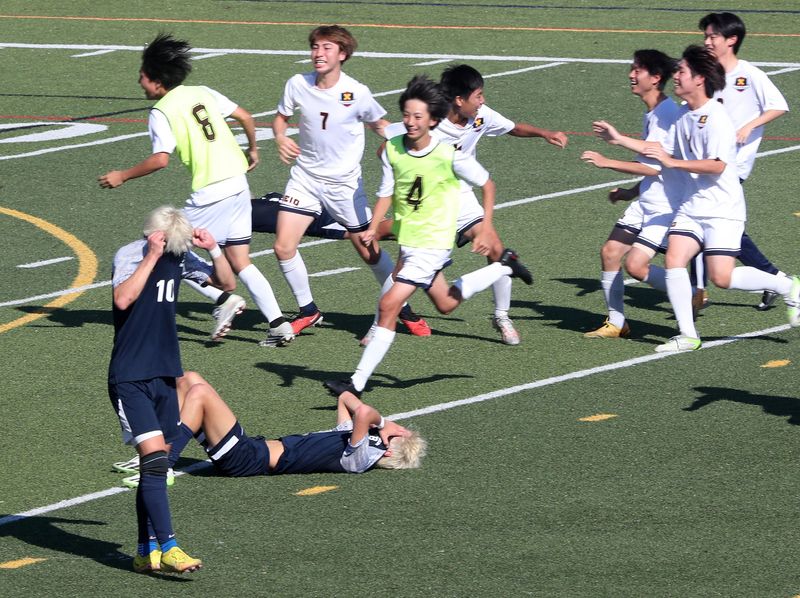
Albertus Magnus, Ursuline, Leffell School and Keio Academy would essentially be excluded from traditional Section 1 and NYSPHSAA postseason tournament play, starting with the 2027-28 school year.
“We’ve gotten here because of the inaction of the NYSPHSAA,” Clarkstown School District superintendent and Section 1 President Marc Baiocco said. “We need to get them to realize there are structural inequities that exist across the state. … There are predictable results when a school can assemble rosters from a regional talent pool that no public school can draw from.”
As schools without boundaries, Albertus Magnus, Ursuline, Leffell and Keio can pull talent from multiple towns, states and even countries. They are prohibited from any kind of direct recruiting by state and sectional rules.
The four schools have full athletic programs with high participation rates and varying degrees of success.
So far this calendar year, there have been 28 Section 1 championship games in football, boys and girls soccer, field hockey and boys and girls basketball. Only three non-public school teams went home with titles, and they all happened to be from Albertus Magnus.
“I think what you’re seeing is powerhouse teams emerging,” said Putnam Valley superintendent Jeremy Luft, who is president-elect of the Lower Hudson Council of School Superintendents (LHCOSS) and sits on the NYSPHSAA Central Committee and Section 1 Executive Committee. “It’s easy just to count championships, but if you look at it from an opportunity loss for students, how many public school students never had an opportunity to participate in that championship by virtue of whatever powerhouse made their way through sectionals and eliminated a bunch of teams along the way, then they made their way through regionals and eliminated more public schools, then in the semifinals or finals did the same? It’s a much greater number.”
A number of local superintendents have grown frustrated with NYSPHSAA executive director Robert Zayas and have suggested the state education department needs to get involved.
“I’ve been involved in Section 1 athletics for about six years now and this is my second go-round as president,” Baiocco said. “The (NYSPHSAA) is a membership driven organization, but there’s no governing body that oversees it. Oftentimes, when we speak to Dr. Zayas, we’re getting a very nebulous answer, if any, and we’re not getting any type of leadership that’s coming out and saying, ‘OK, we recognize there are inequities here, and we need to move to a more equitable environment where students in public schools aren’t being disenfranchised anymore.’ ”
A bill proposing separate interscholastic championships for public and non-public schools was introduced last year by New York State Assemblyman Matt Slater (R-Yorktown) but failed to gain traction.
How did we get here?
Interscholastic athletics have increased exponentially in size and scope over the last 20 years. Parents have never been more influential, and they are primarily responsible for the increased volume level when a public school is sent home from the playoffs by a private school team.
Yes, there are trophy hunters in the conversation but they are outnumbered by folks who have witnessed the heartbreaking end of a memorable season at the hands of a private school that plays by different rules. The outcry resulted in NYSPHSAA forming the Schools Without Boundaries ad hoc committee to explore solutions.
During the initial meeting in October 2024, Zayas cautioned that prohibiting non-public schools from competing in state championships in any way could lead to potential legal and legislative challenges.
The state association’s legal counsel, Renee James, provided a historical review of related litigation at the meeting and noted that separating non-public schools into their own classification is unlikely to hold up in court. She further urged the committee to consider the legal challenges when evaluating future proposals.
During the following meeting, in February 2025, Section 1 shared a team sports proposal to establish a separate postseason for schools without boundaries. The framework loosely mirrors a system used by the New Jersey State Interscholastic Athletic Association. Private schools would remain members of their respective leagues and sections for the regular season, but would participate in two newly formed postseason classifications based on enrollment, starting with sectional tournaments.
“Our goal is equity, not exclusion,” Baiocco said. “We’re not suggesting that during (regular-season) play, we eliminate non-public schools. I’m a big proponent of playing non-public schools in regular competitions, because it gives our students a competitive advantage in future games. Our objective here is to create an equitable situation for our students. It’s just demoralizing when our students advance to the sectional level and they’re getting beat by teams they just can’t compete against in terms of rosters.”
The response from ad hoc committee members included concerns of potential lawsuits over what some might view as a discriminatory action. Questions about classifying schools that accept tuition-paying students were also raised and it was mentioned that separating the non-public schools would water down the level of competition and diminish the prestige of NYSPHSAA championships.
There were a number of other potential solutions introduced, as well.
Section III (Syracuse area) proposed the creation of three postseason classifications for schools without boundaries as defined by NYSPHSAA. That was met with a suggestion that the committee, instead of looking for ways to separate member schools, needed to focus on enforcing existing rules against recruiting violations.
Section IV (Binghamton area) raised the possibility of schools without boundaries facilitating their own state championships.
The state association proposed creating a Class AAA in football and Class AAAA in basketball, allowing public schools who lose in sectional finals to enter the state playoffs in the new division.
A motion to combine the Section 1 and NYSPHSAA proposals was rescinded. The committee instead decided to conduct a survey to collect data on public schools that allow tuition-paying students and to fine tune the combined Section 1 and NYSPHSAA proposal to explore a potential compromise.
The idea of an oversight committee with the power to change the classification of schools that become dominant in postseason tournaments was also deemed worthy of further thought.
During the April 2025 meeting, Section 1 representative Joe Sigillo, the Nyack athletic director, expressed the growing frustration of the Lower Hudson Council of School Superintendents and voiced concern about the inaction of NYSPHSAA.
“There is a very definite disconnect between superintendents and those representatives at the NYSPHSAA table,” Luft said. “There are more and more superintendents that are speaking up who may have been unaware of what was going on. And that’s something we’ve seen across the state, where people felt they didn’t have a voice in this process, that are now speaking up.”
The previous Section 1 proposal received little support. A motion to empower an oversight committee and establish criteria for classification of non-public and charter schools and procedures to handle school and sectional appeals was approved with a 9-2 vote.
Section I and Section XI (Suffolk County) were opposed.
The ability of a state-level oversight committee to move championship teams up a classification might derail a dynasty, but it could also strengthen a non-public school by guaranteeing better competition. Strength of schedule is a selling point for programs looking to attract top athletes.
Christian Brothers Academy in Syracuse narrowly beat Somers to win the NYSPHSAA Class A football title in 2021 and got moved up by Section III the following season. The Brothers have won the last three Class AA state titles. There are five public schools in Section III who vacated a competitive football league ahead of the 2026 season to avoid regular-season meetings with the Brothers, who haven’t lost in three seasons.
It’s essentially a protest highlighting the issues that have resulted in a competitive imbalance.
Here in Section 1, Albertus Magnus won the NYSPHSAA Class AA girls basketball championship in 2024 and the Falcons promptly tacked on two more titles after they were bumped up to AAA the following season.
At the June 2025 meeting of the ad hoc committee, Zayas noted the oversight committee proposal had the most support and, with NYSPHSAA assistant director Todd Nelson, offered a proposal that included guidelines for potential movement between classifications.
Modifications were approved three weeks later, and the proposal was set up for a vote during the October NYSPHSAA Executive Committee meeting, where it passed by a 20-2 vote.
So now each section evaluates non-public and charter schools for promotion based on four criteria – a .750 winning percentage in league or state classification, winning a league title or playoff championship, reaching a sectional tournament semifinal or winning a NYSPHSAA championship.
Teams can be moved up or down based on those criteria and the seven-member Classification Oversight Committee, which has a rep from each class and one private school member, will hear all appeals and proved a binding ruling.
Essentially, after 14 months of study and discussion, the ad hoc committee’s answer to the current state of interscholastic competition was installing an oversight committee to shuffle the deck when a private school rattles off a string of state championships.
A mulligan for the NYSPHSAA ad hoc committee
It’s a resolution that inspired the LHCOSS to fire off a letter demanding a more thoughtful solution. Section 1 last February presented a Sectional Concern at the quarterly NYSPHSAA Executive Committee meeting, which refired the debate.
The state brought its ad hoc committee back into play, this time adding superintendents from each of the 11 sections. Perspective at last month’s reconvening was provided by interscholastic executive directors from Michigan, Alabama, Louisiana and New Jersey who conduct separate championships for public and private schools.
“I think New Jersey is an exemplar,” Baiocco said. “I think New Jersey has leadership at the state level that has made a very equitable situation for New Jersey. We continue to call upon the NYSPHSAA leadership, asking them to help us, and they have done nothing.”
A number of previously-stated concerns were raised again during the meeting along with additional cost and logistical issues that would come with two additional classes at the sectional and state level.
Representatives from each section on Friday will vote to determine where NYSPHSAA goes from here. There are three options:
If the results call for abandoning the (COC) plan, the state will then begin to construct a new postseason model. There will undoubtedly be immediate questions about the timeline and the approval process.
“Are there some sports where, after doing the analysis, they decide there’s simply not enough open enrollment schools for this to work, I think that’s the responsibility of the NYSPHSAA leadership to decide there are exceptions for every rule,” Luft said. “If there’s a sport where this isn’t going to work and it’s going to end up disenfranchising kids, then we should come up with another model for that specific sport. But we certainly can say in football and basketball and soccer, there are enough teams.”
Albertus Magnus is the only non-public football school in Section 1.
Providing the private schools a similar experience to a parallel NYSPHSAA public school championship and matching the depth of the New Jersey model could be difficult in many sports. Would the state consider recruiting New York Catholic High School Athletic Association and New York Association of New York Association of Independent Schools teams?
Bringing all of the associations together would likely require navigated some three-story hurdles so it’s probably a longshot.
It’s a tired refrain that has to be noted, parents of students attending private schools do pay taxes which directly or indirectly fund Section 1 and the NYSPHSAA.
In case of emergency, break glass
Athletic directors from the 78 member schools in Section 1 were informed of a proposed amendment to the section’s constitution during a regularly scheduled March 11 meeting. It was adopted by the Section 1 Executive Committee on March 23 during a special meeting that included a review of the state ad hoc committee’s latest meeting.
It would make non-public schools in the section ineligible for Section 1 tournament play. Albertus Magnus, Ursuline, Leffell and Keio would have the option to compete against each other in a parallel tournament but would not be allowed to advance to the NYSPHSAA tournament.
“The logistics would have to be worked out, but I think the vision would be to play it alongside the Section 1 tournament and provide the same championship experience,” Section 1 executive director Todd Santabarbara said.
While the schools are not far apart in terms of enrollment, Albertus and Ursuline are typically far more competitive than Leffell and Keio in most sports. There is a competitive imbalance there, as well.
The four schools impacted were informed the potential amendment before the Section 1 public schools.
“We met with them in early March to share with them an update about what was happening at state level,” Santabarbara added. “We reviewed the ad hoc schools without boundaries committee’s resolution and shared our local discussions.”
The amendment is not a fix-all.
Removing the private schools likely makes the path to a sectional championship a little easier, but the potential of an immediate regional meeting with Our Lady of Lourdes or CBA-Albany still exists for some of the winners.
The Section 1 Athletic Council will consider a referendum ballot measure at its April 28 meeting. Each school would have a vote and passage would require a two-thirds majority.
“I think this Section 1 proposal is purposely timed to coincide with the state proposal, because everyone is still hopeful that a statewide resolution can be reached, which would make the sectional proposal mute,” Luft said. “The sectional proposal is there in the event that the state does not act. Obviously, Section 1 doesn’t have the ability to fix a statewide problem, but there’s still enough concern for those students attending public schools within Section 1 that superintendents and athletic directors feel obligated to do something. And it may not be what we want to do, but it’s what we can do at the local level to fix what’s really just kind of an injustice. I believe strongly that no public high school students should be put at a competitive disadvantage just by choosing to attend their local school district.”
Albertus Magnus, Ursuline, Leffell and Keio could elect to stay in the section or play an independent schedule and live without a postseason. They could also elect to join another league. When it was banned from Section 1 for the 2013-14 season over improper recruiting violations, Kennedy Catholic moved to the CHSAA.
The four impacted schools appear to be fact finding at this point.
Administrators from Albertus Magnus, Leffell and Keio declined to comment at this time and Ursuline issued a statement.
“The Ursuline School is aware of a Section 1 proposal that could limit postseason opportunities for some member schools. We are actively engaged in the process and continue to monitor developments closely. While no final decision has been made, we believe every scholar-athlete deserves the opportunity to compete fully, and we remain committed to protecting those opportunities for our students.”
Parents at Ursuline and Albertus Magnus were brought up to speed via emails.
Get my lawyer on the phone
There’s a reason why NYSPHSAA’s legal counsel reminded the ad hoc committee at the beginning of this meandering process that in the event of litigation, the association has a $100,000 deductible to meet under its Directors and Officers insurance.
Section 1 is covered under that same policy, according to Santabarbara.
It was further explained the deductible is per claim and under certain federal statutes, plaintiffs could potentially recover attorney fees if successful.
Baiocco doesn’t believe a challenge from any of the private schools in Section 1 would stand up in court.
“Quite honestly, I can’t see how,” he said. “We’re giving them adequate time. We’re making changes to the bylaws that would have to be voted on by the membership, and if the membership votes on it, I don’t understand what their argument would be. Rather, I think we have a fair defense, that there are clear structural imbalances here, clear structural unfairness for public school students.”
There would be additional costs to cover things like facility use, referees, custodial services and security at the sectional and state level if the NYSPHSAA adopts separate parallel tournaments.
For example, completing the state basketball tournament would likely take an extra day with the addition of four more games. That event already runs four days, so it’s conceivable NYSPHSAA would have to discuss scaling back its public school classifications or utilizing multiple sites.
If nothing else, Section 1’s amendment proposal is a clear signal that administrators in this part of the state are done sitting on their hands, waiting for a solution.
“It’s Section 1’s desire to say we need to do something about this, and because of NYSPHSAA’s inaction, we need to create a more equitable environment for our students. We’re resolving this issue that, quite honestly, has been around for decades now,” Baiocco said.
Mike Dougherty covers high school football, basketball and lacrosse for The Journal News/lohud.
This article originally appeared on Rockland/Westchester Journal News: Section 1 amendment could lead to private schools’ departure
Reporting by Mike Dougherty, Rockland/Westchester Journal News / Rockland/Westchester Journal News
USA TODAY Network via Reuters Connect