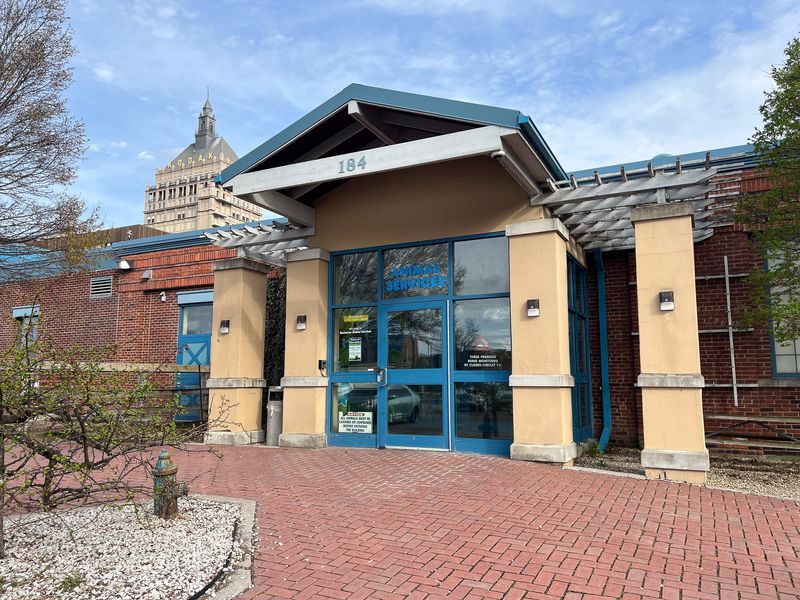
Later this year, Rochester Animal Services will be operated out of half of its facility due to renovations to help improve efficiency for the team and volunteers.
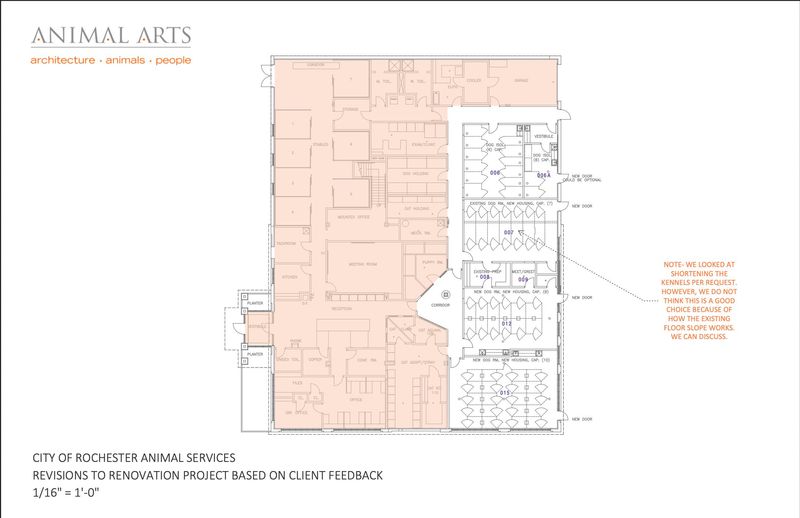
The updates will include replacing all the dog kennels, changing the floors for new drainage, splitting one large room into two to help reduce stress for dogs, creating an isolation area to help prevent spreading disease to the general population, replacing the windows and adding exterior doors to help assist traffic flow.

Currently, the facility only has two entrances – the main entrance and one in the back corner of the building.
“When dogs are moving in and out of the shelter to go for walks – two or three times a day – they have to walk through all of their friends in their rooms and then go out that door that is on the opposite end of the building,” said Staci Papadoplos, the director of RAS. “Once every dog room has its own door, they can just pop outside from their space, go on their walkie and come right back into their space so there’s a lot less cross traffic.”
For these changes to be possible, RAS will need to foster out 36 dogs, about half of their population.
While the dogs are in foster homes, their empty kennels will be upgraded as the other half of the dogs wait patiently for the renovations to be completed. After the first portion of renovations is completed, the dogs staying in the facility will move to the upgraded kennels so that renovations can begin in the area that they were staying in.
People who decide to foster will receive assistance from RAS for the basic needs of the dogs.
“We try to provide everything that the foster needs including, the basics of supplies, if you need a crate, food, toys, bedding, anything that you might need to physically support the animal in your home,” said Christie Hall, the foster care and transfer associate at RAS.
Each foster will have a volunteer foster coordinator to contact for assistance and check-ins as needed.
Misconceptions about pet fostering
Many of the dogs at RAS go in as strays or brought to the facility by concerned residents or animal control. Due to this, it is hard for the team to pinpoint the animals’ backgrounds and traumas.
Hall explained that RAS is a blank slate for most of the dogs where the staff and volunteers can learn about each animal from scratch.
“We always let fosters know what we’re seeing in the shelter, and that’s oftentimes why we’re soliciting fosters – if an animal isn’t doing well here. There’s always going to be an adjustment period, even with a ‘perfect’ animal in the shelter,” Hall said.
According to Hall, being placed in a foster home is a chance for the dog to decompress, learn routines and build trust with new humans in their lives.
“The reward of seeing that animal start to open up in your home, pretty much always, outweighs that stressful transition period,” Hall said. “The idea that this dog is now relaxed – you get to see their personality. They’ll start to play – they’re dogs again, which is super cool.”
Hopes for the dogs
Hall believes that fostering an animal is one of the most heartwarming and rewarding feelings a person can experience due to the relationship that is built between the animal and the human.
While the dogs are being fostered, getting dogs into permanent homes is still RAS’s main priority. They will run adoption events as normal. Fosters can help in this effort by posting to their social media platforms, promoting their dogs and how they are doing outside the shelter.
This allows people looking to adopt an idea of the dogs’ personalities, how they live with kids, other dogs and more.
“Fosters often say the hardest thing they have is when they have to let the animals go at the end,” Hall said. “You’ve helped this dog transition from a traumatic stay in a shelter. They’ve become a dog in your home, and now you’re trusting some other human to take care of this dog.”
Papadoplos hopes that the efforts don’t stop there.
“We’re doing this push, and we want people to understand what fostering is,” she said. “What we all hope for this push is that it doesn’t just end up with you fostering one dog – we want you to become one of our foster parents.”
After one of the 36 dogs is adopted from their foster home, Papadoplos hopes that the fosters take in another dog and continue the cycle.
How to get involved
Although there is no set start date for the construction or fostering timeline, interested people can begin applying to foster now.
If you’re interested in fostering, the process is straightforward. You can either fill out a foster application online or email Hall at christie.hall@cityofrochester.gov.
“Anytime you’re volunteering, I think it brings a sense of wellbeing to you and it’s really food for your mental health,” said Hall. “It makes you a part of our community. You’re supporting us. You’re supporting the animals in the community. I think that’s incredible.”
— As a Rochester native, Justice Marbury entered the world of journalism to create work where voices like hers were heard—the voices of minority communities. Marbury covers small businesses, neighborhood concerns, and the interesting people who live in Rochester’s 19th Ward. As the 19th Ward reporter, she has helped implement community outreach ideas by asking what people in various communities want to read about themselves in addition to regular news. Contact her on Instagram @justice_marbury and by email at jmarbury@gannett.com.
This article originally appeared on Rochester Democrat and Chronicle: Rochester Animal Services seeks fosters ahead of renovations
Reporting by Justice Marbury, Rochester Democrat and Chronicle / Rochester Democrat and Chronicle
USA TODAY Network via Reuters Connect