Do you want to feed the hungry and keep landfills from growing so quickly?
There’s a way to do both at the same time in Oneida County.

Most people have to be awfully hungry before they think of trash as food. But the volunteers at ResQ2Feed Oneida County Inc. realize that stores, restaurants, institutional cafeterias, food processors and other businesses that make and/or sell food, end up throwing out a lot of food that is still good to eat. It could be leftovers, food that’s too close to its expiration date to sell or produce that’s about to look less healthy.
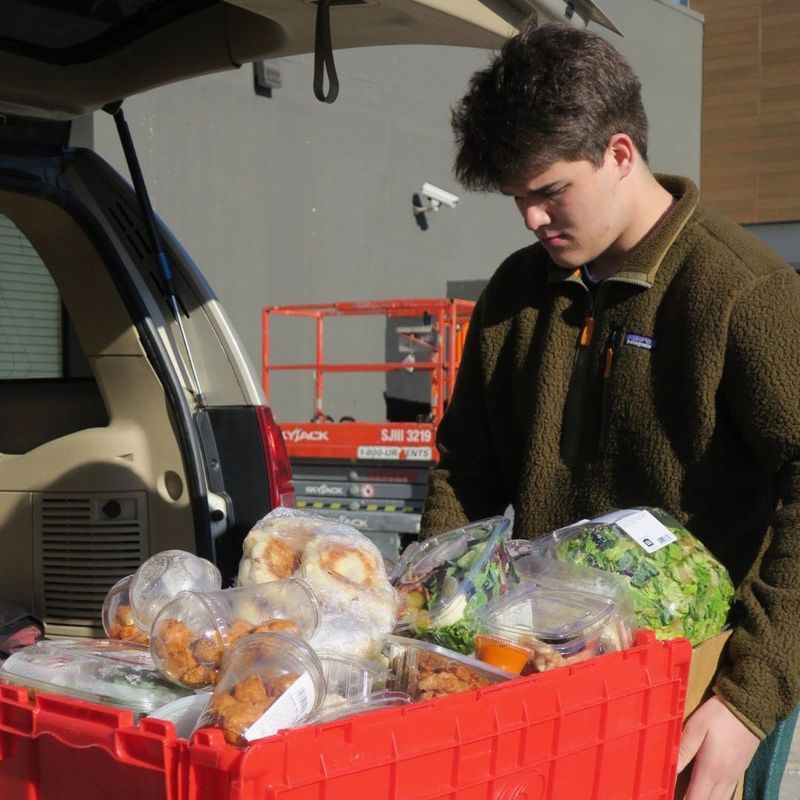
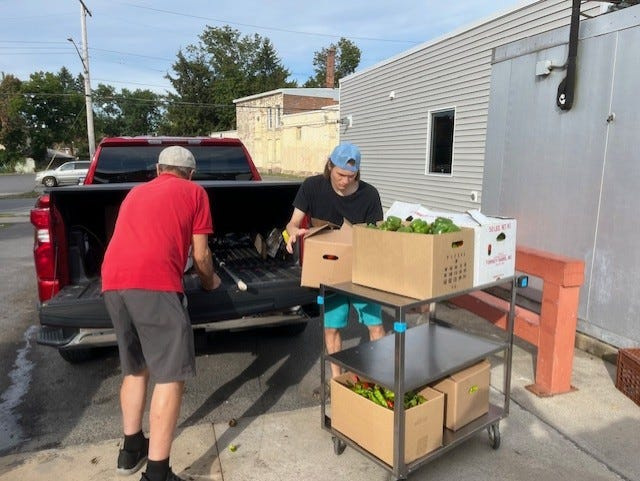
And that’s when ResQ2Feed volunteers, alerted by the business with the surplus food, swoop into action, picking up the food and delivering it to a local nonprofit or taking it to an affordable apartment complex or someplace else where people who might be food insecure congregate.
“It’s really a solution to food insecurity in the community,” said ResQ2Feed founder and Executive Director Armand Mastraccio, “because you have food waste. If you have a manner of picking that food up for recovery of it and distributing it to people in need, you’re solving two problems in the community.”
The nonprofit organizes its rescues through an app developed by the Food Rescue Hero Network, which parters with local food rescue organizations. ResQ2Fees is the network’s 23rd partner and its first in New York.
And the nonprofit, founded in April of last year, will get a boost from a New York State Pollution Prevention Institute (known as NYSP2I) Community Grant Program to help it spread the word to local businesses on how to reduce food waste.
A state law requiring businesses and institutions that generate two tons or more of food waste a week on average to recycle that waste will expand to cover more entities in 2027 and more in 2029. That gives ResQ2Feed an opportunity to partner with more businesses and groups looking for affordable and impactful ways to obey the law, Mastraccio said.
In Oneida County, 13% of residents — and one in five children under the age of 18 — are food insecure, Mastraccio said. There’s more than enough food in the county to feed them all; 21,000 tons get wasted every year in Oneida County, he said.
“The strength of this program is that it deals with the logistics of getting food from where it is to where it has to be,” Mastraccio said.
How effective has ResQ2Feed been?
The nonprofit started food rescues in April 2025 and in the next 12 months volunteers picked up 162,000 pounds of food (almost 45,000 pounds of it produce) in more than 1,100 rescues.
So far, most of the food has come from grocery stores, convenience stores, some institutions and food distributors. An agricultural program at Mohawk Correctional Facility in Rome has donated its harvest, too, Mastraccio said.
It was delivered to soup kitchens, food pantries, other nonprofits, public housing and senior centers, often delivering food straight to the people who need it within an hour of the pickup.
Those rescues accounted for 127,000 meals, Mastraccio said.
And they offset 165 tons of carbon emissions because food waste is one of the biggest sources of carbon dioxide, he added.
How does it work?
Donors let ResQ2Feed know that they have extra food by calling or by filling out a form on its website. Some donors just make a one-time, random donation and others have regularly scheduled pickups.
Community volunteers download the app and register as volunteers, indicating at which days and times they might be free for rescues, as well as where they’re located. When a rescue is needed, the app will ping volunteers who have indicated that they are free at that time and who are located close to the pick-up point.
So far more than 100 volunteers have signed up, although they are not all active.
Volunteers can then “claim” a rescue, go to pick it up and deliver it to its destination. One rescue can go to as many as three recipients.
“Most rescues are completed within an hour,” Mastraccio said.
Donors save money on disposal costs for food waste and may be eligible to deduct the donation on their taxes.
Find out more on the all-volunteer nonprofit’s website.
What about food safety?
ResQ2Feed is in charge of making sure donors have followed all food safety guidelines, that its volunteer continue to do so and that recipients have the ability to keep food fresh until it’s given away. The one-hour timeline for typical rescues helps to make sure that happens, Mastraccio said.
“So potentially the things we’re distributing can potentially be to somebody’s dinner table that evening,” he said.
And, he added, that donors are covered by federal and state Good Samaritan laws shielding them from liability if they donate food in good faith, believing it to be unspoiled.
How will the state grant be used?
“From Surplus to Sustenance: Engaging Oneida County Businesses in Food Waste Prevention,” the project being paid for by the state grant, will run from October through September, 2027. ResQ2Feed will deliver a series of business education workshops to grocers, restauranteurs, retailers, convenience stores, hotel, food manufacturers and other establishments generating food waste.
The goal is to teach them about complying with the food waste law, food waste prevention practices and working with ResQ2Feed.
The grant will also cover development of a Business Food Waste Prevention Toolkit with information on reducing food waste.
The goal is the enrollment of at least 20 businesses in active food rescue participation by the end of the grant period.
What does the state law say?
The Food Donation and Food Scraps Recycling Law went into effect in 2022, requiring any business or institution generating at least two tons of food waste a week on average to recycle that food if an organics recycler operates within 25 miles.
The law will expand on Jan. 1 to cover businesses and institutions generating one ton of food waste a week or more on average and to apply if a business is within 50 miles of a recycler.
On Jan. 1, 2029, the law will cover entities that generate at least a half-ton of food waste a week on average.
The Oneida-Herkimer Solid Waste Authority offers food recycling. It has had a Source Separated Organics Processing Facility at its Eastern Transfer Station in Utica since 2019. It processes the food waste and then sends it to the Oneida County Water Pollution Control Plant where it is anaerobically digested and used to offset the energy demand of the control plant.
This article originally appeared on Observer-Dispatch: Oneida County food rescue group turns surplus food into 127,000 meals
Reporting by Amy Neff Roth, Utica Observer Dispatch / Observer-Dispatch
USA TODAY Network via Reuters Connect
By Amy Neff Roth, Utica Observer Dispatch | USA TODAY Network