America turned 250 years old this summer. I organized a timeline of local history for a talk given earlier in July. This is part one of a three-part series. Included here are my highlights from early times to the 1850s.
There were dinosaurs in New York, but no skeletons have been discovered. Coelophysis dinosaur footprints were found near the Tappan Zee Bridge, dating to 200 million years ago. We did have woolly mammoths around 50,000 years ago. Their skeletons have been found locally.

1500s-1700s: The Seneca, the largest of the six Haudenosaunee (Iroquois) nations, whose democratic government predates the U.S. Constitution. They historically relied on the “Three Sisters” — corn, beans, and squash — and today more than 8,500 citizens and their families continue this legacy through tourism, gaming, cannabis, and cultural initiatives.
1730s: “Kanaweola” was one of seven Indian villages in Chemung County. The name was a not-very-pleasant Seneca word meaning “head on a pole.” In the 1730s, a Seneca chief was tried for alleged treachery to his tribe, convicted, and decapitated. They placed his head on a pole as a warning to others. This spot was at the confluence of Newtown Creek and the Chemung River (the Exit 56 area on Water Street at Interstate 86). Kanaweola was a village of 20 well-built houses. General John Sullivan’s army destroyed the town.
1779: The Battle of Newtown on Aug. 29, 1779, was the only major battle of the Sullivan Expedition, an armed offensive led by Major General John Sullivan that George Washington ordered to end the threat of the Iroquois who had sided with the British in the American Revolutionary War.
1783: Matthias Hollenback opened a trading post at Newtown (now Elmira). He was an American Revolutionary War soldier, judge, and merchant along the Chemung and Susquehanna Rivers.
1779: Although named the “Treaty of Painted Post,” it was actually signed in Elmira. Col. Timothy Pickering, a commissioner appointed by President Washington, negotiated the Treaty of Painted Post with the Iroquois Indians, which ended warfare between the Six Nations and the white settlers in New York State.
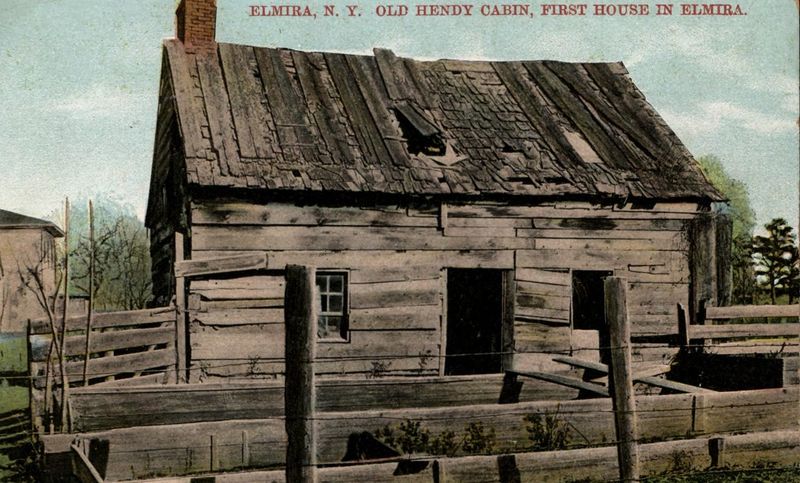
1788: Our first settler, John Hendy, came back after the Battle of Newtown. His first cabin was along Newtown Creek and the Chemung River. He eventually moved his cabin to near Rorick’s Glen Parkway in 1796. John was 6 feet 7 inches.
1800: The story of Elmira’s name — a saloon owner’s daughter curled up in Judge Coryell’s arms at the Teall saloon. Her name was Elmira.
1819: John Arnot, Sr. came to Elmira. He was a generous man; he employed the freedom-seekers. It is said that those who sought refuge with him found themselves safe — one of our early abolitionists.
1824: The end of Chemung River ferry at Madison Ave; new toll bridge at Lake Street. Our river was narrower and deeper than it is today.
1828: A dam was built across the Chemung River by the Chase-Hibbard flour mill. Their flour was labeled “XXX” or “Seal of Minnesota.” College Avenue used to be called Mill Street.
1833: The Chemung Canal connected Seneca Lake at Watkins Glen to the Chemung River at Elmira, New York. The canal could not compete with railroads and was not used after 1878.
1840s: Several mastodon or mammoth tusks were found — and lost — after being sent to conservators.
1846: The Park Church began with an origin tied to slavery. Forty-one members left the First Presbyterian Church to form a congregation committed on Christian grounds toward abolition.
1848: The Plank Road ran the entire route from Lake Street bridge to the Pennsylvania Line. It allowed for the commercial transportation of goods to Elmira and the Chemung Canal.
1849: Our early beginnings of railroads in Elmira began on Oct. 2, 1849. The first New York and Erie (NY&E) train arrived in Elmira, marking the start of regular passenger service just six days later, with two trains each way per day.
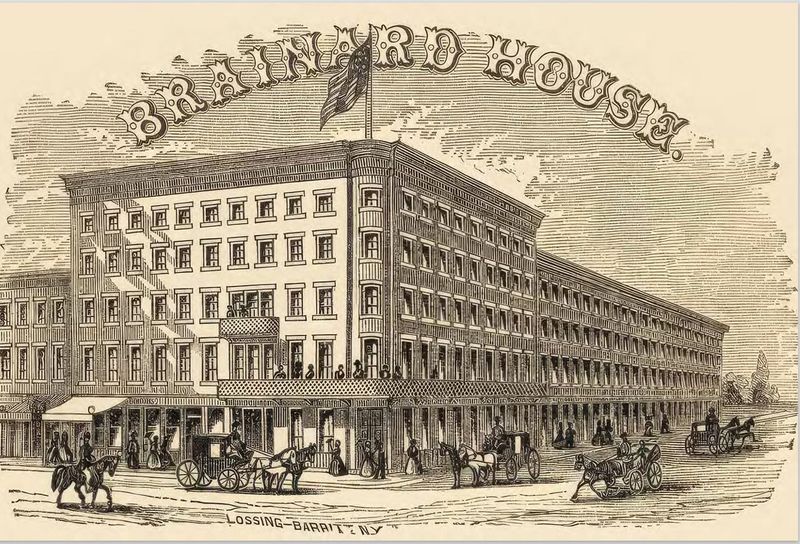
1851: President Millard Fillmore and Daniel Webster came to the Brainard House to celebrate the completion of the Erie Railroad to Dunkirk. The Brainard’s chef served them stewed oysters. The president said the meal was “admirably arranged and cooked.”
— Elmira city historian Diane Janowski writes a biweekly column.
This article originally appeared on Elmira Star-Gazette: Key events during early history of Elmira area through 1851 | Column
Reporting by Diane Janowski, Special to the Star-Gazette / Elmira Star-Gazette
USA TODAY Network via Reuters Connect
By Diane Janowski, Special to the Star-Gazette | USA TODAY Network