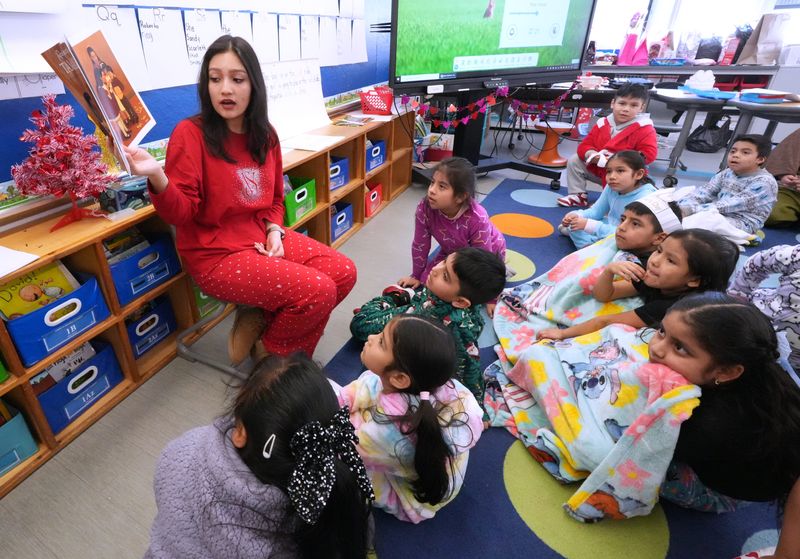
East Ramapo, a district that has among the lowest test scores in the state, suffers from a significant chronic absentee rate. Nearly a third of public-school students in the K-12 district are considered chronically absent.
At the high school level, that chronic absentee rate is more than 44%. A student is considered chronically absent if they have missed at least 10% of their instructional days.

Chronic absenteeism is among the issues state-appointed monitors and the New York Department of Education have mandated the district to address.
The issue is addressed in the district’s state-mandated long-term strategic academic and fiscal plan. The district has outlined a plan to tackle chronic absenteeism, including reviving night and weekend classes for kids who have to work or have family obligations. But it remains unknown when progress will be made.
Data shared by Bhavin Gandhi, assistant superintendent for technology & information management, shared a closer look at chronic absentee rates during a Dec. 9, 2025 board meeting. As the months in the 2025-2026 school year went on, the chronic absentee rates continued to top 31%.
Absences for any reason, excused or unexcused or as a result of suspensions, count toward being considered chronically absent.
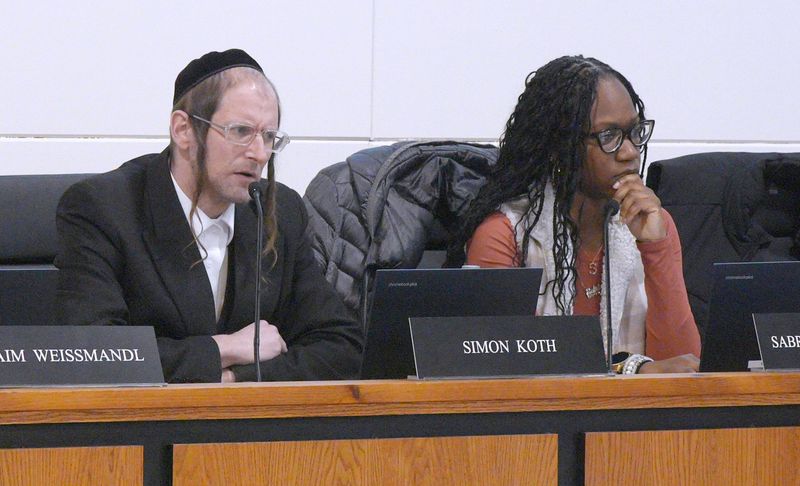
East Ramapo school board Trustee remarked at the Dec. 9 meeting that the absentee rate shows that on any given day, around 900 of the districts 9,500 public school kids are missing class.
Why are absentee rates so high at East Ramapo?
Interim Superintendent Ana Reluzco during the Dec. 9 school board meeting acknowledged there could be multiple reasons for dwindling attendance.
Board members and Reluzco discussed challenges kids may face:
“We do know that there are some community factors that are very challenging,” Reluzco said. “It’s going to be a big challenge.”
But, she said, the district is focused on the issue.
“These numbers I hope will change with the interventions we’ve put into place,” Reluzco said.
Reluzco acknowledged that the district is managing myriad struggles and student literacy rates had been this year’s priority. “This is a big district,” she said. “It needs a lot of work.”
What happened to district’s night school?
The district once hosted a Regional Night High School, with Rockland BOCES contracted to operate it. After about 20 years, the program was stopped at the end of the 2022-2023 school year. The program offered weekend and evening courses, including credit recovery for students who had fallen behind in completing the required curriculum for graduation.
“There have been discussions between BOCES and East Ramapo about a future model,” said BOCES spokesperson Scott Solatto.
The district’s five-year long-term academic and fiscal plan, a document demanded by its state-appointed monitors and NYSED, specifies that a regional night or “twilight” high school needed to be in place by September 2026.
“It’s not should you do it, might you do it,” state-appointed East Ramapo Monitor Shelley Jallow said during the Dec. 9 meeting. “It’s in the plan.”
The long-term plan also specifies that by Dec. 31, 2025, the district have in hand a multiyear plan to boost attendance. “The plan should include proposed funding,” the long-term plan states.
At the Dec. 9 meeting, East Ramapo administrators outlined steps being taken and considered in the future to address chronic absenteeism.
Those efforts include school building-based efforts, from awarding good attendance to using data to track students who show signs of slipping into missing too much school.
District leaders also outlined plans for more parent engagement and family support when students are at risk.
Reluzco said East Ramapo could also hire attendance monitors.
The state Department of Education is keeping an eye on the issue.
“NYSED continues to emphasize the importance of consistent attendance as a foundational component of academic success,” State education department spokesperson JP O’Hare said, “and we expect districts to implement evidence-based strategies that address barriers to student engagement.”
By the numbers: What are schools’ chronic absentee rates?
Chronic absentee rates for students in the 2025-2026 academic year appear to hold steady, even as more school days allow for more absences.
By the end of October, 31.82% of the public school student body was considered chronically absent. By that point, the academic year had 37 instructional days, and nearly a third of students had missed four or more days of school.
By the end of November, 31.67% of students were considered chronically absent, meaning they had missed six or more days of school out of the 53 days school was in session for the 2025-2026 year.
A school-by-school breakdown shows the chronic absentee rate is higher at the high school level.
For example, at Spring Valley High School, 46.8% of students were considered chronically absent by the end of November, and 44.4% at Ramapo High School.
Middle school chronic absentee rates for the same time period include: Pomona, 32.2%; Chestnut Ridge, 27.7 and Kakiat, 20.1%.
Chronic absentee rates, as of Nov. 30 for the district’s nine elementary schools range from 20.6% of students at Margetts to 35.7% at the Early Childhood Center.
This article originally appeared on Rockland/Westchester Journal News: How will East Ramapo fix students’ soaring chronic absentee rate?
Reporting by Nancy Cutler, Rockland/Westchester Journal News / Rockland/Westchester Journal News
USA TODAY Network via Reuters Connect