As spotted lanternflies continue to spread across New York, U.S. Sen. Kirsten Gillibrand is backing bipartisan legislation aimed at limiting the invasive pest’s damage to the state’s agricultural industry.
Gillibrand, D-N.Y., joined Sens. John Fetterman, D-Pa., Dave McCormick, R-Pa., and Ron Wyden, D-Ore., in introducing the Spotted Lanternfly Research and Development Act.

The bill would designate the invasive insect as a high-priority research initiative for the U.S. Department of Agriculture’s National Institute of Food and Agriculture. The designation would direct additional federal research toward developing new methods to detect, manage and control spotted lanternflies as they continue to spread across the United States.
“The spotted lanternfly has proven to be a destructive pest that threatens New York state’s specialty crops, especially vineyards throughout Western New York, the Finger Lakes, Long Island and the Hudson Valley,” Gillibrand said in a statement.
“If not contained, this pest will have devastating economic consequences at a time when New York farmers are already having their profits destroyed by rising diesel and fertilizer costs. Congress must immediately prioritize spotted lanternfly research to prevent further spread.”
Spotted lanternfly infestations continue to spread across New York
The legislation comes as spotted lanternflies remain active across New York, with confirmed infestations now stretching across much of the state.
Cornell Integrated Pest Management lists confirmed infestations in counties across New York City, Long Island, the Hudson Valley, the Capital Region, Western New York and the Finger Lakes. Additional counties have reported confirmed sightings as the insect continues to expand its range.
The pest was first detected in New York City in 2019 after arriving in Pennsylvania in 2014. It has since spread to dozens of counties across the state, according to Cornell Integrated Pest Management.
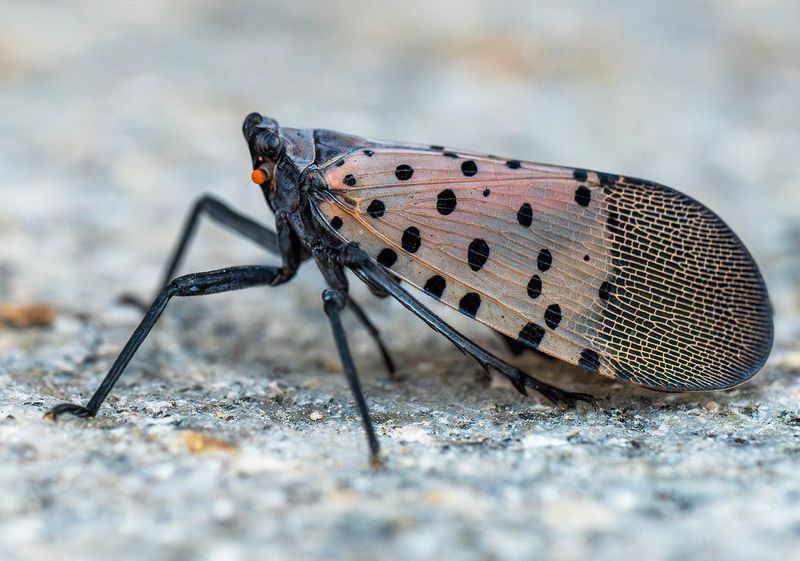
Native to Asia, spotted lanternflies are harmless to people but can cause significant damage to vineyards, orchards, forests and other plants.
“Spotted lanternflies generally travel by being transported by people,” Jacob Lesser, an extension and outreach specialist with Cornell Integrated Pest Management, said.
“Cars are a very common method, or trains. We are seeing lanternflies lay eggs on things like pallets and camping supplies. Then those eggs aren’t detected, they get transported, and the next spring, those hatch.”
Unlike many invasive insects, spotted lanternflies typically do not spread long distances by flying. Instead, they hitchhike on vehicles, campers, boats, firewood, outdoor furniture, pallets and other outdoor equipment, allowing them to establish populations in new areas.
Why researchers are concerned
Although spotted lanternflies are harmless to people, they feed on the sap of hundreds of plant species, including grapes, hops, maple trees and fruit trees.
As they feed, the insects leave behind a sticky substance called honeydew that can encourage the growth of sooty mold, reducing photosynthesis and weakening plants.
New York’s grape industry is considered particularly vulnerable.
According to Gillibrand’s office, Cornell University researchers estimated in 2025 that, if left unchecked, spotted lanternflies could cost New York’s grape industry more than $14 million during the first three years of an invasion.
Those concerns are particularly significant in regions with major wine industries, including the Finger Lakes, Hudson Valley, Long Island and parts of Western New York.
What New Yorkers can do
New York State Department of Environmental Conservation officials continue to advise residents to help slow the spread by inspecting vehicles and outdoor equipment before traveling from areas with known infestations.
Anyone who finds a spotted lanternfly or egg mass should:
People who live outside Dutchess, Nassau, New York City, Orange, Putnam, Rockland, Suffolk (except the North Fork), Sullivan, Ulster and Westchester counties should report sightings immediately.
Officials also recommend checking vehicles, campers, trailers, boats, firewood and camping gear for egg masses before transporting them to another location.
If passed, the Spotted Lanternfly Research and Development Act would make research into the invasive pest a federal priority. Supporters say additional research could help develop more effective ways to control the insect and protect New York farms and vineyards as its range expands.
This article originally appeared on Rockland/Westchester Journal News: Gillibrand backs bill to protect Hudson Valley from spotted lanternflies
Reporting by Beyonce Thomas-Reynoso, New York Connect Team / Rockland/Westchester Journal News
USA TODAY Network via Reuters Connect
By Beyonce Thomas-Reynoso, New York Connect Team | USA TODAY Network