With spring in full mode right now, people are getting outside much more and enjoying their yards and beyond. The many flowers, budding trees, and birds make it so enjoyable.
My wife and I have a small bird feed business and country greenhouse here at 6340 LaGrange Road in Wyoming, NY and we love everything outside including birds, landscaping, nature hikes, and so on. Between our small business and our loyal readers of this biweekly column, we get asked many questions which we try to answer as good as we can. Sometimes there is no good answer or there may be several answers depending upon the circumstances. We learn a great deal from our readers like you.

The whole idea of this column on birds and nature is to help with communication among all of us nature lovers and to encourage others to enjoy nature, birds, and the outdoors more. Like with most hobbies or interests, there is always room to become more knowledgeable and an opportunity to “take it to the next level.” I have so much interest in the outdoors and nature and gardening and trees and so much more that I don’t know where to begin in thanking God for so much beauty and opportunity on this beautiful earth!
Anyways, on with some answers to some common questions!
Why has Goldfinch action at the feeding station taken a huge drop?
I have mentioned it before, but in late April and the first part of May there are many Goldfinches around and they have molted into their bright yellow plumage. I think some of those Goldfinches have migrated here from the South to join those that were here all winter long. Many of those may migrate further north. But a major factor is that the dandelion flowers have gone to seed and those are a natural favorite. As you know from mowing your lawn, dandelion season will be over soon. You will likely see action pick up again at the feeders, but not even close to what it was. There are other seeds in nature that will also keep them busy – one being birch tree seeds right about now.
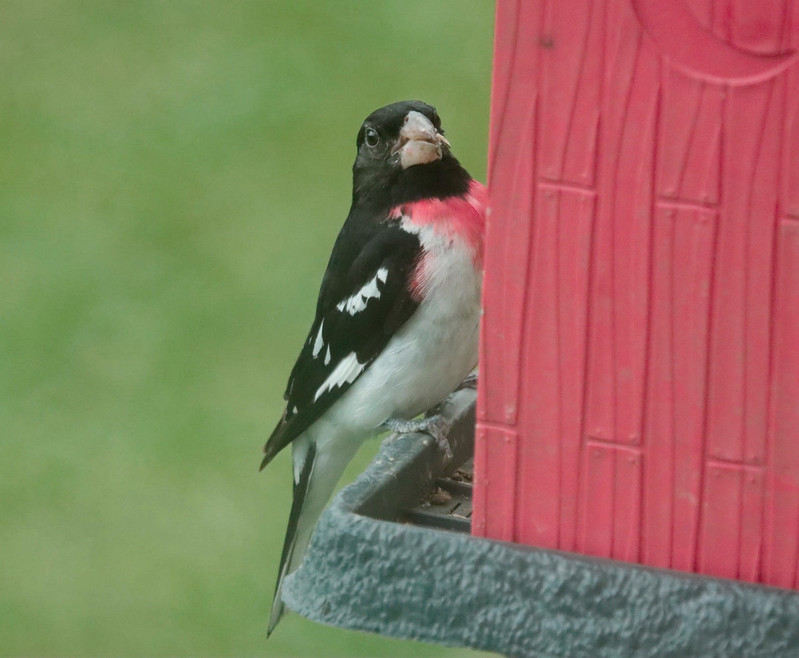
What happened to my Rose-breasted Grosbeaks that we had back in early May?
They are still around and already busy nesting in the thickets and woods. With warmer temperatures they find a lot more “natural” food in the form of insects and larvae. However, if you keep a very steady supply of sunflower seeds available, they likely will keep coming all summer. They may be sporadic, but you will likely see them. Here, we seem to have a very good balance of habitat so that we have several coming all summer and we feed them all the sunflower they want!
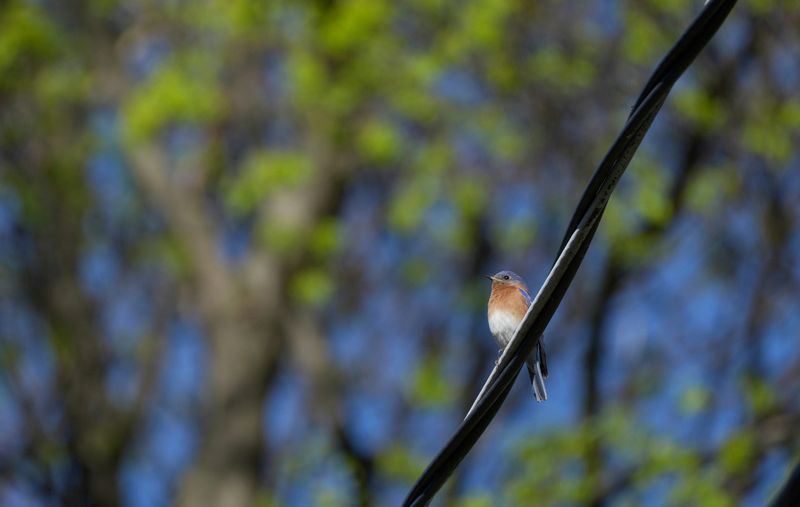
Do I need to feed mealworms to the Bluebirds?
Generally not, but during cold, rainy spells, it is difficult for the adults to find enough insects to feed their young – especially when mother is keeping the babies warm. Sometimes they give up and abandon the nest. But if you have mealworms available in a dish near their nest box, that very well may save the brood – especially if the babies are at least one week old. Remember, the Bluebird adults have to find food for themselves as well, to have the energy to take care of their babies – often five. Once the Bluebird adults know that the dish or feeder has mealworms they will keep checking to see if there are more! I’m feeding them right now and I think they appreciate the “help!”
Speaking of Bluebirds, do I clean out the nest box after the first nest of young has fledged?
Yes, simply remove the old nest right away – they will build a new clean one. You don’t need to sanitize the box – just a good scrape out. So much more good information on Bluebirds at the NYS Bluebird Society website: NYSBS.org.
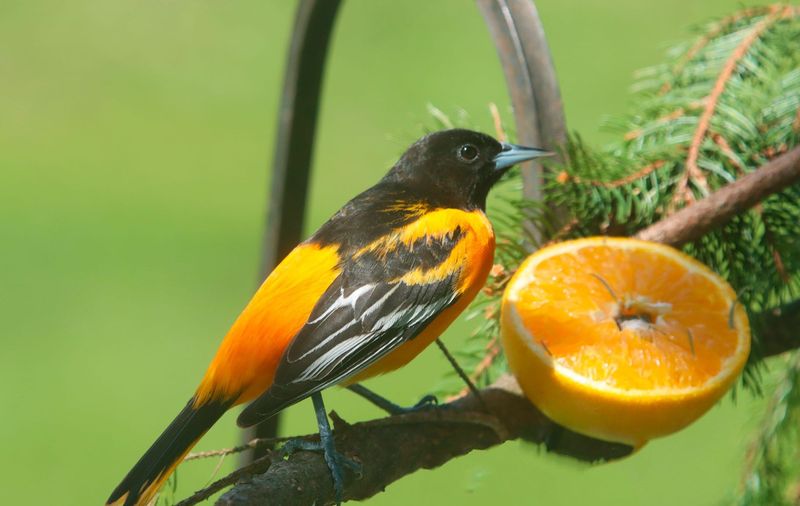
What happened to my many Orioles that were coming to my Oriole feeders?
Some of those early Orioles may have only been passing through. Many stay here and are now nesting and thus have spread out. They will still travel quite a distance to come to the feeders, but with warmer weather, they also find plenty of natural food in the form of insects and larvae. Your Oriole activity can also be a bit sporadic all summer. Don’t give up! My recommendation based on my own experiences and from talking to so many people, is that grape jelly is the most preferred attractant to the feeding station. Eventually the Orioles may bring their young to the feeding station. This is true for both Baltimore and Orchard Orioles. You could end up with 10 to 20 Orioles at your feeding station this spring and summer. By August, some Orioles are moving on and the wasp activity at the jelly feeder kind of puts an end to the Oriole feeding. Every situation is different.
Finally, should I quit feeding the birds in the summer?
That’s up to you. You are not making the birds dependent on you – they still know how to go out and find lots of natural food. We generally feed birds in the summer to enjoy bringing the birds closer to our back yards and porches as they are so colorful and enjoyable to watch. Sunflower seeds are key.
As always, we have run out of room again with so much more to discuss. Let’s all enjoy the beauty of nature and the birds and share with others. Help brighten someone’s day by getting them started on bird feeding. If you have any questions or comments or observations, feel free to call/text me (Hans Kunze) at 585-813-2676.
— Hans Kunze writes a New York state-focused birding column.
This article originally appeared on Elmira Star-Gazette: Answers to common questions from New York bird enthusiasts | Column
Reporting by Hans Kunze, Columnist / Elmira Star-Gazette
USA TODAY Network via Reuters Connect