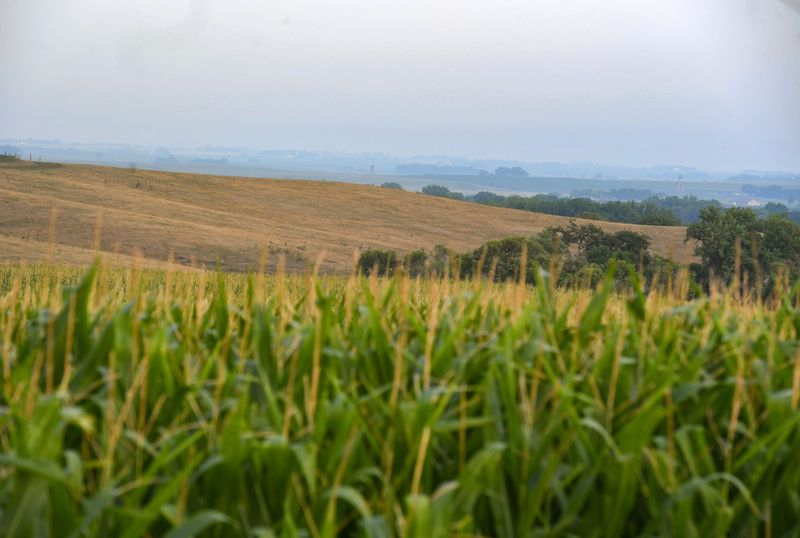
Not only are Iowans sweating in this heat, but the corn stalks are too.
High temperatures are expected to be in the high 80s to low 90s in Des Moines this week. Some areas in the northwestern and southeastern corners of the state are under heat advisories, with select counties in the east under extreme heat watch.

While these temperatures may not be extreme in dry-climate states, Iowans know high temperatures this time of year are usually accompanied by humidity. And the millions of acres of tall corn aren’t helping either.
Why is Iowa so humid?
Iowa is experiencing high humidity due to a culmination of three factors. Corn sweat is typically a contributor during July and August.
Recent thunderstorms with heavy rain left some standing water across the state. Much of this moisture is evaporating due to high temperatures, which can hold more water vapor, according to the National Weather Service.
Humidity from the Gulf of Mexico, renamed by the U.S. government as Gulf of America, also manages to travel up to the Midwest, adding to the humidity, said Jim Lee, a meteorologist with the National Weather Service in Des Moines.
How does corn sweat increase the humidity?
Crops pull moisture from the soil and then push that into the atmosphere through evapotranspiration. This process moves moisture from the soil into the air. Any plant photosynthesizing emits water vapor, particularly during the mature phase of growth, Lee said. This includes trees and grass, but Iowa also has millions of acres of grow-crops.
“They are particularly efficient at producing this water vapor into the air,” Lee said of corn and other row crops. “So [corn sweat] is a real thing, and it does contribute to some portion of our humidity during the summer.”
When is corn sweat contribute to most to humidity?
Growing season is the peak time for corn sweat, especially in the mid to late summer, according to the National Weather Service. Corn sweat contributes most to humidity during July and August.
When is the corn going to stop sweating?
You don’t have to wait for harvest for the corn to stop sweating. Humidity from crops typically cuts back in September. Once harvest begins, the contribution from corn sweat is eliminated.
How to stay safe during high humidity
More rain is on the way throughout the coming week for Des Moines, so the humidity likely won’t ease up on Iowans. Staying hydrated and taking breaks if you are outside is crucial to avoid any heat-related illnesses, Lee said.
“When it is so humid out, it can really sneak up on you,” Lee said. “You can have symptoms of heat illness before you even really realize it.”
Kate Kealey is a general assignment reporter for the Register. Reach her at kkealey@registermedia.com or follow her on Twitter at @Kkealey17.
This article originally appeared on Des Moines Register: Why is it so humid? Corn sweat among factors increasing humidity in Iowa
Reporting by Kate Kealey, Des Moines Register / Des Moines Register
USA TODAY Network via Reuters Connect