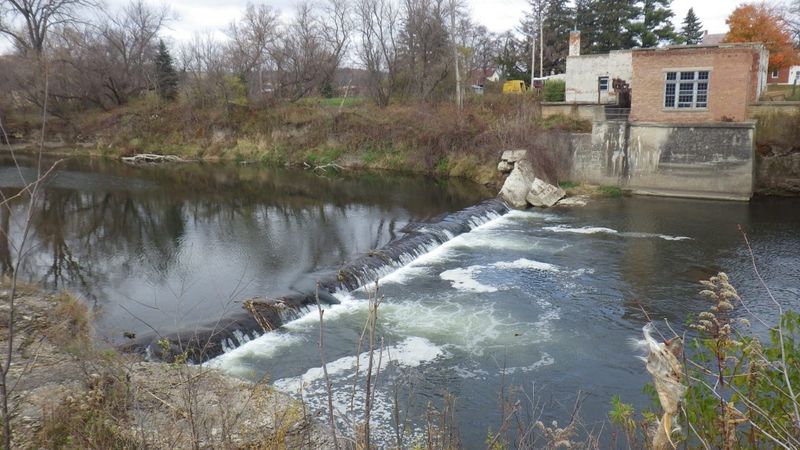
The family of a mother and daughter who died on an Iowa river tubing trip went over a poorly marked dam and drowned in the current beneath it can continue their lawsuit against city, county and state officials, the Iowa Supreme Court says.
The court’s opinion, issued Friday, June 13, revives a lawsuit over the deaths of Vicki Hodges, 44, and her mother Sharon Kahn, 64, whose June 2020 accident occurred on the Turkey River in the city of Clermont.

Low-head dams like the one in Clermont are extremely hazardous to boaters and swimmers because they are entirely under the surface of the water, making them hard to spot from upstream, and create violent currents at the base that can trap boats and people. Safety advocates have called them “drowning machines” and many local governments are working to remove or otherwise mitigate them, including some on the planned ICON water trail in downtown Des Moines.
Kahn and Hodges’ family filed suit in 2022 against Clermont, which owns the dam, and Fayette County and the state of Iowa. The state and county marketed the stretch of northeast Iowa river on which the duo were floating as a “water trail” for recreational use, and made no mention in promotional materials of the dangerous dam.
While the state had posted signs upstream warning of the dam, the family alleged most were overgrown with vegetation and not visible from the water. An emergency portage location, where people could exit the water and walk to another access point downstream, also was overgrown and inaccessible, and there were no buoys or safety chains marking the dam itself.
The county and state filed motions to dismiss and the city filed a motion for judgment. A district judge granted all three in 2023, finding that the various government defendants were protected from liability by qualified immunity, public-duty immunity and other legal doctrines.
Friday’s unanimous decision reverses those rulings. Justice Matthew McDermott wrote for the court that, at this stage in proceedings, the family has adequately alleged negligence and liability on the part of the defendants.
Court rejects various defenses for government defendants
Much of the ruling focuses on the public-duty doctrine, a legal rule holding governments cannot be held liable for a plaintiffs’ injuries unless the government has a “special relationship” with the injured party above and beyond a duty owed to the general public. The doctrine is famously abstruse, and McDermott dedicates three full pages of the opinion to reviewing how the court has applied it in various contexts.
In this case, he wrote, the state and county took affirmative actions to designate the stretch of river as a water trail, encourage members of the public to use it, and to mark safety hazards, however allegedly negligently. This is enough to create a legal duty on their part to users of the water trail, the court found.
The city, meanwhile, is liable as owner of the dam and the portage site. McDermott made a comparison to cases where cities have been liable for poorly maintained sidewalks.
Later in the decision the court refuses to apply another legal protection known as discretionary function immunity because the complaint focuses on the state’s alleged inaction in failing to maintain its warning signs rather than an official policy decision about whether to provide the warnings.
The court also rejected arguments the state is protected by sovereign immunity, and that the county and city are protected by a law preventing liability for injuries during recreational activities on public property “result(ing) from the normal and expected risks inherent in the recreational activity.”
While drowning might be a normal risk of river tubing, the court ruled, drowning from going over an unseen low-head dam is not.
Attorney hopes decision leads to safer water trails
The decision revives the case and sends it back for further litigation.
An attorney for the city declined to comment on the ruling. Attorneys for the county and state did not respond to messages seeking comment.
Attorney Russ Hixson, representing the plaintiffs, said the court’s decision was the right one.
“We are pleased that the Iowa Supreme Court agreed to hold accountable all entities, governmental or otherwise, who undertake a duty to warn the public and then fail to do so properly,” he said in an email. “Such accountability will hopefully make all of the State’s designated water trails safer for Iowa’s families and residents who use the rivers and waterways for recreational purposes.”
William Morris covers courts for the Des Moines Register. He can be contacted at wrmorris2@registermedia.com or 715-573-8166.
This article originally appeared on Des Moines Register: Iowa Supreme Court revives lawsuit over mother and daughter who died after tubing over dam
Reporting by William Morris, Des Moines Register / Des Moines Register
USA TODAY Network via Reuters Connect