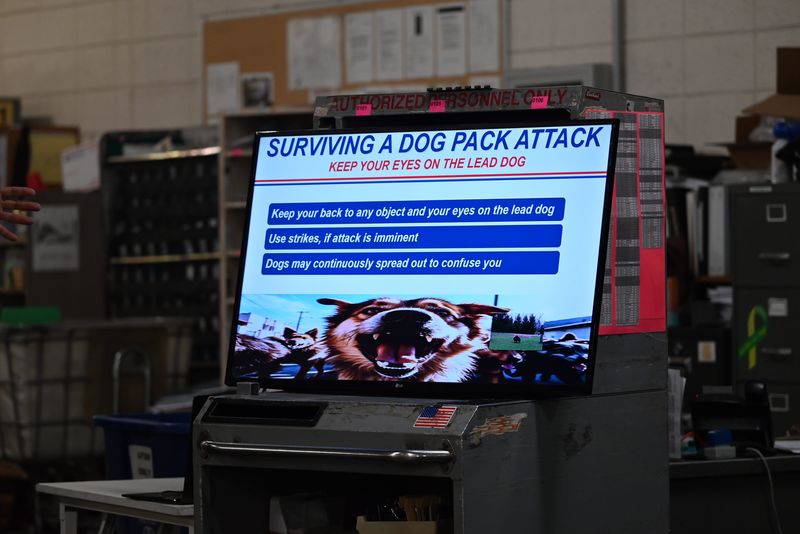
Seven dog bites or attacks took place in South Bend last year, prompting postal services to take action by educating their workers a few dog bite prevention tactics.
Nearly 6,000 cases of postal workers involved in dog attacks occurred in 2024, with the highest number — 77 — occurring in Los Angeles, CA, the United States Postal Service reported. Indianapolis ranked 16th with 26 dog attacks of postal workers last year, part of 143 such attacks statewide. No city in the South Bend area was ranked in the top 20 most bites.

Why do dogs bite?
Though every instance that leads to a dog attack is different, veterinarian Mariah Covey at Kryder & Harr Veterinary Clinic in Granger said a lot of it is linked to “flippant pet owners.” She listed examples such as: dogs who aren’t confined properly or owners who aren’t aware that their dog getting out is an issue. Dogs who spend a lot of time on tethers outside with very limited space to exhibit dog behaviors can become very territorial, she said.
Fear is a number one reason, Covey said. She listed other reasons that are unique to each dog, such as experiences in utero, dogs genetically not well-tempered, if the dog’s mother was under duress during pregnancy, a lack of socialization — which occurs during puppyhood — and not experiencing new things or a negative experience during development.
7 dog bite prevention tips
For its National Dog Bite Awareness campaign, which started June 1, the South Bend United States Postal Service invited motivational safety speaker Hector Hernandez, owner of First Class Dog Training, to educate postal workers about tips and practices to protect against dog bites and attacks.
Postal carriers already know the dangers of their job, said Yvette Claxton, a customer service support supervisor at the postal office who planned the event. Mail carriers are required to report any dog incidents or close calls to their supervisor, because an “almost bite” today could be a “bite” tomorrow.
“My goal was to bring awareness to the community because we’ve had numerous dog bites already, so I just want to make sure that they’re safe,” Claxton said. “That’s my number one priority.”
Around 20 employees gathered in the postal office’s back area, at 424 S. Michigan St., to watch Hernandez’s presentation, along with his 2-year-old Belgian shepherd, Chankla — meaning sandal in Spanish. Hernandez — who’s been training dogs since 1982, including training police dogs for 25 years — provided tips backed by the empirical knowledge of trial and error of what works, Hernandez said, for safety precautions against dog bites. Covey provided tips as well.
● Don’t move forward; back up
Move backward when facing a dog, making it appear that you’re leaving or escaping, Hernandez said. “If you walk forward, it looks like you’re the aggressor,” Hernandez told the group.
● Spray pepper spray in the dog’s mouth
A postal worker saved an 8-year-old girl’s life who’s leg was clamped in a dog’s jaw and was being dragged across a lawn, The Tribune’s reporting partners with the Detroit Free Press reported. The postal worker sprayed the dog several times until it retreated into a backyard and the girl survived, Detroit Free Press said. Postal workers carry dog repellant spray. Both the pepper spray and a dog horn have a 50% chance of working, Hernandez said, but it’s a tool to have, he said.
● Don’t turn your back on a dog
Covey advised to not turn away from a dog. She said people can turn to the side, not being threatening, but while also keeping an eye on the dog.
● Read a dog’s body language
A dog’s body language can show if they’re excited, aroused or upset. Learning to read dogs — such as if it’s coming and wagging its tail — can prepare people for how to react around loose dogs, Covey said. But if an animal is truly being aggressive or has a history of being aggressive, you have the right to defend yourself, she said.
● Carry dog treats
Though South Bend USPS workers said they aren’t allowed to carry and give dogs treats on their routes, Covey said it’s been useful for her. She carries treats on walks to help train her own dogs, but to also throw a treat at a loose dog to keep it away.
● Hit below the chin or side of the ear
“If the dog has a hold of you and won’t let go, you have to do something,” said Hernandez, who’s been providing training for postal services for 25 years. The three strikes he said to use were the uppercut under the jaw, the side of the ear or the back of the neck.
Hernandez said he doesn’t want anyone to have to hit a dog, but “we’re dealing with a creature who’s not being managed or controlled properly.” Loyalty, he said, is what leads a dog — who is protecting itself, its property and its owner — to attack a stranger. “That trilema makes them very aggressive,” Hernandez said.
● Put something between you and the dog
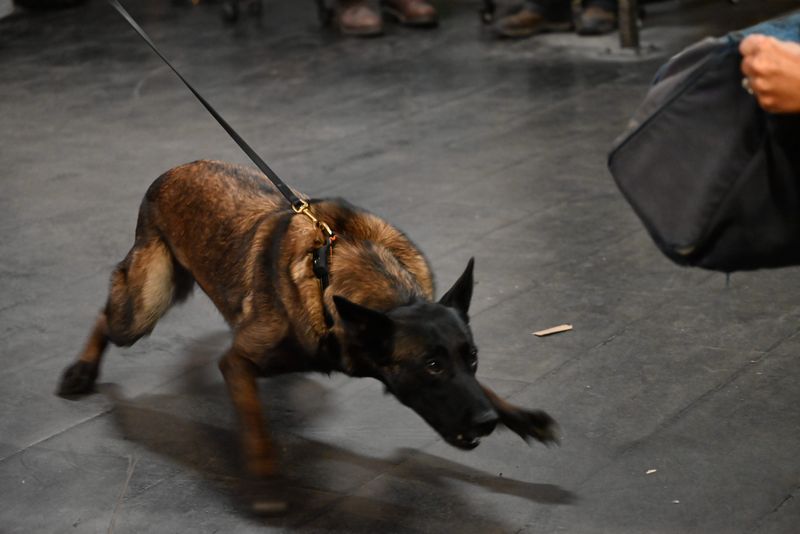
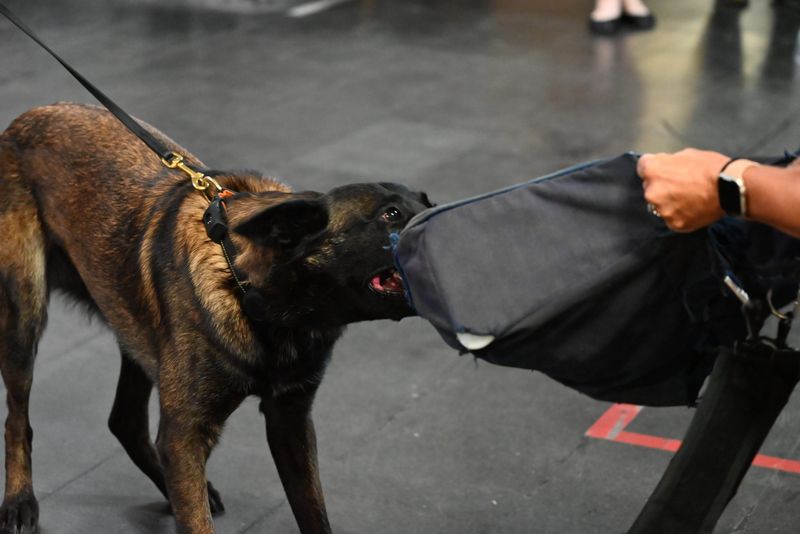
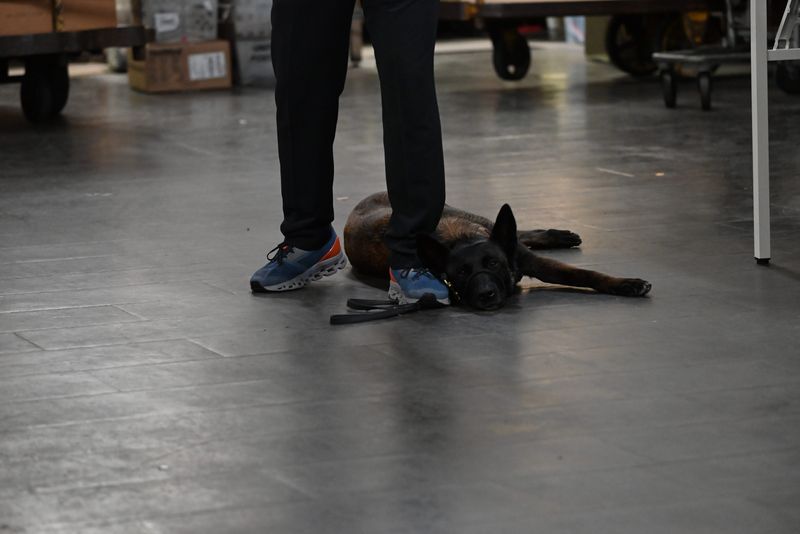
Adam Richman and Zamire Cook were among four volunteers who took part in a scenario with Chankla. Hernandez instructed the volunteers, one at a time, to hold a satchel in front of them and practice the techniques presented minutes before. Chankla, who was calmly lying at Hernandez’ feet the entire presentation, lunged at the bag and Hernandez instructed the volunteers to not let go as they practiced backing up. Chankla growled, struggling to grab the back for a few minutes, then the demonstration ended. “It’s all an act. It’s all a show,” Hernandez said.
Tips for owners
“If the owner is not managing or controlling them,” Hernandez said, “they’re (the dog) just doing their job.” Hernandez said.
Covey, who is completing her residency in animal behavior, provided ways dog owners can work to prevent their dog biting someone in the community.
● Keep your pet on your property
Most incidents of dog bites or attacks occur when a dog is not confined properly, Covey said. She said owners should have a plan to prevent escape, such as making sure a gate properly locks or having a double fence in the backyard or keeping a pet inside by using a baby gate. “There’s layer upon layer that affects behavior,” Covey said, “but the end result is, if your dog isn’t loose, it won’t bite someone off your property.”
● Don’t punish, teach
Punishing behaviors like growling — in which dogs are giving a warning — can increase the likelihood of bites, Covey said. Covey, who does not advocate for punishment-based training, such as using shock collars to teach commands, said, “It’s hard to learn if you’re in a panic situation.” She urged owners to seek qualified trainers who understand behavior.
A training for all
As a former mail carrier, Richman said, most of his experiences involved small dogs. “Ankle-biters,” he called them. The training, he said, gives people the ability to go home the way you came to work: in one piece. He called the training another tool to keep postal workers and the community safe.
Cook, who works at the post office in maintenance, attended Monday’s training to gain more awareness about dog attacks and to know the proper procedures when encountering an aggressive dog, he said.
Though Cook doesn’t work as a mail carrier, he said, the information presented is useful for whenever he’s outside and encounters a dog on the loose.
“It can happen to me,” Cook said. “It was good to see because it gave me the proper training.”
Email Tribune staff writer Camille Sarabia at csarabia@gannett.com.
This article originally appeared on South Bend Tribune: Vet and dog trainer give 7 dog bite prevention tips; Postal workers at particular risk
Reporting by Camille Sarabia, South Bend Tribune / South Bend Tribune
USA TODAY Network via Reuters Connect