In 2014, The Tribune reported that, during the previous school year, Black students received 62 percent of all incidents of out-of-school suspensions ― though they comprised just 34 percent of South Bend schools’ enrollment.
Earlier that same year, education reporter Kim Kilbride wrote about a discipline policy of issuing tickets to students as young as 10 or 11. She noted that the clear majority of tickets — 74 percent — were given to African-American students … though they represent just one-third of the district’s enrollment.

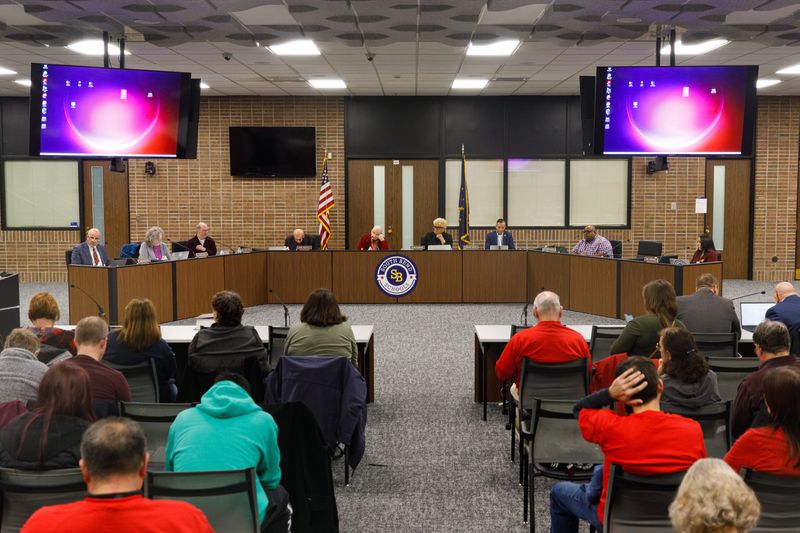
Those Tribune reports of more than a decade ago came to mind at the news that the South Bend school board is establishing a committee to identify what’s causing the disproportionality. During a board meeting on Monday, Jan. 26, board attorney Pete Agostino outlined the committee’s methodology and purpose, saying it’s meant to address a problem within SBCSC that’s been around for several years.
Indeed, the problem is hardly a new one. In fact, it seems to come up with regularity, with not much in the way of progress. The U.S. Department of Justice has taken notice, warning administrators in 2021 about inconsistent disciplinary practices across the school district. According to a 2022 Tribune report , school board members discussed the letter in a committee meeting, saying its findings were indicative of the work still needed to address disproportionate suspensions and expulsions.
Has any of that work been done in the years since the problem was identified? The DOJ letter from five years ago pointed to opportunities lost, saying the corporation failed to properly implement a “multi-tiered system of support” plan, known to educators as MTSS. The DOJ had added new requirements to its consent decree, asking that the school corporation implement a MTSS.
A MTSS is an educational framework that identifies students who may be falling behind academically or behaviorally and provides resources for those students based on the level, or tier, of their needs. It’s used in schools across the country and, in South Bend’s case, the student support plan could help identify and reduce disciplinary actions after years of suspensions and expulsions disproportionately affecting Black students.
But according to that 2022 report, the DOJ found that the district abandoned its plans to introduce MTSS in two of five pilot schools the previous year, and in the remaining three pilot schools, the DOJ found a lack of staff buy-in and support from administrative leadership further delayed progress.
As noted earlier, that’s the sort of history that comes to mind when we hear that the board is attacking a problem that’s been widely acknowledged for more than a few years.
We certainly hope this board is successful in finally making real progress toward eliminating it.
Editorials represent the opinion of the Tribune Editorial Board. Its members are Audience Engagement Editor Alesia I. Redding, Enterprise Editor Cory Havens and Executive Editor Ismail Turay Jr.
This article originally appeared on South Bend Tribune: Uneven discipline far from new in South Bend. Will talk lead to action?
Reporting by The Editorial Board, South Bend Tribune / South Bend Tribune
USA TODAY Network via Reuters Connect