EVANSVILLE – An order from the Trump administration could affect how much Evansville-area CenterPoint bills increase this year.
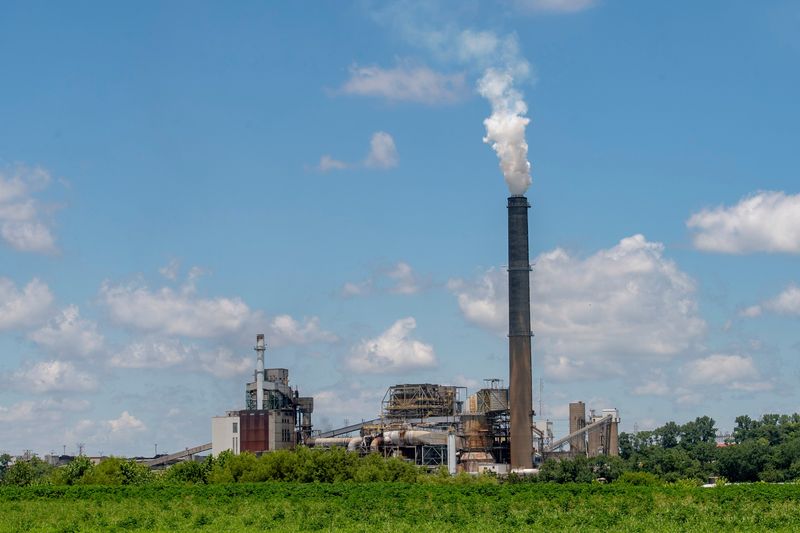
In late December, U.S. Secretary of Energy Chris Wright issued a ruling requiring CenterPoint to keep unit two of the coal-powered F.B. Culley Generating Station in Warrick County operating through at least March 23. It comes while the country and region brace for a sharp uptick in demand as more artificial intelligence data centers come online.

CenterPoint had planned to close the 60-year-old facility at the end of 2025.
Because of the order, CenterPoint has filed two proposals related to recovering the money it will cost to keep Culley open – one with the Federal Energy Regulatory Commission and the other with the Indiana Utility Regulatory Commission.
According to the filing in the latter, CenterPoint will seek to bill ratepayers for the “the timely recovery of 80% of the federally mandated costs” through its environmental cost adjustment mechanism − one of the many additions CenterPoint tacks onto customer bills.
The remaining 20% would be deferred until CenterPoint’s next electric rate case, the filing reads.
That will come soon. Submissions for “phase two” of the base rate hike the IURC greenlit last year should show up around March 1. The first wave of increases caused average Evansville-area electric bills to leap by almost 25% over the summer. Other customers saw their bills rise even more.
The FERC filing, meanwhile, isn’t directed at recovering the money that will be spent at Culley over the next few months. That would happen in a later proposal. The current one is only meant to ensure FERC “has the requisite tariff-based mechanism to effectuate the company’s cost recovery,” the filing reads. In plain English, it wants FERC to establish a way for CenterPoint to get its money back.
CenterPoint filed both petitions in early January. Neither the IURC nor FERC has ruled on the issue.
Mike Roeder, head of CenterPoint’s Indiana operations, addressed the Culley concern in an interview with the Courier & Press on Jan. 13. He said “plan A” would be to go through FERC, gather the money at a later date and spread the costs through the north and central regions of the Midcontinent Independent System Operator, the entity that runs the electric grid for huge swaths of the U.S. That way, it wouldn’t be concentrated all in Southwestern Indiana.
“The (Culley) issue is an issue that we didn’t ask for,” Roeder said. “We planned to suspend Culley 2.”
But Ben Inkseep – the program director for Citizens Action Coalition, which has filed to intervene in the IURC case – told the Courier & Press that, at least according to his interpretation of the filings, CenterPoint will try to recover costs from Indiana ratepayers no matter what FERC decides.
“This will be a cost increase for CenterPoint customers regardless of what happens,” he said.
How much could keeping Culley open cost?
Over the summer, the Trump administration resuscitated the National Coal Council, an advisory board of former and current fossil fuel executives and others who push federal policy.
Former President Joe Biden nixed it as part of his attempt to steer the country more toward wind and solar, but Trump has long embraced the coal industry. He’s called climate change a “hoax” and a “con job” and recently pulled the U.S. out of multiple United Nations environmental treaties.
At the coal council’s first meeting on Jan. 15, Wright – a former oil and fracking executive – vowed to stop the “political closure of coal plants,” the New York Times reported.
CenterPoint, however, announced the planned closure of Culley 2 and other generating stations back in June 2020, when Trump was still in his first term. At the time, CenterPoint said shutting down Culley 2 and the two generating stations at the A.B. Brown facility in Posey County would help save its customers $320 million over 20 years and decrease carbon emissions by as much as 75% compared to 2005 levels.
The savings were key for a customer base long saddled with some of the highest electric rates in Indiana. And the plummet in emissions would be a big change for the Evansville area, which is sandwiched between some of the largest superpolluters in the U.S.
A.B. Brown now houses natural gas turbines – the costs for which were passed onto Evansville-area ratepayers. Culley, meanwhile, was originally supposed to shut down in 2023, CenterPoint’s latest FERC filing reads, but that got pushed to Dec. 31, 2025, to reportedly ease the cost for customers.
Now that won’t happen.
In its IURC filing, CenterPoint wrote that keeping Culley open could add an “annual net depreciation expense of an additional $5.8 million.”
In the Jan. 13 interview, Roeder couldn’t confirm if that was the exact increase CenterPoint was seeking. But Inskeep thinks that’s the figure CenterPoint could settle on.
The costs could grow if the Department of Energy wants to keep Culley open even longer.
CenterPoint issues “integrated resource plans” every three years. They’re supposed to serve as roadmaps for how the utility plans to adhere to its “five pillars” of Indiana energy policy: reliability, resilience, stability, affordability and environmental sustainability.
According to the FERC filing, the last three IRPs “concluded that (CenterPoint) could not continue to operate Culley Unit 2 beyond October 2023 without making some investment, or beyond December 2025 without making significant investment, to bring the facility into compliance with then-applicable environmental standards.”
And that’s with the unit functioning as a shadow of its former self. Even though it’s built at a capacity of nearly 104 megawatts, it currently “operates infrequently within the MISO market, with an annual capacity factor of roughly 25%,” CenterPoint’s FERC filing reads.
Data centers
Wright’s order, which is included in the FERC filing, partially quotes a DOE study from earlier in the year.
“The department concluded that “absent decisive intervention, the nation’s power grid will be unable to meet projected demand for manufacturing, re-industrialization, and data centers driving artificial intelligence innovation,” it reads.
Data centers are the hulking, windowless warehouses that contain the tangle of hardware needed to fuel the demand for ChatGPT, fake photos, and Coca-Cola commercials, among other AI offerings. They also consume giant amounts of energy and water, and a proliferation of them could put the stability of the electric grid at risk.
Trump parroted that concern in an April executive order. It required the secretary of energy to “prevent … an identified generation resource in excess of 50 megawatts of nameplate capacity from leaving the bulk-power system or converting the source of fuel of such generation resource if such conversion would result in a net reduction in accredited generating capacity.”
Eight months later, Wright handed down his order on Culley and four other power plants across the U.S.
According to the New York Times, at least two of those are out of operation completely, and it’s unclear when they could be fixed.
The article quotes a study by Earth Justice that says keeping the plants open that were set for retirement between now and 2028 could cost U.S. ratepayers around $3 billion a year.
This article originally appeared on Evansville Courier & Press: Trump order could further increase Evansville CenterPoint bills
Reporting by Jon Webb, Evansville Courier & Press / Evansville Courier & Press
USA TODAY Network via Reuters Connect