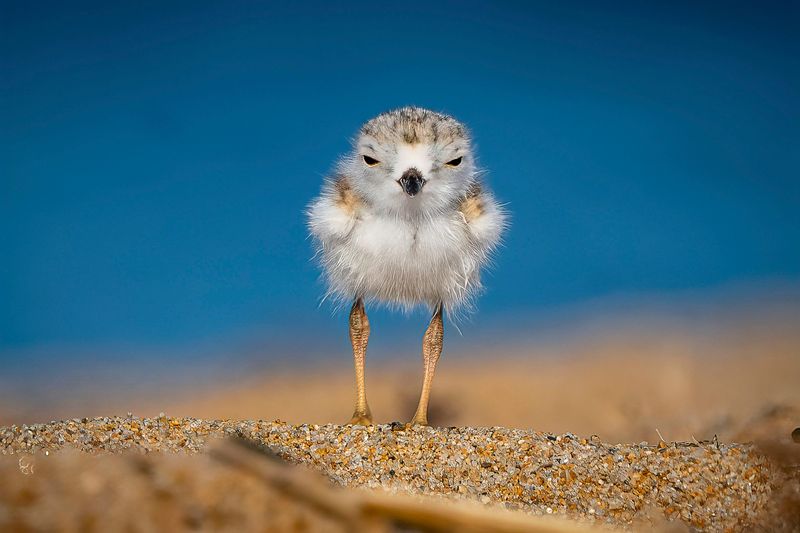
Indiana has a rich biodiversity with thousands of species in unique habitats, but growth and development have changed some of those fragile ecosystems and threaten the wildlife they support. IndyStar is highlighting some of these endangered species and documenting the work being done to conserve them.
Sorry T-Swizzle fans, but there is a bird that sports more bracelets than the most dedicated Swiftie at the Eras Tour.

And while it’s not quite as hard to find as a ticket to a Taylor Swift concert, the piping plover does appear on Indiana’s endangered list.
The piping plover, a shorebird found in Indiana along Lake Michigan, looks similar to its bigger relative, the killdeer, which is more commonly found across Indiana in wide-open spaces like fields and even parking lots. Both birds have sand-colored backs and stark white bellies.
But what sets piping plovers apart are the colorful bands around their legs. These bands are particularly common among the Great Lakes population, which has been listed as endangered since 1986.
The Great Lakes population’s bands are even more visible than those on other piping plovers because every year researchers tag new bands on hatchlings to denote when and where they hatched, according to the bird conservancy group Audubon. When the hatchlings return to the Great Lakes area to breed, researchers then apply additional colorful bands they will wear for the rest of their life.
The bands help scientists track the birds throughout their lifetime, collecting information on individual birds’ lifespans and movements. In 2006, a team of conservationists published an observation report based on this banding program.
The bands have helped the scientists glean some important information. For instance, while piping plovers live around five years on average, the oldest one in the Great Lakes population is 15 years old.
The species can show resilience individually as well as collectively. The Great Lakes population historically had up to 800 breeding pairs nesting on beaches but hunting and egg collecting in the late 19th century caused the population to drop to fewer than 100 pairs.
While the Migratory Bird Treat Act of 1918 helped the species fend off extinction, the Great Lakes population was never able to recover successfully from the drastic downward trend and in the late 1980s, populations fluctuated between 12-19 nesting pairs, according to the Center for Biological Diversity.
Since the bird first appeared on the state’s endangered list in 1985, however, the Great Lakes Piping Plover conservation team has worked to bolster the population.
The team frequently monitored and protected nests, educated beach users, protected habitat and controlled predators. By 2023, breeding pairs rose to a new record of 80, according to the team.
A 2005 plan by the conservation team set a goal of at least 150 breeding pairs surviving five consecutive years for the birds to be taken off the endangered species list. The plan also says the federal government should develop long-term funding and management agreements to ensure the population remains protected.
While Indiana currently does not have a project focused on the piping plovers, the Department of Natural Resources’s Wildlife Research Supervisor Theresa Bordenkecher said the agency is considering starting one in the future.
Hoosiers can help piping plovers by keeping dogs and other pets on leashes when around the birds. The U.S. National Park Service also recommends not feeding gulls since that could attract gulls who compete with the plovers for food/space, causing more stress for the piping plover population.
IndyStar’s environmental reporting project is made possible through the generous support of the nonprofit Nina Mason Pulliam Charitable Trust.
Karl Schneider is an IndyStar environment reporter. You can reach him at karl.schneider@indystar.com. Follow him on BlueSky @karlstartswithk.bsky.social or X @karlstartswithk.
This article originally appeared on Indianapolis Star: This endangered shorebird sports more bracelets than an avowed Swiftie
Reporting by Karl Schneider, Indianapolis Star / Indianapolis Star
USA TODAY Network via Reuters Connect