Mt. Summit celebrated Mother’s and Father’s Day in our small town this year by giving away bird feeder craft kits for moms and bird house craft kits for dads — simple projects for families to enjoy while also creating habitat that supports wildlife and pollinators.
As Pollinator Week arrives, it’s a good reminder that making room for wildlife does not have to start with a big restoration project. Sometimes it starts with a flower pot, a patch of herbs or choosing to leave a little space in our yards for the creatures that keep ecosystems thriving.

Pollinator Week is June 22 to 28 this year and is a chance to celebrate the species that quietly make life possible. Established nationally in 2007 through a unanimous vote of the U.S. Senate, Pollinator Week recognizes the bees, butterflies, birds, bats and other animals responsible for pollinating nearly 90% of flowering plants and about 75% of the world’s leading food crops.
Thanks to the work of organizations like Pollinator Partnership and countless local conservation groups, more people each year are learning how essential pollinators are to healthy ecosystems, gardens and communities.
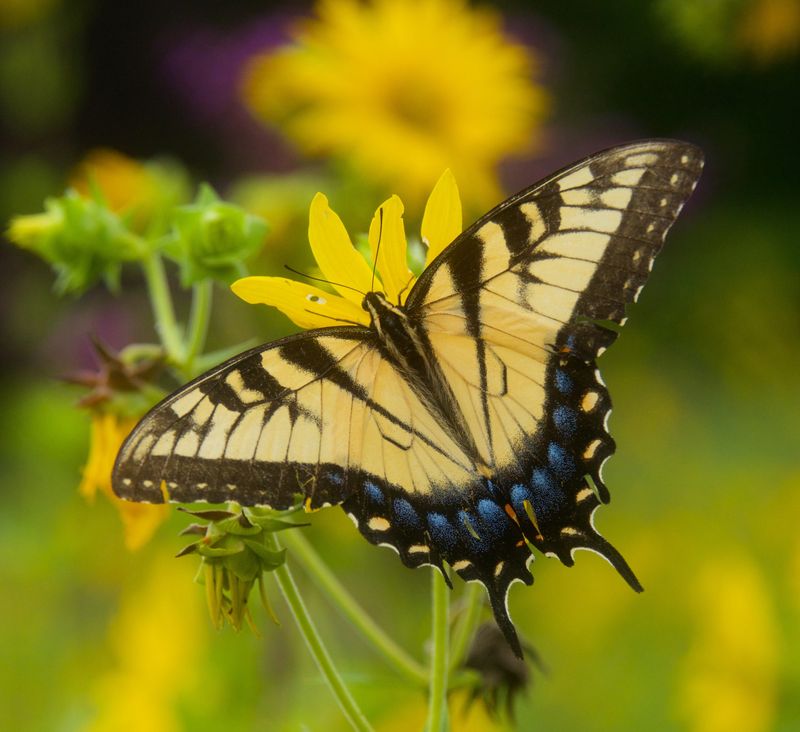
This year’s national Pollinator of the Year is the swallowtail butterfly, which happens to be one of my favorites.
About 30 swallowtail species are native to the United States, and many can be supported right in our own back yards with nectar-rich flowers and the right host plants.
Want to attract more swallowtails? Start small.
Plant dill or parsley in a porch planter and allow some plants to flower and go to seed. Add a few vegetables and native flowers and suddenly you have a growing habitat that even young gardeners can contribute to.
The secret is that butterflies need more than nectar.
Adult butterflies visit flowers, but caterpillars need host plants where eggs can be laid and young insects can feed. Growing host plants means supporting the next generation, not just attracting adults for a season.
Different swallowtails use different plants.
Black swallowtails lay eggs almost exclusively on plants in the carrot family, including dill, parsley, fennel and carrots. Eastern tiger swallowtails, one of Indiana’s most recognizable butterflies, prefer trees in the magnolia and rose families, including tulip trees and wild black cherry.
By learning to recognize butterflies at each stage of life — egg, caterpillar, chrysalis and adult — you can help protect them year-round. You’ll find an abundance of resources to help with identification of species at each life stage and the habitat to support them at the Pollinator Partnership website.
And here’s one more reason to leave the leaves: Unlike monarch butterflies, eastern tiger and black swallowtails do not migrate south. As temperatures cool, their caterpillars enter diapause, a dormant stage that pauses development through winter.
They spend the cold months protected in a chrysalis attached to twigs or bark or tucked beneath leaf litter. Their bodies naturally slow down and produce compounds that help prevent freezing until warmer temperatures return.
So if you leave a few leaves and stems standing this fall, you may be giving next year’s butterflies a place to survive.
And next spring, your garden could take flight.
Aleece Raw is operations and membership coordinator for Red-tail Land Conservancy.
This article originally appeared on Muncie Star Press: Red-tail conservancy: Celebrate Pollinator Week and swallowtails
Reporting by Aleece Raw, Muncie Star Press / Muncie Star Press
USA TODAY Network via Reuters Connect
By Aleece Raw, Muncie Star Press | USA TODAY Network