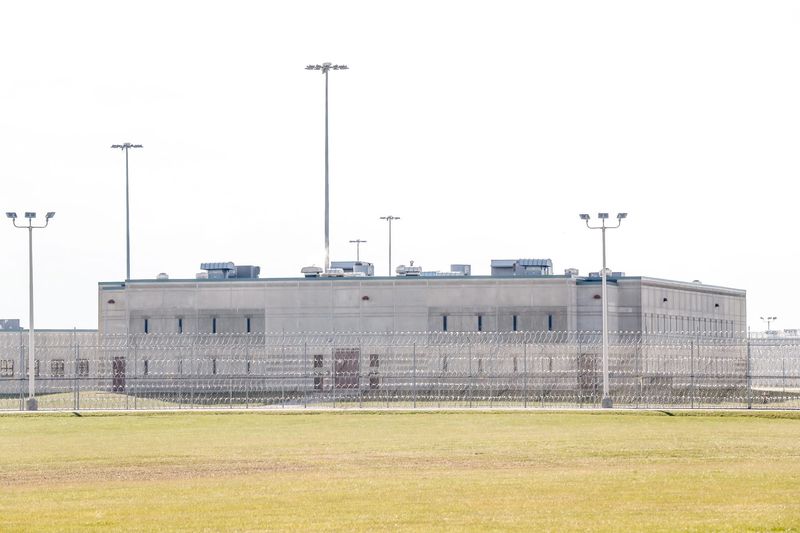
Last week, Department of Homeland Security officials began promoting a deal with the state of Indiana to use 1,000 state prison beds for federal immigration detention — calling it the “Speedway Slammer.” (The facility itself is 70 miles north of Speedway, near Bunker Hill.) Social media posts from government accounts hyping the deal included an AI-generated image of an ICE-branded Indy car on track at a version of the Indianapolis Motor Speedway that featured a hulking prison in the background instead of the iconic pagoda.
The IndyCar racing series — which shares corporate ownership with IMS — acted swiftly to extricate itself from a conversation it hadn’t wished to enter, asking DHS to stop using intellectual property. DHS insisted no such violation occurred, but quietly deleted the image — only to post another one Aug. 8 with a fleet of slightly modified ICE-liveried racecars.

Many fans remain upset about the incident, with many blaming the series for not criticizing the Trump administration’s immigration policy more forcefully — and even calling for boycotts.
There’s more to a sport than its ownership. The series’ response hardly scratched the surface of why using IndyCar and the Speedway for literal government propaganda, promoting immigration detention, felt to so many of us like a violation of a racing series and a set of traditions that we dearly love.
Why DHS is using state facilities — and what it means
First of all, let’s talk about why DHS is doing this to begin with.
Using state facilities to detain immigrants helps muddy the waters about who’s actually responsible. In Florida, where a facility called “Alligator Alcatraz” is ostensibly operated by a state department that doesn’t have a written agreement with the feds, detainees have been served maggot-infested food and had to clean out toilets with their bare hands.
But it’s also happening because the government simply needs the space. Immigration and Customs Enforcement (ICE) agents have been ordered to meet astronomically high arrest quotas, which can only be met by sweeping people up first and checking their immigration status later.
Frequent reports of U.S. citizens getting arrested and detained have raised real concern that ICE is resorting to industrial-scale racial profiling to make its numbers. Court cases show government lawyers have argued that agents should target people based on factors like speaking Spanish, looking Mexican, or working in gardening.
The message being sent is that some people are presumed unwelcome, particularly Latinos. Communities around the U.S. have heard it loud and clear: community parades, ethnic restaurants and Spanish-language church services have all shuttered or been cancelled out of fear of ICE. And the message is reinforced by the government’s jokey, sneering tone on social media, posting “soothing” videos of clanking chains alongside recruitment pitches to join ICE and “protect your culture.”
That’s the culture war DHS dragged IndyCar into — casually appropriating the series and the Speedway as if it owned Americana, as if anyone who loves American traditions would share its vision of who counts as “real America.”
It couldn’t be more wrong.
What Pato O’Ward and IndyCar really stand for
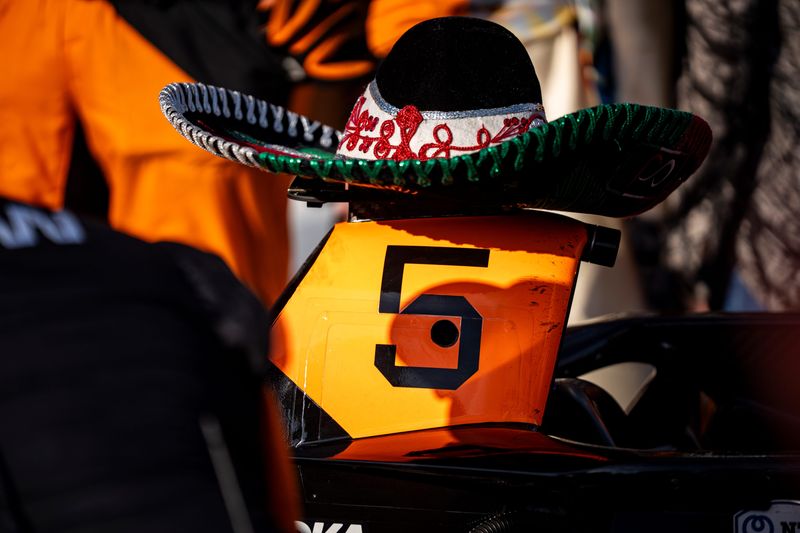
Take Pato O’Ward, my very favorite racing driver, whose IndyCar No. 5 showed up in AI-mangled form on the original (deleted) image DHS posted. O’Ward races under the Mexican flag but has roots in Texas as well. He’s not politically outspoken and mostly demurred when asked about the “Speedway Slammer” image, but did say “I don’t think it made a lot of people proud, to say the least.”
The word choice was striking; O’Ward’s pride in representing his community — and its pride in him — is one of the great joys of IndyCar in 2025. The same people who are being scared out of public life by ICE in other regards are some of the most visible fans at every IndyCar race.
Of course they’re welcome. Of course everyone is welcome.
First-time Indianapolis 500 attendees, or newcomers to the racing series from the driver’s seat to the broadcast booth, are consistently bowled over by just how welcoming IndyCar is. What makes the last Sunday in May the best day of the year is the combination of traditional ritual and an unpretentious, open vibe.
You don’t have to be a Hoosier to choke up at “Back Home Again in Indiana,” any more than you have to be a gearhead to hold your breath at the greatest spectacle in racing. When I evangelize for the 500 to my coastal friends, I always tell them it’s the Midwest at its best. It’s America at its best.
ICE doesn’t own the rights to IndyCar, and it doesn’t own the rights to America. The rest of us get a say in the meaning of the things we love.
Dara Lind is a senior fellow at the American Immigration Council and a former immigration reporter.
This article originally appeared on Indianapolis Star: ICE’s ‘Speedway Slammer’ propaganda gets IndyCar — and America — wrong | Opinion
Reporting by Dara Lind / Indianapolis Star
USA TODAY Network via Reuters Connect