A few days after immigration officials placed a GPS monitoring device on his ankle, it started to swell. The bracelet gripped his left ankle so tightly that it restricted blood flow. Discomfort escalated to pain. It kept him awake at night and made even the mundane tasks of standing and walking almost unbearable.
By the time officials finally agreed to remove the device, he said his ankle was so swollen that the straps were starting to come off. His skin was peeling, and puss was seeping out. By then, it was too late.

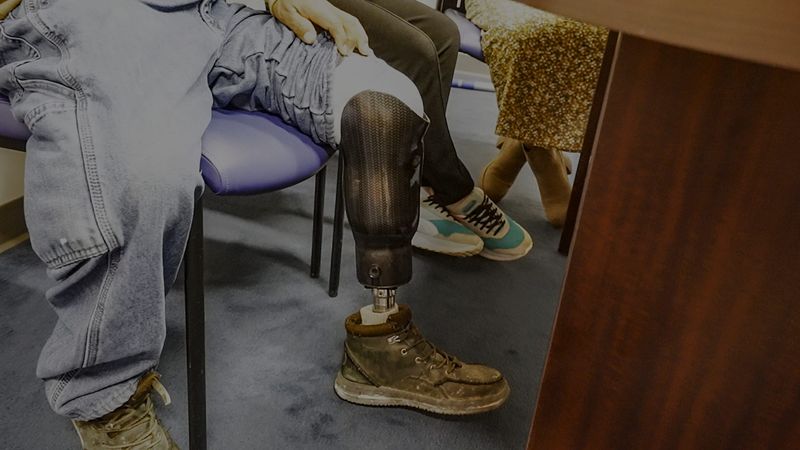
His lower left leg, a few inches below the knee, was amputated.
The father of four, who lives in Noblesville, fled to the United States two years ago to seek asylum. He arrived at the U.S.-Mexico border in Arizona, where he was enrolled in a federal supervision program and legally allowed into the U.S. for humanitarian reasons. The 51-year-old hoped for a better life for himself, his wife and their four daughters after they lost their home in Mexico.
He never imagined it would cost him his leg.
He has spent the last two years in Central Indiana, saddled with medical bills, yet unable to work because of the actions and indifference of immigration officials and a private government contractor that runs the supervision program, according to a federal lawsuit that alleges constitutional violations.
The case is one of at least four lawsuits filed within the past decade that alleged injuries from ankle bracelets outfitted by BI Incorporated, which provides monitoring services for the federal government. Three of the cases involved those under the supervision of U.S. Immigration & Customs Enforcement.
BI Incorporated, a subsidiary of private prison giant GEO Group, has not responded to questions, including how often its devices have led to injuries.
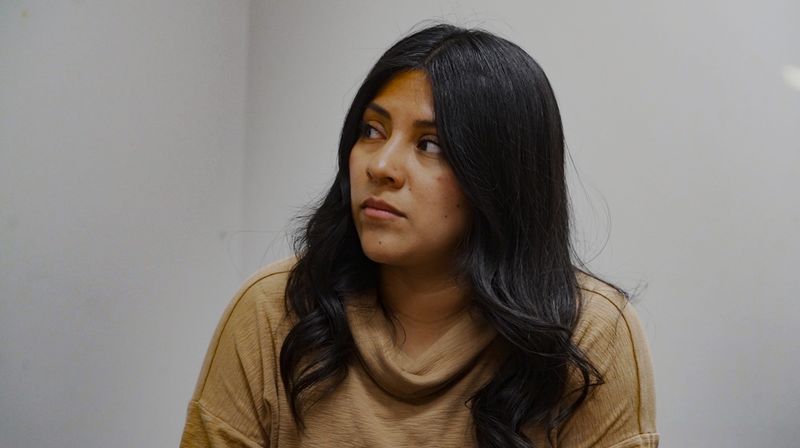
The asylum seeker and his immigration attorney agreed to speak to IndyStar on the condition that he not be named, citing the confidentiality of asylum cases and his fears of retaliation. The man could not afford transportation, his attorney said, so IndyStar arranged a rideshare for the man to the law firm’s office for the interview.
Now, his and his family’s future are even more uncertain.
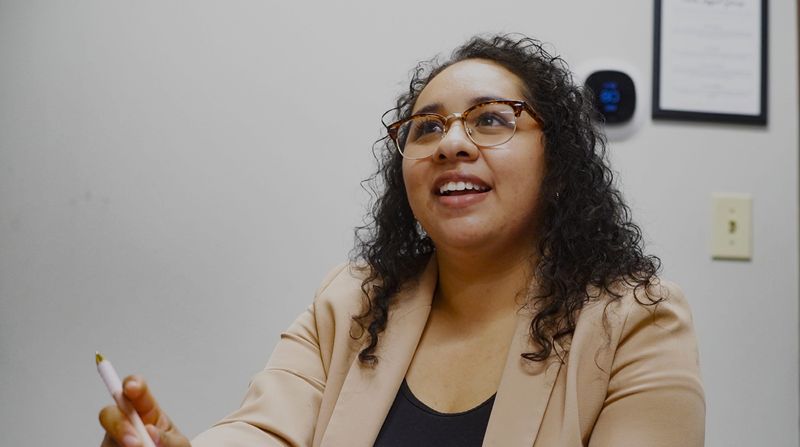
The Trump administration has implemented sweeping restrictions on asylum seekers, including asking immigration judges to deny cases even without hearing the merits. Jessica Venters, the man’s immigration attorney, said this means asylum seekers who arrived under the Biden administration and have waited for years to present their case before a judge no longer have that chance.
“It’s not what they expected,” Venters said. “It wasn’t the law when they entered either.”
With part of his limb gone, Venters’ client, along with his family, are facing deportation to a third country where they have no connections.
“We don’t really know,” he said through the law firm’s interpreter when asked what he thinks will happen if they get deported. “We’re confused.”
Leaving his hometown
He grew up in San Jose Monteverde, a small remote village in Oaxaca in southwestern Mexico. According to him and his attorney, he is part of the Mixtec people, an indigenous group that has long inhabited Oaxaca and the southern part of the country.
His family was poor. His schooling ended in fourth grade, and he worked mostly in construction. When he was younger, he crossed the border and went to California, where he trimmed trees and worked on farms picking strawberries, pears and peaches. His wife, who is also a Mixtec, later joined him there. They had three daughters, all born in Fresno in California’s Central Valley.
Several years ago, his elderly mother became sick, so he and his family went back to Mexico to be with her. She later died.
Indigenous groups have long faced social inequalities, systemic discrimination and marginalization in Mexico. Despite government measures, groups like the Mixtec have more limited access to housing, education and other basic services, according to a 2012 report by Amnesty International. They speak a different dialect, have a darker skin color and dress differently, making them easily identifiable. They also live in the most remote, least developed part of the country and have little opportunity to own property. Those who do own land don’t have enough of it to make a sufficient living.
Venters, of the Flora Legal Group in Indianapolis, said her client became the target of extortion by groups in his hometown after his mother died. He was forced to pay 150,000 pesos a year, or about $8,600 in today’s dollars, to live in the family home he built, Venters said. When he couldn’t pay, his family was kicked out and attacked with sticks.
“They took away my property… I wasn’t able to give my family a roof over their head,” he said. “I had no other choice but to come back [to the U.S.] because I had nothing else there.”
Venters said her client also tried to find another place to live in Oaxaca but was unable to do so.
“They were practically homeless,” she said. “That’s when they decided to flee to the United States.”
Seeking asylum in the U.S.
On April 18, 2024, he, his wife and their fourth and youngest daughter who was born in Mexico went to Sasabe, Ariz., a tiny desert town located on one of the most remote stretches of the border.
The Biden administration at that time was experiencing record-high arrivals at the U.S. southern border. Migrants from Mexico, Central and South America, and other countries were arriving at the border to seek asylum, many with their families. Hundreds were showing up along the Sasabe border.
U.S. Customs and Border Patrol agents brought the family to a port of entry in Tucson, about 70 miles northeast of Sasabe. He recalled seeing hundreds of people like him being divided in groups of 40 and 50, waiting to be processed. DHS documents show the family was paroled into the U.S. for humanitarian reasons and were allowed to stay in Anderson, where a close family member lives, while they sought asylum. They later moved to Noblesville.
The documents also show that he was enrolled in ICE’s Intensive Supervision Appearance Program or ISAP, which began in 2004 and uses technology to monitor and supervise someone with a pending immigration case as an alternative to detention.
“ISAP exists to keep tabs on the whereabouts of aliens with final deportation orders and ensure compliance with release conditions, and regular check-ins are part of this compliance,” ICE, which is not a defendant in the asylum seeker’s lawsuit, said in a statement to IndyStar.
Because of limited detention space and a surging number of border arrivals, the Biden administration relied heavily on the program and on BI Incorporated, which has been providing electronic monitoring services to the federal government for two decades. An earnings report in November showed that a two-year contract to continue the monitoring program is estimated to be worth $1 billion. GEO Group, BI Incorporated’s parent company that operates some of the largest ICE detention centers in the country, has raked in millions more as the Trump administration shifted policies to mandatory detention.
Under Biden, the asylum seeker became one of thousands enrolled in the monitoring program. There were 179,071 people in the program at the end of fiscal year 2024, according to data from ICE. The highest in recent years was in 2022, at 322,701.
Depending on individual circumstances, those under supervision are required to either download an app, which they can use to check in with immigration officials, or wear monitoring devices on their wrists or ankles. In the asylum seeker’s case, it was the latter.
It’s unclear why he was issued an ankle bracelet, as opposed to other means of supervision. But generally, Venters said ankle monitors are issued to people who are deemed to be possible flight risks. After a year with no issues, they can request less intrusive forms of supervision, like the app.
As soon as immigration officials in Tucson placed the ankle monitor on him, he knew something was wrong.
‘How am I supposed to work?’
He recalled telling an immigration official at the Tucson port of entry that the device was too tight and asking if she could loosen or place it over his sock. He said the official ignored his request.
The family later boarded a flight to Indianapolis (he said he borrowed money for the plane ticket from his family member in Indiana). DHS documents he’d brought with him to Indiana showed he was required to check in with the BI office on the northwest side of Indianapolis. He was also required to appear for a credible fear interview, a screening process and the first step in an asylum case, at the federal courthouse in downtown Indianapolis.
He recalled telling officials at both appointments that his ankle bracelet was too tight and was causing him pain. He asked that the device be loosened, but he said his requests were ignored. At the BI office, he said one of the employees scolded him, telling him that “people like you” create more work for the company. He made the same requests to two asylum officers for the U.S. Citizenship and Immigration Services, or USCIS, according to his federal lawsuit, but those were also ignored.
USCIS, which screens asylum cases, referred questions about the monitoring program to ICE. Neither agency commented on the allegations.
After several days, the asylum seeker said he was struggling to stand or walk because doing so meant putting weight on his numb and swollen ankle. He made multiple visits to St. Vincent Hospital in Anderson, where he said he was given antibiotics and some ointment. But doctors told him they couldn’t do much unless the device was removed.
It’s unclear if healthcare providers recommended that the device be removed. But hospital records from a May 7, 2024 visit advised him to return to the emergency department if the redness, swelling and pain on his left ankle worsens.
He went back to the BI office with his hospital papers and asked employees to loosen the device. Again, he said, his request was denied. When the pain became unbearable, he went back to the BI location again, and officers finally agreed to remove the device. By then, he said he’d been wearing the bracelet for three weeks. His ankle was already too infected.
Doctors told him his leg needed to be amputated. At first, he refused and instead asked for antibiotics and medication for the pain.
“How am I supposed to work? How am I supposed to walk?” he said, adding that he has four daughters, ages 10 to 16, to support.
He’s known only manual labor. He’d hoped to work on a farm or in construction doing house repairs or roofing. He worried that losing his leg would make finding that type of work impossible. But he said doctors told him the infection would only spread. On June 4, 2024, according to court records, his lower left leg was amputated.
He felt relief, at least initially, because the swelling and the pain were finally gone. But sometimes, he’d get up or walk too fast. In one incident, he fell and broke his nose.
“Because I forgot,” he said, crying. “I didn’t have a leg.”
Injuries from BI Incorporated’s monitoring devices seem to be rare, but not unheard of. In 2017, an immigrant under the supervision program alleged she fell and fractured her right ankle because the device was too tight and made walking difficult. In another federal lawsuit in 2020, an asylum seeker with a preexisting medical condition in her leg veins alleged the ankle bracelet restricted blood flow, causing swelling and clotting. Neither case involved amputations and both were settled for undisclosed amounts.
Another 2020 case involving an American with a pending federal criminal case alleged the device caused severe burns. The parties agreed to dismiss the case two years later.
Deportation to a foreign country
Since his ankle bracelet was removed, the asylum seeker has been allowed to use SmartLINK, an app run by BI, to check in with immigration officials.
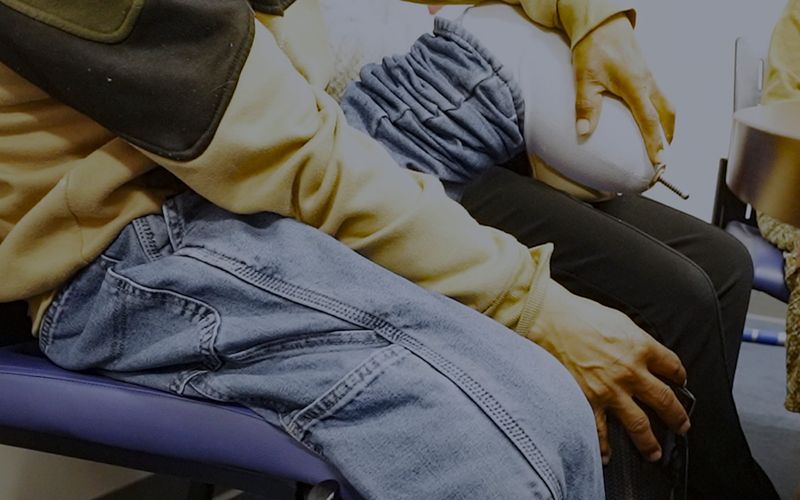
He tried to find work, but he said he’s been unable to because what’s left of his left leg still hurts. Hospital records show that he was back in the emergency room on Oct. 18, 2025, more than a year after the surgery, because of a pressure ulcer on his stump. He now walks with a prosthetic leg, but he said that, too, is often painful. He stuffs a piece balled-up fabric inside it to alleviate the pain.
Venters said the asylum process typically involves a hearing, during which applicants can present evidence to an immigration judge on why they’re fearful of returning to their home countries. But under the Trump administration, DHS has increasingly started to use a procedural tool, called a motion to pretermit, to summarily dismiss cases and accelerate deportations without hearings.
By filing these motions, DHS is arguing that asylum applications should be denied for failing to meet basic legal requirements, including failure to pay a fee and filing insufficient or incomplete application forms. The third reason — one that applies Venters’ client — is that asylum applicants can be deported to third countries with which the U.S. has asylum cooperative agreements.
On March 26, almost two years since he, his wife and their youngest daughter sought asylum, an immigration judge issued a deportation order. Venters said DHS is looking to deport them to either Honduras or Ecuador, two countries where they have no ties. His attorneys have filed an appeal to the Bureau of Immigration Appeals, a process that could take years.
“I would like to ask this government not to throw us into another country,” he said. “Because we’re not bad people. We are good people.”
Contact IndyStar reporter Kristine Phillips at (317) 444-3026 or at kphillips@indystar.com.
This article originally appeared on Indianapolis Star: He sought asylum in Indiana. He says an ICE ankle monitor cost him his leg
Reporting by Kristine Phillips, Indianapolis Star / Indianapolis Star
USA TODAY Network via Reuters Connect