On Wednesday, Oct. 22, a team of IndyStar journalists traveled to Lake County, Indiana, for the fifth leg of our statewide reporting tour to hear about what issues matter to Hoosiers. The following is a dispatch from that visit. Read about our stops in Muncie, Daviess County, Perry County, and Boone County.
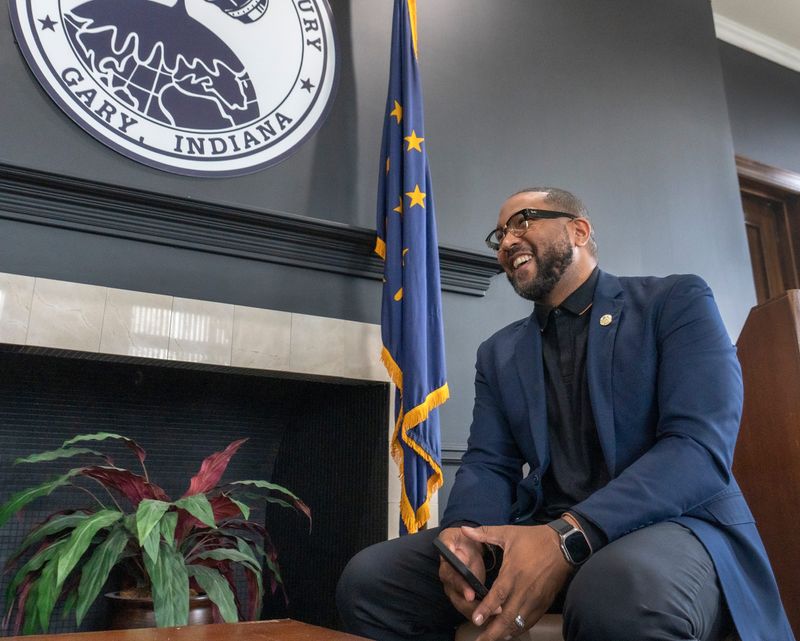
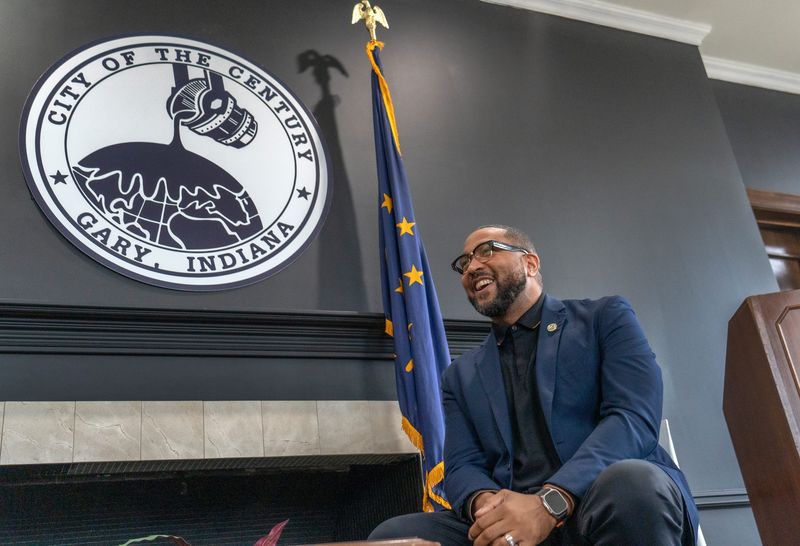
GARY — Mayor Eddie Melton believes his city is on the brink of a comeback.

After decades of economic disinvestment, blight, population loss and a stint of being America’s murder capital, things are changing in the city built by U.S. Steel.
Nippon Steel is poised to invest billions in Gary Works. There are groundbreakings and major job announcements, recent economic development wins, new money to revitalize downtown. The train to Chicago goes faster. Crime is down.
“Gary has a lot to prove,” Melton told IndyStar on our recent reporting tour stop in Lake County. “We got a lot to prove to ourselves, but more importantly to everybody that has counted us out.”
There’s been a longstanding disconnect between Lake County, where Gary is one of the largest cities, and its political leaders in Indianapolis, a divide that Melton says he’s uniquely positioned to bridge.
It’s not just that he and his neighbors cheer the Chicago Bulls instead of the Indiana Pacers. Melton said he can’t tiptoe around the history of racism and past local mismanagement that he believes have held Gary and the surrounding area back in past decades.
“That’s the past, right,” said Melton, a former state senator who took office as mayor in 2024. “Those are the things that we’re recovering from and trying to overcome.”
Things are already much improved from his first year as a state senator in 2017, when the state took control of Gary Community School Corp., which he attended as a child. That was “the hardest thing in my life” to deal with, Melton said.
By the end of his tenure in 2023, he was helping Gary secure new investments including casino tax revenue and millions to build a new train station. The schools came back under local control last year.
“My experience down there helped me to be prepared for right now in this moment,” said Melton. “(Leading) a predominantly Black city in a predominantly Democratic county in a predominantly Republican legislature. I know how to navigate those waters. I’m not saying I’ve mastered it, but I know it has allowed us to get further down the road. … Why wouldn’t you want to turn around one of America’s iconic cities? Who loses?”
When it comes to feeling isolated from Indianapolis, Gary isn’t alone. That sentiment is felt across Lake County and the rest of The Region, several residents told us, a consequence of being politically and culturally distinct from the rest of the state, not to mention operating in a different time zone.
While much of Indiana is barn-red, Lake County overall is light blue or purple, though the area trended more Republican in the 2024 presidential election, with President Donald Trump gaining ground compared to 2020.
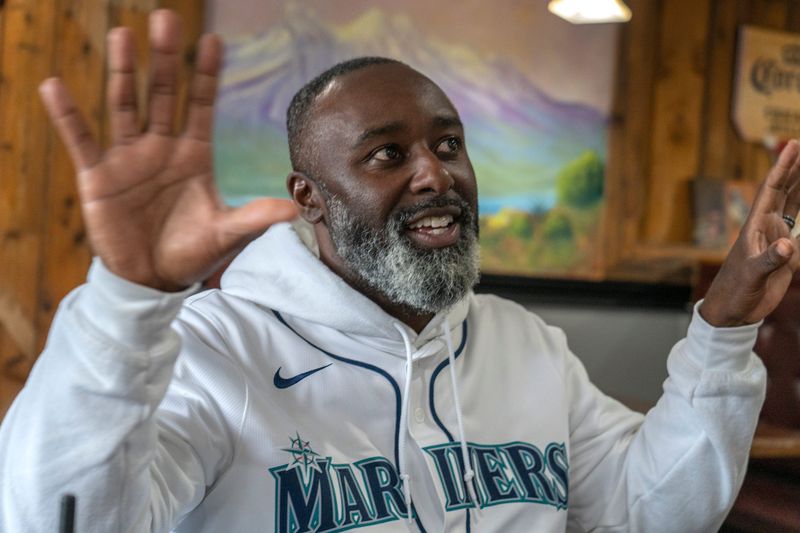
Ivan Ursery II, a Gary resident who identifies as a Black conservative, said the Democrat-Republican divide isn’t as pronounced in The Region compared to other parts of the state.
“It’s not a red-blue (thing) up here,” Ursery said. “It’s like, what you going to do for this area, you know?”
That’s part of why Ursery mostly approves of Melton’s job performance, even while critiquing other local “same old” Democrats who stay in office but don’t seem to accomplish much.
“I’ve been back 15 years now and it’s the same thing,” Ursery said. “Stuff doesn’t get done. … Stuff is getting done now. I respect him for that.”
Several cities in the area are split almost 50-50 between Democrats and Republicans. In Hobart, for example, the votes for Democrat Kamala Harris and Trump were almost exactly evenly divided in 2024. The same was true in nearby Highland.
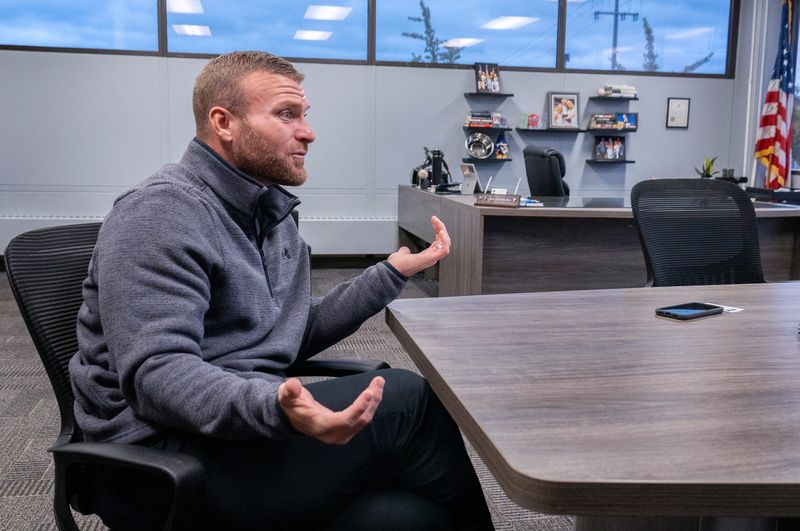
“I’d say a lot of us are either just right of center or just left of center,” said Hobart Mayor Josh Huddlestun, a Democratic mayor who describes himself as the “most unpolitical politician in the world.”
There are people on the extremes, he said, but it’s more evident on the internet, not in real life.
“I could go into a restaurant or whatever and and have a beer with somebody and and they could be far-right,” Huddlestun said. “They can even be wearing a Trump shirt. And I don’t think there’s any issue. … They know that we’re both good souls. When you leave there and you go on social media, that’s where the divide is.”
Huddlestun said most of his neighbors care about the same things: how to provide for their families, the rising cost of living, health care and education.
“I feel like both parties have lost that sense of what matters most,” he said.
‘Handcuffed’ by the Statehouse
In downtown Hobart, Huddlestun feels disconnected from some of the decision-making that takes place at the Statehouse in Indianapolis, even though he and his neighbors have to deal with the consequences.
“We try to have conversations with them,” he said. “We don’t have the staff and the time to be going down there all the time.”
Overall, Huddlestun said the entire Region, which is comprised of several counties across Northwest Indiana, is treated more like the “forgotten child” by lawmakers than the “golden child” he believes it is.
“There’s opportunity up here, and I think we should be looked at that way as opposed to maybe, potentially the opposite way,” Huddlestun said. “There’s a lot of, I think, untapped potential.”
Huddlestun is trying to capitalize on the area’s assets and try to grow Hobart’s population and tax base even as he governs in increasingly tricky financial circumstances. New residents and investors aren’t flocking to the area as much as they were in recent years, he said, and current residents are feeling the pinch of child care expenses and groceries.
He’s also trying to figure out how to weather an impending city budget crisis caused by Senate Bill 1, this year’s property-tax reform bill that cut future funding to local governments. It’s one of several state policies he says he feels “handcuffed” by.
Before Senate Bill 1, Hobart’s finances were “trending in the right direction,” he said, and officials were building up cash reserves to bolster the city’s bond rating.
Now local units of government are facing millions in funding cuts that Huddlestun said will impact everything from public safety to the local schools. Cuts to the city budget will reach a combined $5.5 million by 2028, according to a legislative analysis. The school district will lose more than $4 million over the same period.
“You ask what’s burning inside of elected officials? I’m yet to go to a good community with a bad public school system; I think those are tied together,” Huddlestun said. “There’s a lot of pressure on them to make cuts. I know that impacts quality education, which impacts our community, which impacts home values. It’s just, there’s a ripple effect.”
Huddlestun said the city will have to make tough choices in the future. Raising the income tax, as some communities are now weighing in response to property-tax reform, could be a tough sell for residents. Per capita personal income in Lake County is slightly lower than the state average.
“Hobart is not this huge, wealthy, affluent community,” Huddlestun said. “Every dollar matters to our residents. Every dollar that they give to us is a dollar less they have to spend.”
‘Whoever’s going to win for us’
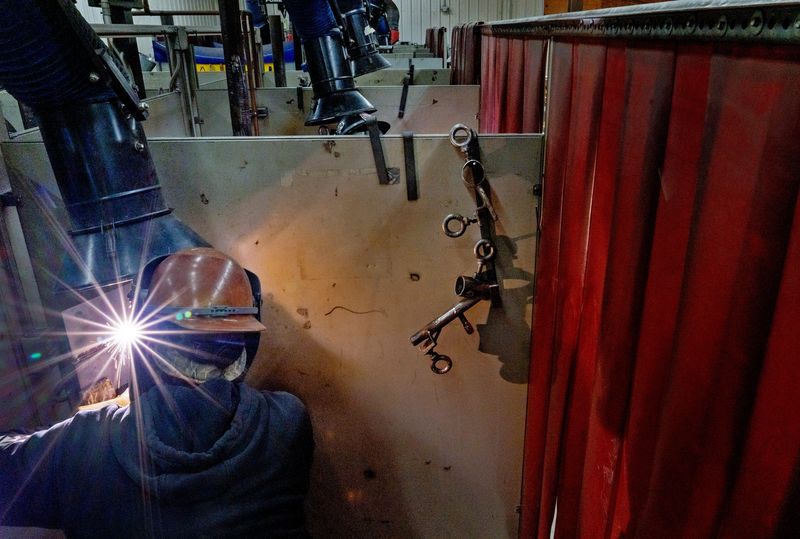
A few miles down the road in Hobart, Nick Tokarz takes a short break from training apprentices at the local International Brotherhood of Boilermakers hall. Upstairs, students are learning how to weld. Tokarz hopes there are good jobs for them when they finish the program.
It’s his 24th year in the union, a long enough time to see lots of politicians come and go, and the political winds shift numerous times. Tokarz said he doesn’t care much about party loyalty as much as he does economic opportunity.
“I hate the whole Democrat (or) Republican thing,” Tokarz said. “You’re supposed to be Democrat if you’re in the union. Whatever. I don’t care. Whoever’s going to win for us is what I’m voting. My big thing is protecting our work and keeping us working.”
Though he’s not hyper-partisan, Tokarz is hyper-invested in politics, especially local politics. He said he admired Huddlestun, the Hobart mayor, for supporting a local proposal to build data centers, even more so because he’s taken some heat over it. Tokarz is also cautiously optimistic about Nippon’s acquisition of U.S. Steel and its promises of investment.
The area needs more good-paying union jobs, he said, as the consolidation of steel mills in Northwest Indiana have created new economic uncertainty even after the decades-long shift away from U.S. manufacturing took a toll on the area.
“They want to put a bunch of money in here,” Tokarz said of Nippon. “That would be awesome for us.”
‘The right way’
Back in Gary, Melton says he believes the city is a “blank slate.” That’s both literal and figurative — tearing down abandoned structures means there’s room for physical new growth.
But he also sees a future where Gary sheds its past reputation and becomes a hub for new residents — while being an example of how to take care of longtime ones who have stuck it out through hard times and deserve to reap the benefits of growth.
Currently, he’s trying to negotiate a direct tax benefit to Gary from Nippon’s investment in Gary Works, which he said could be a “gamechanger” for the area, and make sure that the people he calls “legacy residents” aren’t displaced by new growth.
“I want Gary to be the model of how you do it the right way,” Melton said.
He isn’t alone in feeling optimistic.
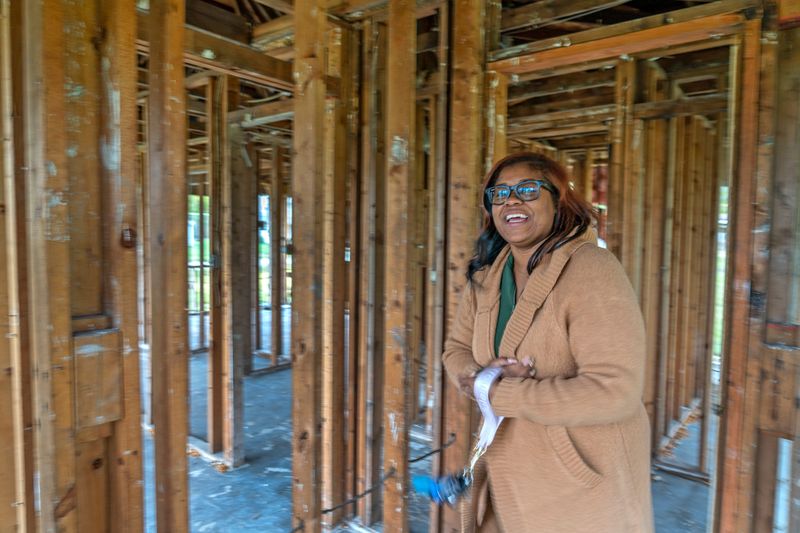
On Gary’s South end, longtime resident and nurse Leah Lewis stands inside the exposed framing of a previously abandoned home that’s been torn down to the studs.
It’s part of the old Colonial Gardens neighborhood, soon to be transformed into a model home for a new 80-residence neighborhood that she’s working to build with her family, which owns Lewis Construction Corp. The project is her family’s way of giving back to the community, she said.
“It was a really open, friendly neighborhood,” Lewis said of what she remembers from her childhood. “It was a nice neighborhood, but a lot of things have changed over the years. So we’re just trying to revitalize (the homes) and keep some piece of Colonial Gardens here.”
Lewis’ family kept the bones of the structure intact, but nearly everything else has been removed. She envisions an open kitchen, taller ceilings, an inviting home for a young family or a senior. Right now, there’s just wood framing, an old bathtub and a roof.
Much like her city, its transformation lies ahead.
“It does feel like it’s changing in a big way,” Lewis said. “This could be a pretty different city in a few years.”
Contact senior government accountability reporter Hayleigh Colombo at hcolombo@indystar.com.
This article originally appeared on Indianapolis Star: ‘Gary has a lot to prove’: How America’s former murder capital is staging a comeback
Reporting by Hayleigh Colombo, Indianapolis Star / Indianapolis Star
USA TODAY Network via Reuters Connect