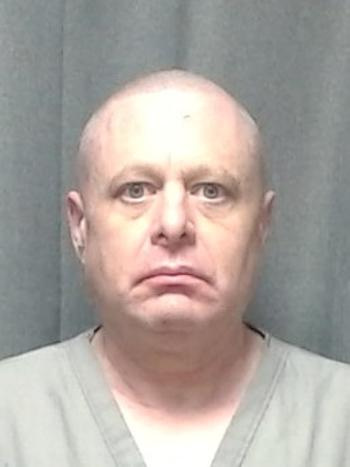
INDIANAPOLIS — While Delphi murderer Richard Allen serves his 130-prison sentence in an Oklahoma prison for safekeeping, his appellate attorneys have asked for the opportunity to argue his case in front of the Indiana Court of Appeals.
The motion was filed Monday night, along with a 58-page reply to the state’s rebuttal brief countering Allen’s initial brief on his appeal.

Allen’s appeal is now fully briefed, according to a docket entry. The appeals court has not yet indicated whether it will allow oral arguments in Allen’s case.
Allen, who is now 53, was convicted Nov. 11, 2024, of two counts of murder for the Feb. 13, 2017, killings of Delphi teenagers Libby German and Abby Williams. The case went unsolved for nearly six years.
The girls’ killer became known as “Bridge Guy,” and his blurry image was captured on video from Libby’s phone, as well as his voicing ordering the girls “down the hill.”
“Bridge Guy” forced the girls from the south side of the Monon High Bridge east of the Carroll County city. He made them ford Deer Creek to the bank on the north side, where the two were killed, according to evidence presented at Allen’s trial. The girls’ bodies were not found until Feb. 14, 2017.
Allen was sentenced Dec. 20, 2024, to 130 years in prison — the maximum sentence allowed. He was moved in July 2025 from the Pendleton Reformatory to the custody of Oklahoma’s Department of Corrections.
The reply brief argues many of the same points raised in pretrial motions, as well as raised in post-conviction motions and Allen’s initial appeals brief.
Some of the arguments are that then-Det. Tony Liggett omitted exculpatory information from the probable cause affidavit to get a search warrant for Richard Allen’s house, where they found a .40-caliber pistol that prosecutors say matched an ejected unfired bullet found at the murder scene.
The search warrant probable cause, for example, omitted the fact that an eyewitness’ description of a man on the bridge did not match Allen’s age or physical description.
“To get a warrant, they ignored that (Betsy) Blair, the only eyewitness to the man on the bridge, described someone different than Allen and his car,” the brief states. “They ignored that Blair said the man (Sarah Carbaugh) saw was different than the man she saw. And they lied about Allen’s admitting he wore a blue jacket. …
“The pattern is unmistakable: Every fact undermining Liggett’s theory was omitted; every fact supporting it, however distorted, was included,” the brief states. “Strip away the falsehoods and restore the omissions, and probable cause evaporates.”
The brief calls into question Allen’s statements of killing the girls while he was in pretrial detention in solitary confinement at a maximum-security prison. The brief notes that some of his claims were factually wrong. Some of the confessions were made during a time when Allen was psychotic from being held in solitary confinement for 13 months.
“Allen’s statements expressing guilt correspond with his psychosis, a time he does not remember,” the brief states. “After 5.5 months of solitary, Allen lost touch with reality, questioning not only whether he was innocent or guilty, but whether he was dead or alive.”
Jurors heard one phone call Allen made to his wife on April 3, 2023, but the court’s ruling barred the defense from playing two other phone calls Allen made within five hours of the call jurors heard.
In one of those calls, Allen tells his father he did not know “how much longer I’m going to be lucid.”
The reply indicated that detectives dropped their investigation and theory that the girls were sacrificed in a ritual killing as soon as Allen became a suspect.
“What changed was not the evidence,” the brief stated. “What changed was the arrest.
“When Allen was charged, the State abandoned the theory, reversed its position on the Blair and Carbaugh sketches, recharacterized the investigation as complete and moved to exclude the evidence it had spent years developing.
“That reversal is not a neutral evidentiary decision,” the brief states. “It is a confirmation bias made visible — law enforcement finding a more convenient suspect and retrofitting the evidence to fit him, discarding what pointed elsewhere.
“The jury was entitled to see that pivot. The trial court’s rulings ensured it never did. …”
“They abandoned the obvious theory that more than one person did it,” the brief states. “They ignored the oddness of the scene and the sticks and the fact that Allen lived and worked in a community for five years, contacted law enforcement proactively to help and cooperated fully.”
Reach Ron Wilkins at rwilkins@jconline.com. Follow on Twitter: @RonWilkins2.
This article originally appeared on Lafayette Journal & Courier: Delphi murderer Allen asks for oral arguments at Indiana appeals court
Reporting by Ron Wilkins, Lafayette Journal & Courier / Lafayette Journal & Courier
USA TODAY Network via Reuters Connect