DigIndy is finally dug.
The multi-billion-dollar, multi-year project has wrapped, and most of the city’s sewage is now being safely shuffled away from Indianapolis’s creeks and rivers to an underground system of deep rock tunnels.

Citizens Energy Group successfully excavated dozens of miles of tunnels underneath city streets to capture sewage and rainwater and prevent the untreated waters from reaching the already polluted White River.
To celebrate the achievement, Citizens is holding a ribbon-cutting ceremony at the Celebration Plaza Amphitheater at White River State Park on Oct. 9. The celebration begins at 6 p.m. with food trucks and beer. DigIndy leaders and community leaders will give remarks and cut the ribbon at 7 p.m.
Here’s what to know about the extensive project:
Underground labyrinth for Indy’s sewage
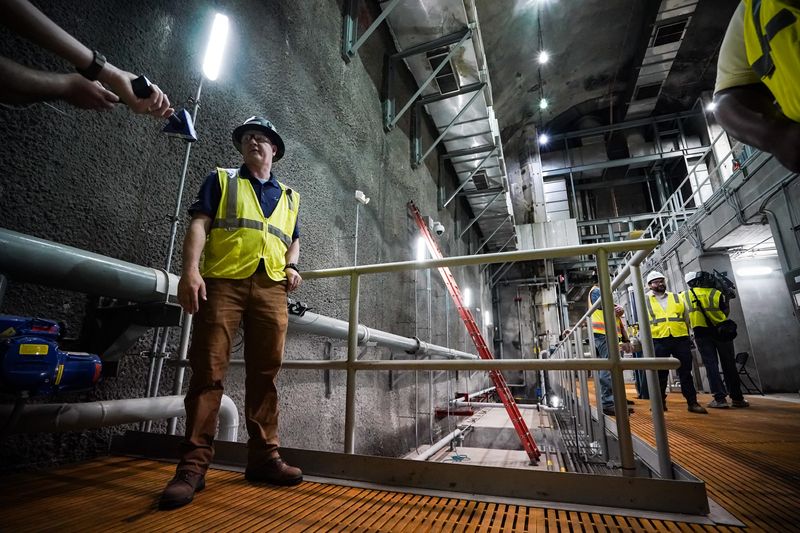
DigIndy is basically a multi-million-gallon storage tank under the city, said Mike Miller, manager of Citizens Energy’s DigIndy Capital Program.
“When it rains, the pipes that would normally be overrun with combined sewage that would go to the river system now go to our tank,” Miller said. “Then that tank ultimately goes to a treatment system where we treat it and release it into the environment safely.”
The massive tunnel system took more than a decade to dig and prepare, during which time Citizens did more than bore out deep rock tunnels. The water utility also built tens of thousands of feet of additional sewers to connect drains and other infrastructure to the underground tunnels.
DigIndy by the numbers
DigIndy construction costs totaled nearly $2 billion, making it one of the largest civil infrastructure projects in the city’s history, according to Citizens’ officials.
The system captures and diverts roughly 95% of the sewage overflows in the city, or about five billion gallons a year. To put this into perspective: If the 253-acre Indianapolis Motor Speedway were filled with five billion gallons of water, the water line would be 60 feet high, or about the same height as a six-story building.
During the project, excavators removed about eight billion pounds of rock for DigIndy’s tunnels, which total about 28 miles in length and were dug 250 feet underground.
The system moves about 290 million gallons of water north to south, east to west, until it reaches Citizens’ Southport Advanced Wastewater Treatment Plant where three massive pumps transfer the water for treatment. The plant has an additional fourth pump in reserve in case the water needs to be moved more quickly out of the system. Each pump can handle about 30 million gallons a day.
The four pumps are massive and stored in a large underground cavern at the Southport plant. The cavern is about 22.5 stories underground, and the elevator ride takes nearly a full minute before the doors open into the cave.
Why DigIndy was dug
DigIndy’s origin story begins around 2005 when the City of Indianapolis agreed to improve its combined sewer overflow system. But before work got started in 2006, the U.S. EPA filed a civil action against the City of Indianapolis, claiming the city was violating the federal Clean Water Act in the way it ran the wastewater and sewer system.
The city ended up selling its wastewater utility to Citizens Energy in 2011, and with it, the agreement to address the overflow system.
Citizens broke ground on the DigIndy project in 2013 and started with mining the tunnel system, which was broken up into different sections. Work began on a 5.8-mile White River tunnel in 2016, along with the smaller 1.9-mile Lower Pogues Run Tunnel.
Construction on the Deep Rock Tunnel Connector and the Eagle Creek Tunnel began in 2017, totaling nearly 10 new miles of tunnel. Then in 2020, work began on the two final tunnels: 3.9 miles at Fall Creek and 7.4 miles at Pleasant Run.
Tunnel mining finished in 2024, and the last year was spent completing the other infrastructure odds and ends that brought the whole project together.
In the years to come, the federal government will require Citizens to monitor how well the project is keeping the White River clean from sewage.
IndyStar’s environmental reporting project is made possible through the generous support of the nonprofit Nina Mason Pulliam Charitable Trust.
Karl Schneider is an IndyStar environment reporter. You can reach him at karl.schneider@indystar.com. Follow him on BlueSky @karlstartswithk.bsky.social or X @karlstartswithk.
This article originally appeared on Indianapolis Star: Citizens Energy completes DigIndy system to protect White River: What to know
Reporting by Karl Schneider, Indianapolis Star / Indianapolis Star
USA TODAY Network via Reuters Connect