Late evening on April 2 of this year, three tornadoes descended out of an epic, multi-state thunderstorm to carve a path of destruction across western and northern Delaware County.
Just before 10 p.m., an EF-0 tornado crossed the Madison County line into Mt. Pleasant Township and dissipated near Division Road. Meanwhile, an EF-1 formed northwest of Muncie on Nebo Road and ran through Country Village to Shideler. Then a violent EF-2 twister tore across 15 miles of western and north-central Delaware County, leaving a wreckage trail from Interstate 69 nearly to Eaton.

Delaware County’s Emergency Management Agency later reported dozens of structures damaged and six homes destroyed. Regionally, heavy winds toppled trees and snapped thousands of limbs across East Central Indiana. In Delaware County alone, 12,000 customers lost power.
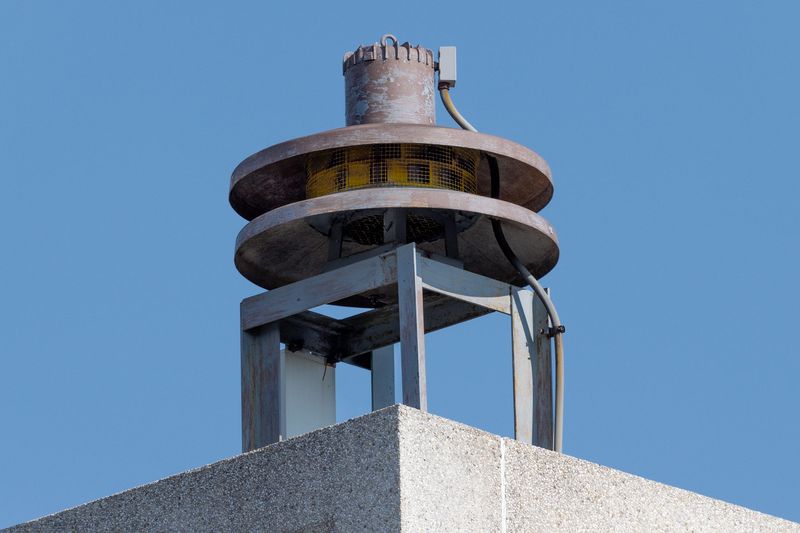
I ran to my basement after hearing the piercing wail of Muncie’s outdoor warning sirens. My house in Kenmore Neighborhood is surrounded by no fewer than eight of them.
I find the sirens terrifying — an ominous call to defensive action because some horror is rapidly approaching from the sky. I appreciate the severe weather details that text, radio and app alerts provide, but it’s the piercing banshee-howl of a siren that sends me running for cover.
The sirens’ primary purpose now is to warn people outside to take immediate shelter from approaching violent weather, especially tornadoes. There are about two dozen sirens across greater Muncie and some in county towns like Gaston and Albany.
Growing up here, every Boomer and Greatest Generation member I knew referred to them as “air-raid sirens,” as in, duck and cover when you hear them because a Soviet intercontinental ballistic missile is about to unleash nuclear hell over Muncie. The name reflects the sirens’ original purpose and the Cold War reality of living in a town with heavy industry.
Delaware County’s first outdoor emergency warning system began as air-raid drills during the Second World War. No one in the 1940s really believed enemy bombers would reach this far inland, but like most Americans, Munsonians took part in civilian homefront readiness as part of the war effort.
The outcome of the war was also still uncertain when Muncie’s first air-raid system was implemented in fall of 1942. Earlier that year, Japan had seized parts of Alaska’s Aleutian Islands and German u-boats prowled off the Atlantic seaboard. Had either Axis power gained a North American foothold, so the thinking went, the Midwest industrial heartland might be within a bomber’s reach.
To prepare for such possibilities, Delaware County’s Civilian Defense Corps began air-raid tests. Led by Commander Hal McNaughton, the CDC was tasked with coordinating homefront defense, including blackout tests and air-raid drills. The corps’ command center was on the second floor of Muncie City Hall, then located at the northwest corner of Jefferson and Jackson streets.
McNaughton first tested an outdoor, steam-powered air-raid siren on Sept. 8, 1942. The test was administered by Knapp Supply of Muncie and Colby Equipment of Indy, whose workers brought a Foster Steam Siren, the loudest available. Managers at General Motors’ Chevy plant in Avondale volunteered access to their steam lines.
At precisely 2 p.m., in heavy rain, 150 pounds of steam barreled through the siren and out across greater Muncie. “The signal was plainly heard in all sections of the city,” the Evening Press reported. In Avondale, “It was deafening.”
The successful test prompted Muncie’s city council to fund five sirens for the Civilian Defense Corps, but the order was waitlisted. The manufacturer couldn’t meet demand and prioritized coastal cities.
Undaunted, Commander McNaughton moved forward with air-raid drills that fall. Instead of sirens, the CDC partnered with Muncie factories to coordinate outdoor shift whistles as the signal. A whistle test was then conducted on Nov. 23, 1942.
At noon, factory whistles shrieked in unison at Ball Brothers, Broderick Hammer, Ontario Silver, Chevy, Muncie Malleable, Indiana Bridge, Delco Remy, Indiana Steel and Wire, Kuhner’s, Muncie Foundry, Owens-Illinois Glass and Warner Gear. The test lasted three minutes: 60 seconds of intermittent blasts, followed by a minute of silence and then a minute of one long, continuous wail.
The test worked without issue and McNaughton moved forward with a citywide dim-out drill on Nov. 29, 1942. A dim-out required everyone outside to seek shelter. Lights were extinguished in homes, businesses and factories, though streetlights and Ball Memorial Hospital remained illuminated. Trains, overland buses and trucks could continue running, but everyone else had to pull over and take shelter.
At 10 p.m., Muncie’s factories blew their whistles and the city dimmed out. Hundreds of air-raid wardens patrolled streets, ensuring compliance. Clyde Shockley and Loren Yohey of the local Civil Air Patrol flew overhead, taking notes on what factories were still visible at bombing altitude. Below, CDC central command simulated mass casualty incidents around the city to test response time. At 10:30, the whistles blew again, lifting the dim-out.
The drill was productive. The next day, an overjoyed Muncie Star wrote that “the wholehearted way in which those in the city joined in making the dim-out a success was evidence of the war consciousness of our people.” If the enemy were ever to attack the White River valley, “Muncie will take no chances. The city will be prepared.”
A final drill occurred on the night of Jan. 3, 1943, when Delaware County’s Civilian Defense Corps ran a full black-out drill. The readiness exercise required Munsonians to extinguish every light, including those on streets and at the hospital. All train and auto traffic was to stop and every Munsonian was to shelter in place.
Once again, at 10 p.m., factory whistles shrieked in unison and Muncie went completely dark. The CDC ran new simulated first responder runs, while the Civil Air Patrol again flew overhead. Exactly 932 air-raid wardens patrolled Muncie streets, ensuring that all lights remained off. At 10:30, the whistles lifted the blackout.
By war’s end, Delaware County’s Civilian Defense Corps had procured and installed steam sirens. The system was later modified during the Cold War to the Emergency Alert System and modern sirens we know today.
Someone once told me that Muncie was a “primary-secondary target” for Soviet nukes, given our once-robust industrial base. I learned later it wasn’t really true, but I believed it as a kid. I developed a habit then of scanning the sky for Armageddon every Friday at 11 a.m. during the weekly siren test. I still do.
The sirens are a chilling but necessary reminder that absolute terror can descend from above at a moment’s notice. It’s always wise to heed their warning.
Chris Flook is a Delaware County Historical Society historian and senior lecturer of media at Ball State University.
This article originally appeared on Muncie Star Press: ByGone Muncie: Terror from above
Reporting by Chris Flook / Muncie Star Press
USA TODAY Network via Reuters Connect