Mayor Kerry Thomson said the community has to “rethink” housing options to combat Bloomington’s affordability crisis, and she sees the new Hopewell neighborhood as a first step in that shift, with small homes there expected to sell for less than $100,000.

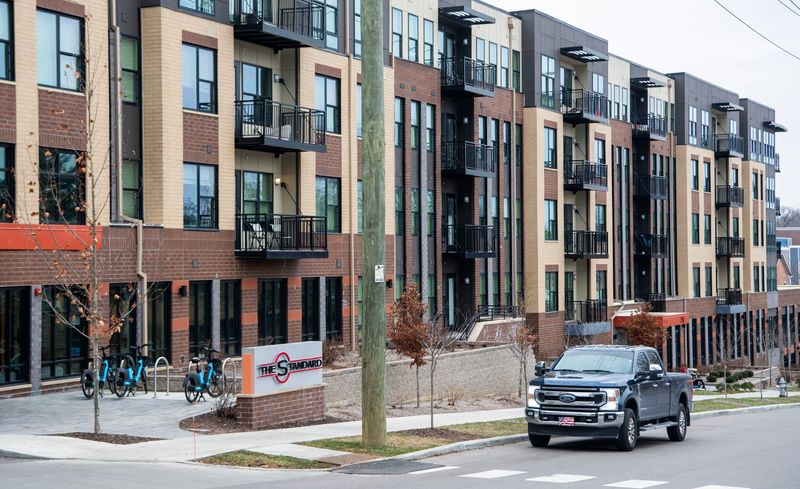
The Thomson administration envisions Hopewell, on the former IU Health Bloomington Hospital site along West Second Street, as a neighborhood with up to 1,000 housing units ranging from single‑family homes to apartment buildings.
The development’s first phase will provide a “very different kind of housing” from what the rest of the community offers, Thomson said.
That’s in part because the rezoning the administration has in mind — and which the city council will take up again on Wednesday — would nearly quadruple the number of housing units that the 6.3-acre property referred to as Hopewell South would provide.
Hopewell would offer homes for less than $100,000
Anna Killion-Hanson, director of the city’s Housing and Neighborhood Development department, said via email that the property under current zoning would allow 28 homes, which, she said, each of which likely would cost $600,000. The city’s plan calls for 98 units instead, with many at a much lower price.
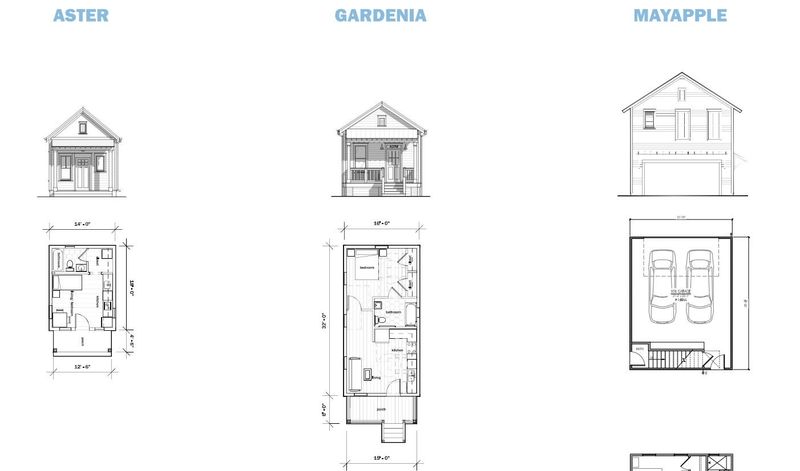
A chart Killion-Hanson provided shows 15 types of units — with names from Aster to Trillium — ranging in square footage from 252 to more than 2,000. Prices range from $83,160 to $653,950. Monthly mortgage costs run from $357 to $2,808. For the units to remain affordable, required annual incomes would range from just over $25,000 to just under $200,000.
All the units will be sold — not rented — though administration officials warned details about size and pricing have yet to be finalized and are subject to input by the city council. Council members have said the project is too important to wave it through without scrutiny and without making sure the units are actually affordable. Killion-Hanson last week described the ongoing discussions as “productive — if at times challenging.”
Thomson administration officials have warned that prices will rise the longer it takes to get any units built in the neighborhood, as interest rates, construction costs and fuel prices remain volatile. Killion-Hanson said last week, “It will be challenging to begin construction this calendar year.”
Thomson said she wants the smallest units to go to young professionals.
“That’s the age group we’re missing in Bloomington,” she said. “We need to attract them and keep them for our workforce, for our business growth and for our schools.”
Zoning code favors apartments over single-family homes
The mayor said the Bloomington housing market suffers from a bifurcation in which rental costs are driven by undergraduate students at Indiana University, while housing prices are driven by lack of supply and shrinking families.
“Unless you’ve been here for a long time, you either have to rent at a very high cost, or you have private wealth and you can buy into the market,” Thomson said.
In the last 10 years, new rental units have primarily targeted undergraduate students — and those units typically are not attractive for young professionals or families, Thomson said.
Killion-Hanson said that dynamic is a result of Bloomington’s zoning code, which favors large multifamily developments.
“Those are often the only projects that can absorb the time, cost and complexity of the approval process,” she said via email. “This reality has limited the production of attainable homeownership opportunities.”
Market mismatch: Household size vs. house size
In addition, the city’s population is aging, and family sizes are shrinking.
“My family is a perfect example,” Thomson said. “We live in a four-bedroom house. At one point, we had five kids and two adults in that house. … As of August, we will have two adults and one kid, but we haven’t moved. Some larger family could be living in that house. So people don’t understand how … population (is) going down, but we don’t have a whole bunch of housing for you. This is how that happens.”
Killion-Hanson said the average home in Bloomington has more than three bedrooms, but single-person households make up a significant share of the population.
The numbers highlight “a clear mismatch between the housing stock and the needs of many residents.”
With Hopewell, Thomson said, the city may be able to interrupt those dynamics. And if that works, the new neighborhood may serve as a model for other sections of Hopewell and other neighborhoods.
Killion-Hanson said rethinking the city’s approach to housing goes beyond real estate economics: Nearly three in four workers commute to Monroe County from outside the area, in part to avoid Bloomington’s high housing costs. The high share of commuters affects residents who live and work in town, as it worsens air quality, parking and traffic.
Thomson said her administration, through the planning department, this summer also plans to propose some changes to the local zoning code that the mayor expects will improve housing affordability and attainability — beyond the Hopewell site.
Boris Ladwig can be reached at bladwig@heraldt.com.
This article originally appeared on The Herald-Times: Bloomington mayor touts Hopewell as model to expand homeownership
Reporting by Boris Ladwig, The Herald-Times / The Herald-Times
USA TODAY Network via Reuters Connect