Put 48 teams from all corners of the globe together for the World Cup, ask them to play 104 matches over a five-week period, and there’s no telling what might happen.
Over the years, not only did a player suffer a heart attack during a match, he insisted on finishing it (the game, not his life). An underdog of a team felt so disrespected it resorted to urinating on likenesses of its opponent. Another team couldn’t understand why its mascot, a camel, wasn’t welcomed at the stadium. Witches were summoned to cast spells. A fan was so certain his team would prevail, he promised to take his own life if things didn’t go as planned (they didn’t).

The only certainty this time is that no team — not defending champion Argentina, not Spain, not Curacao — is going to go home with the World Cup trophy.
World Cup tickets
It was stolen.
Welcome to the 2026 World Cup, with the largest field ever assembled for the quadrennial tournament over the largest territory, with the United States, Canada and Mexico serving as the first three-pronged hosts. This event will bear almost no resemblance to the first World Cup, in Uruguay in 1930, other than adding a rich layer to the strange, poignant, wacky and confounding history only a competition of this magnitude can provide.
What else could be expected of a sport whose original 14 rules were drawn up in a pub more than 150 years ago?
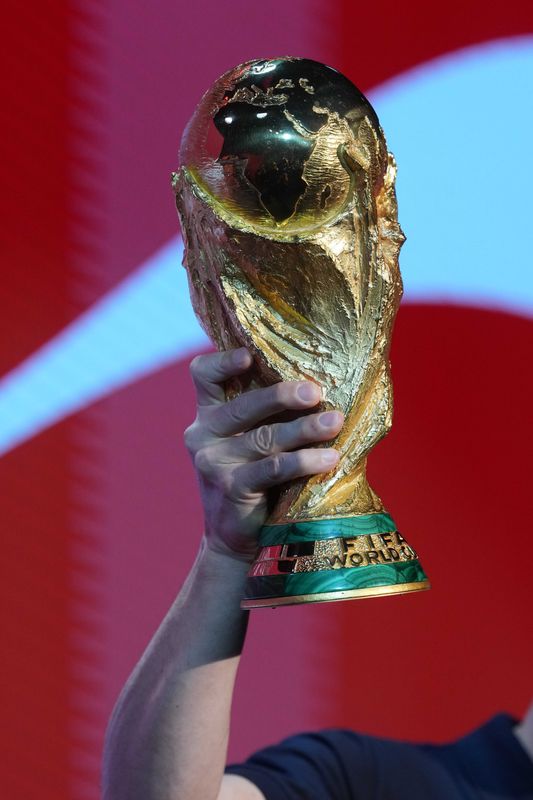
Eventually, the idea was hatched to bring together nations to crown a world champion, with an 18-carat trophy the ultimate prize. The Italians were proud possessors of the trophy after the 1938 competition, but with World War II breaking out, the head of the Italian federation decided that rather than keep the cup in a bank vault in Rome, it would be safer in a shoebox under his bed. Laugh if you must, but it baffled the SS during a search of his apartment.
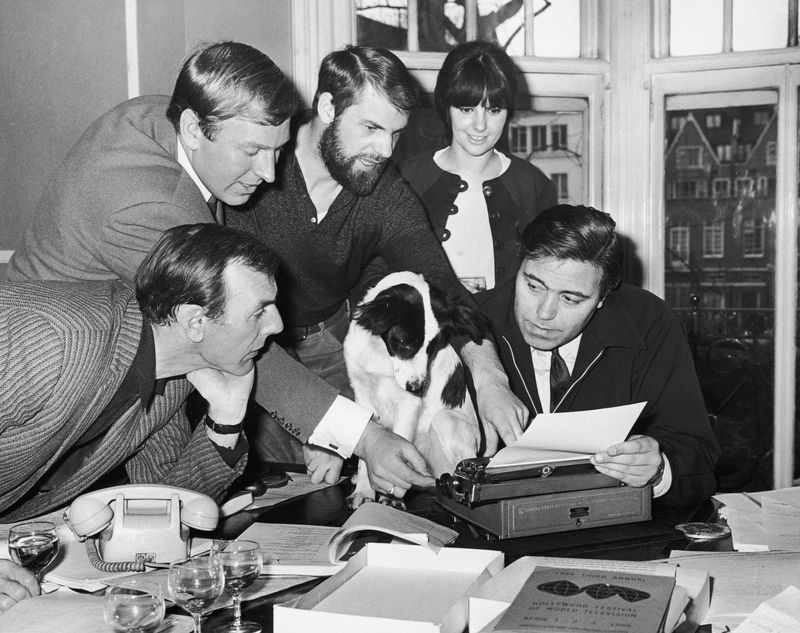
Which doesn’t technically count as the first time the World Cup was stolen (yes, the first time). In 1966, it was snatched from the window of a London shop where it was promoting the country hosting the event. A collie named Pickles found it and earned notoriety Sir David Beckham would someday match.
Fast-forward 17 years and the trophy was again swiped, this time from under Brazil’s nose. To say it was never to be seen again isn’t entirely accurate — one of the thieves was a jeweler who melted it down and sent it to the black market.
With this being corruption not even FIFA could stomach, the sport’s governing body decreed a new trophy would be used starting in 1974 — but the winner would receive not the real thing, but a replica.
Tempting as it may be to say this was the only time the criminal element infiltrated the World Cup, that too would be untrue. History tells us at least twice prisoners used the World Cup as cover to successfully make a break for it. Given the choice between watching the inmates or the action on their TVs, the guards took the predictable route.
Some crooks are wiser than others. In 2006, a thief swiped Eva Standmann’s wallet, compete with the ticket she had to meet up with her husband at the Brazil-Australia match later that day. Imagine his surprise when a young man appeared in his wife’s seat. He notified police, who nabbed a crook best described as bold, not bright.
Diego Maradona and the infamous ‘Hand of God’
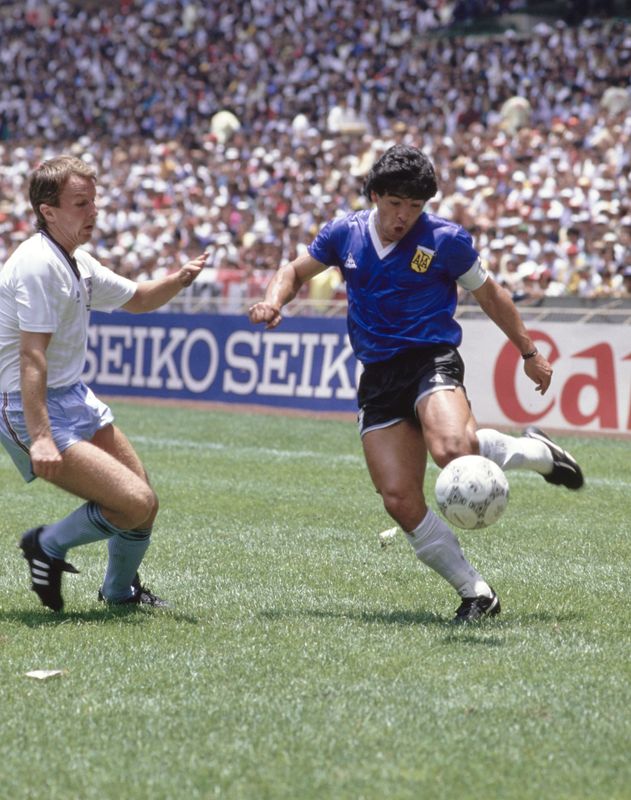
No one, perhaps, was wearing the proverbial white hat in an encounter inspired by Diego Maradona’s infamous “Hand of God” goal for Argentina vs. England in the 1986 World Cup.
Maradona used his hand to knock the ball into the net. A man ironically named Ian Wellworth was nabbed by police years later as he attempted to enter a stadium in which Maradona was coaching. The man explained to police he’d placed a substantial bet on England in ’86. By doing so, he not only lost his money, but also his wife. And so he came to the subsequent match armed with a machete intending to “cut off the thief’s head.”
Other acts, meanwhile, are more closely aligned with questionable judgment than outright malfeasance.
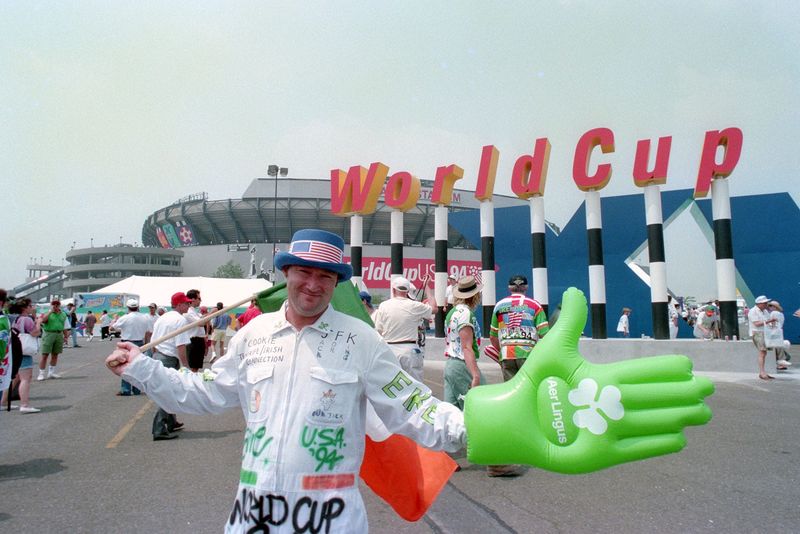
The 1994 World Cup in the U.S. kicked off despite, well, the worst kickoff in World Cup history. Organizers thought it would be a clever idea to have singer Diana Ross slam home a penalty kick as part of her performance in the opening match pageantry. So up stepped Ross in high heels, sending the ball far wide despite her penalty kick coming from only 5 yards out instead of the regulation 12. Worse, the goal was to explode on cue from the force of her shot — and it did, despite her supreme miss.
Speaking of dead-ball plays that didn’t exactly go according to plan, the 1974 World Cup in Germany included an all-timer. Brazil was beating Zaire in the closing minutes when Rivelino lined up for a free kick. But when the referee blew his whistle, Zaire defender Mwepu Ilunga swooped in and booted the ball clear downfield.
At the time, it appeared Ilunga was guilty of an outrageous time-wasting tactic, worsened by the fact he appeared perplexed when the referee brandished a yellow card. It later came out that Zaire’s dictator, Mobutu Sese Seko, was so irked by the team’s 9-0 defeat earlier in the tournament that he threatened players if they lost 4-0. Ilunga was simply assuring safe passage home for the eventual 3-0 loss.
Argentine goalkeeper needed a bathroom break
During Italy 1990, a match against Yugoslavia went to penalty kicks, which was unfortunate for Argentine goalkeeper Sergio Goycochea. Desperately needing a bathroom break, he had a couple of others surround him as he relieved himself on the side of the field (an act later matched by American Landon Donovan infamously in Mexico City’s Estadio Azteca).
Goycochea stopped two penalty kicks, allowing Argentina to advance. When the next match also went to penalties, his coach, Carlos Bilardo, insisted he follow the same formula. He did (including two key saves).
There must have been something about that tournament, because England’s Gary Lineker had a bathroom crisis of the other sort. After relieving himself, he rubbed his bottom on the grass in a hopeless attempt to clean himself, then was (ahem) relieved when substituted for not long after, clearing the way for an early shower.
The 1950 final featured Uruguay against host Brazil at the magnificent, new Maracana stadium in Rio de Janeiro, where attendance officially was 173,850 even though it’s generally agreed that actual attendance was closer to 200,000. Surely such a cauldron amounted to overwhelming odds against the visitors, so the cover of the newspaper O Mundo had a headline “Here Are The World Champions” with a photo of the Brazilian team. Uruguay’s captain, Obdulio Varela, bought 20 copies, spread them on a bathroom floor and instructed teammates to urinate on them.
After Uruguay won 2-1 Varela ignored warnings by going out alone that night to celebrate, hoping he would not be recognized.
“I thought if they did, they would kill me,” he said. “But to my surprise, despite being devastated, they congratulated me and had drinks with me.”
Poland’s players arrived in Argentina in 1978 prepared to imbibe. The traveling party brought enough vodka for each player to have 10 bottles.
Scottish players didn’t have much to celebrate during Mexico 1986. They still toasted the night of their elimination with whisky and beer — then ran a victory lap at their hotel — nude.
World Cup had its own wardrobe malfunctions, foot issues
Italy’s Guiseppe Meazza wasn’t quite that revealing during France 1938. He stepped up to take a penalty kick vs. Brazil immediately after the elastic on his shorts split apart. Using his left hand to suspend his shorts, he converted from the spot, ran to celebrate with fans, and was left with his boxers exposed when he triumphantly raised his arms.
The Super Bowl, it turns out, has nothing on the World Cup when it comes to wardrobe malfunctions. In another 1938 match, Poland’s Leonidas da Silva scored four times in a 6-5 loss to Brazil, although one goal should have been disallowed. Rain had turned the pitch into a mud bath. Da Silva lost one boot in the mud, which concealed his formerly white sock so much the referee never noticed he was virtually barefoot when he scored. Contrast that to India, which qualified for the 1950 tournament but didn’t show up in protest. Reason? The team wasn’t permitted to play barefoot.
The worst lapse in sartorial judgment might have been by the Scots in 1954, showing up with long-sleeved, thick wool shirts, unaware that summertime temperatures in Switzerland can approach 104 degrees. “I think they thought we were going on an expedition to Antarctica,” defender Tommy Dochert said.
Most creatively dressed honors might belong to Brazilian coach Flavio Costa, who after losing that 1950 final holed himself up in the stadium for two days over fear for his life, emerging only after dressing as a woman.
Hard as it is to believe, when Brazil showed up in the United States for the 1994 World Cup, it was with a 24-year drought since its previous triumph. Defender Ricardo Rocha suffered a muscle injury in the opener and missed the remainder of the tournament, but he gathered teammates before the final vs. Italy hoping to inspire them.
“We’ve fought hard. We’ve reached this point. Let’s do the same as those Japanese, the Kawasakis,” he said.
By confusing pilots with motorcycles, Rocha committed a gaffe that would have made John Belushi proud.
“Nobody could stop laughing,” Taffarel said. “It changed the mood instantly. It totally relaxed us.”
Brazil won 3-2 on penalties.
It’s a dog-eat-dog world at World Cup
When you lose at the World Cup, though, there are consequences. After Scotland was ousted in 1978, coach Ally MacLeod was talking with reporters at the team hotel when a puppy wondered by and sat beside him. “Look at me now, without a single friend in this world, only with this little dog,” he said.
The dog bit him.
If only dog bites were the worst of it. During the 1954 World Cup in Switzerland, Uruguay’s Juan Hohberg was piled upon after scoring his second goal against Hungary, triggering a heart attack. He was treated with a respiratory stimulant and soon returned to finish the match.
Usually when team trainers take the field, it’s naturally to treat a player. During the 1930 World Cup, the United States’ trainer collapsed on the pitch. Turned out that when he dropped his bag on the way onto the field, his bottle of chloroform broke. So when he opened the bag … well, you know.
Brazil’s Tostao was in tears for the final 20-odd minutes of a victorious 1970 final vs. Italy. He said he was overwhelmed by emotion, having nearly missed the tournament because of a detached retina. His story didn’t end there. After the competition, he traveled to Houston to give his medal to the surgeon who helped in his rehabilitation. Then he earned a degree in ophthalmology.
Injuries have torpedoed more than one team at the World Cup. It’s one of the many factors beyond the control of coaches, which, as you might guess, tends to drive them mad.
Bilardo, the Argentine hired to lead Colombia in 1982, decided he would take no chances, hiring Beatriz Becerra, who claimed to have supernatural powers. It seemed to pay off just before halftime when Peru’s Teofilo “Nene” Cubillas, who starred for the Fort Lauderdale Strikers, missed a penalty kick. But when the Peruvians earned a draw with a late goal, Bilardo cast a spell of his own, firing Becerra immediately after the match.
Something seems fishy about this World Cup tale
In 1966, a Brazilian clairvoyant said he’d take his own life if his team didn’t retain the Cup. When Portugal eliminated Brazil in the first round, he vanished not only with his life, but with the money he’d received while accepting bets. If only he could have checked in with “Paul,” legend of the 2010 World Cup for his uncanny ability to predict the outcome of each of Germany’s matches, plus the final.
Paul, by the way, was an octopus.
So make predictions and wagers if you dare. The more outrageous, the better. Because come the final on July 19, you’ll probably realize your imagination didn’t go far enough.
Oh, and take a close look at that replica trophy the winning captain will hoist.
You may never see it again.
(Editor’s note: An invaluable source for this story was the entertaining book “Incredible World Cup Stories / Wildest Tales and Most Dramatic Moments from Uruguay 1930 to Qatar 2022,” written by Luciano Wernicke and available via Apple Books, Amazon Kindle, Barnes & Noble and more.)
This article originally appeared on Palm Beach Post: World Cup 2026: Check out these weird tales from previous competitions
Reporting by Hal Habib, Palm Beach Post / Palm Beach Post
USA TODAY Network via Reuters Connect