This is part of a new USA TODAY network project showcasing breathtaking — and perhaps, underappreciated — views throughout the United States. These are some of the most beautiful landmarks, scenic vistas and hidden gems you can truly treasure in your area.
The Sunshine State is filled to the brim with places that pack on the visual splendor.

From flower-filled vistas, to the ecological bounty of the Everglades, to some of the most breathtaking sunsets you will ever witness, Florida provides myriad ways for residents and visitors alike to take in a view.
Making plans for a summer vacation in Florida? You can check out one of these five beautiful spots.
From the Arthur R. Marshall Loxahatchee National Wildlife Refuge in western Palm Beach County, to Blowing Rocks Preserve in the Treasure Coast, to the Ormond Scenic Loop and Trail Loop in Volusia County, to the spectacular sunsets along Southwest Florida’s Coast to the jetties at St. Andrews State Park in Panama City.
It’ll be hard to see them all in a weekend, so schedule your summer around weekend visits dedicated to exploring each space thoroughly.
Whether you visit one, some or all of these lovely settings, you’re sure to get the full picture of Florida’s pristine beauty.
[ Most Treasured Views in America: National | West | South | Middle America | Northeast ]
Arthur R. Marshall Loxahatchee National Wildlife Refuge
What makes Arthur R. Marshall Loxahatchee National Wildlife Refuge special?
If you want to experience the Everglades without needing to navigate the chaotic highways and roads of Miami-Dade County, Arthur R. Marshall is the place for you.
This national wildlife refuge spans more than 145,000 acres in western Palm Beach County. It features a mix of wet prairies, sloughs, tree islands, sawgrass ridges and massive clusters of cattails, as well as a 400-acre cypress swamp.
The refuge is heaven for birdwatchers, who wander the popular marsh trail or cypress swamp boardwalk with binoculars and cameras in hand, ready to spot some of the 250 species of endangered, rare, migratory and native birds that have been reported there.
Arthur R. Marshall also is home to dozens of species of reptiles, amphibians, butterflies and mammals. On cool fall mornings, families of deer have been spotted along the marsh trail. In the summer and early fall, hordes of sunset-colored lubber grasshoppers create a chorus for those who probably expected to see maybe an alligator or two, but instead are treated to a buggy mating ritual.
This is a 226-square-mile slice of biological paradise, tucked away from the bustle of busier eastern areas of Palm Beach County and filled with something for any age or ability.
Things to do at Arthur R. Marshall Loxahatchee National Wildlife Refuge
Hiking and bicycling: Arthur R. Marshall has a variety of hiking trails with a range of lengths and difficulties.
Birdwatching: More than 250 species of birds have been reported at Arthur R. Marshall. As such, it is part of the Great Florida Birding and Wildlife Trail.
Boating: Boats can launch from the Lee Road access boat ramp. Water-cooled motor boats can go into a specified zone within the refuge, and there is also a trail for kayaks or canoes. A 5.5-mile canoe trail is self-guided and includes a rest station about halfway through.
Fishing: Fishing is allowed in designated areas, including near the boat ramp at the Lee Road access.
Horseback riding: About a 36-mile stretch of the perimeter levee is open to horseback riding.
Learning: The refuge staff and volunteers provide educational opportunities in the Visitor Center.
Do you have to pay to see Arthur R. Marshall Loxahatchee National Wildlife Refuge?
Yes; a daily pass is $10 per vehicle, and an annual pass is $25 per vehicle. Discounts are available for seniors, and free passes are available for members of the military and disabled people.
What is the closest city to Arthur R. Marshall Loxahatchee National Wildlife Refuge?
Arthur R. Marshall is west of Boynton Beach, south of Wellington and north of suburban Boca Raton.
Details on Arthur R. Marshall Loxahatchee National Wildlife Refuge
Address: 10216 Lee Road, Boynton Beach, FL 33473
Hours: The refuge is open from 5 a.m. to 10 p.m. daily; the Visitor Center is open 9 a.m. to 4 p.m. and closed on Thanksgiving and Christmas days.
Cost: A daily pass is $10 per vehicle; an annual pass is $25 per vehicle. More pass options, including an annual senior pass, are available at www.recreation.gov. Upcoming fee-free days are June 19, Sept. 27, Oct. 12 and Nov. 11.
Phone: 561-734-8303
Website: www.fws.gov/refuge/arthur-r-marshall-loxahatchee
— Kristina Webb, Palm Beach Daily News
Blowing Rocks Preserve
What makes Blowing Rocks Preserve special?
It’s the largest stretch of exposed Anastasia limestone, or coquina rock, along the Atlantic coast. Its backdrop is teal ocean water carried here from the Caribbean, thanks to the Gulf Stream.
The preserve got its name from the way water bursts upward through holes in the rocks during a combination of rough surf, strong wind and high tide.
On extreme days, it can cause plumes of water to shoot up to 50 feet in the air — but that’s only 3% of the time. A full or new moon brings the highest of high tides, but none of that matters if the seas are calm or summer sands cover the limestone.
Things to do at Blowing Rocks Preserve
∎ Paddleboarding: See the different rocky formations in the ocean during the clear, calm summer months.
∎ Snorkeling: Be careful swimming around submerged rocks that could be sharp, especially with no lifeguard on duty.
∎ Hiking: The Dune Trail is sandy and covered in a canopy of sea grapes, allowing sneak peeks at the bright ocean.
∎ Learning: Take Maggy’s Path to the Lagoon Trail near the Hawley Education Center.
Do you have to pay to see Blowing Rocks Preserve?
Yes, the cost is $2 for adults, $1 for members and free for kids ages 12 and younger.
What is the closest city to Blowing Rocks Preserve?
It is close to Tequesta and Jupiter in Palm Beach County.
Details on Blowing Rocks Preserve
Address: 574 S. Beach Road, Jupiter Island
Hours: Open 9 a.m. to 4:30 p.m. daily (except Easter, Thanksgiving and Christmas).
Cost: $2 for adults, $1 for members, free for kids ages 12 and younger (no pets allowed).
Phone: 561-744-6668
Website: nature.org/en-us/get-involved/how-to-help/places-we-protect/blowing-rocks-preserve
— Laurie K. Blandford, TCPalm/Treasure Coast Newspapers
The jetties at St. Andrews State Park
What makes the jetties at St. Andrews State Park special?
Tucked along the Panhandle coast like a sun-kissed secret, the jetties at St. Andrews State Park in Panama City are a paradise for just about everyone.
Want to tan? The wide, sandy stretch of sand soaks up the sun like a champ.
Need zen time? There’s plenty of space for reading, paddle boarding, snorkeling, and bird watching. Anglers, too, love the rocky outcroppings that make for solid fishing spots.
Things to do at the jetties at St. Andrews State Park
∎ Swim, sunbathe, walk.
∎ Collect seashells and paddleboard.
∎ Fish.
For more details about experiences and amenities, go to https://www.floridastateparks.org/experiences-amenities
Do you have to pay?
Yes. $8 per vehicle (two to eight people). $4 single-occupant vehicle.
The park’s landing page: https://www.floridastateparks.org/parks-and-trails/st-andrews-state-park
What is the closest city?
Panama City or Panama City Beach.
Details on the jetties at St. Andrews State Park
There is camping at the state park, but you can also stay at hotels and condo rentals in Panama City Beach and Panama City.
Go to www.visitpanamacitybeach.com/places-to-stay/ or https://destinationpanamacity.com/accommodations/
It’s a state park, so there are commissaries. But if you want to eat like a local, go to nearby Patches Pub or Capt. Anderson’s Restaurant and Waterfront Market.
You can also take a trip to nearby Shell Island and possibly see dolphins. Go to https://www.captandersonsmarina.com/shell-island-dolphin-tours
— Tyler Orsburn, Panama City News Herald
The Ormond Scenic Loop and Trail Loop
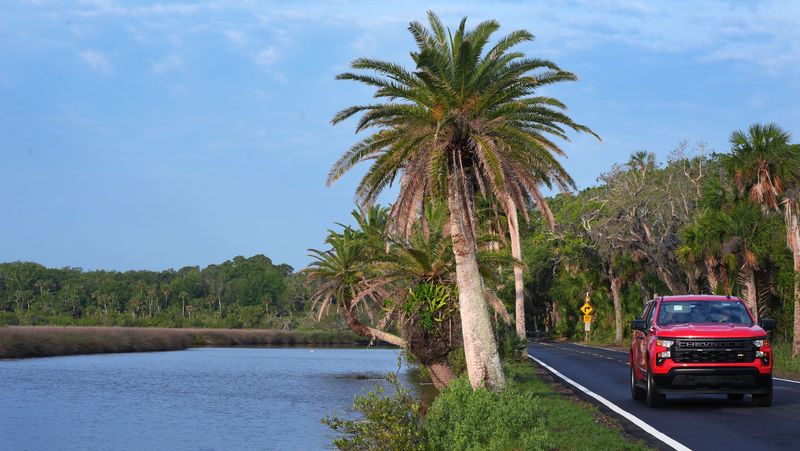
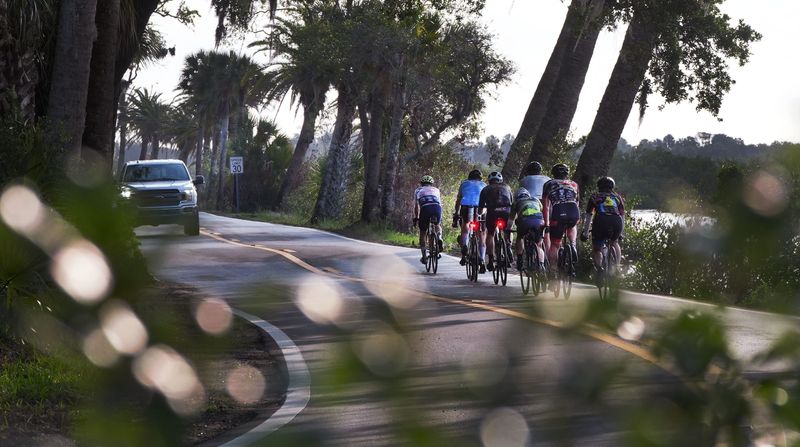
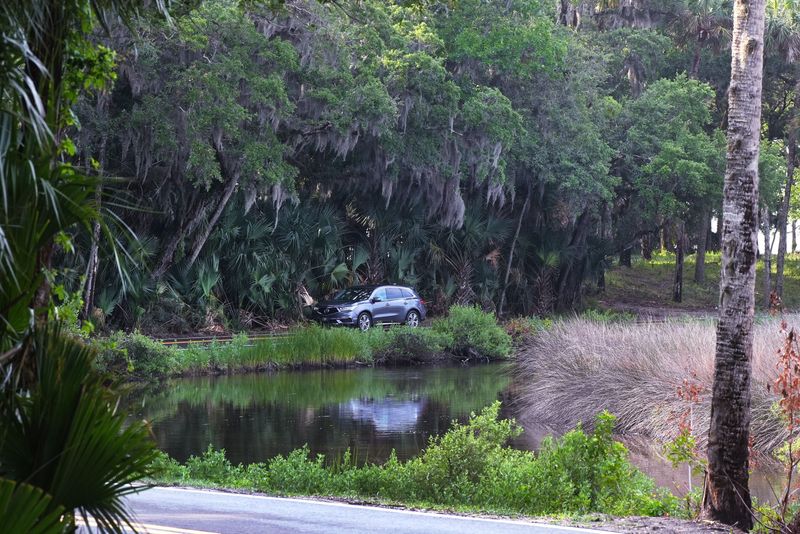
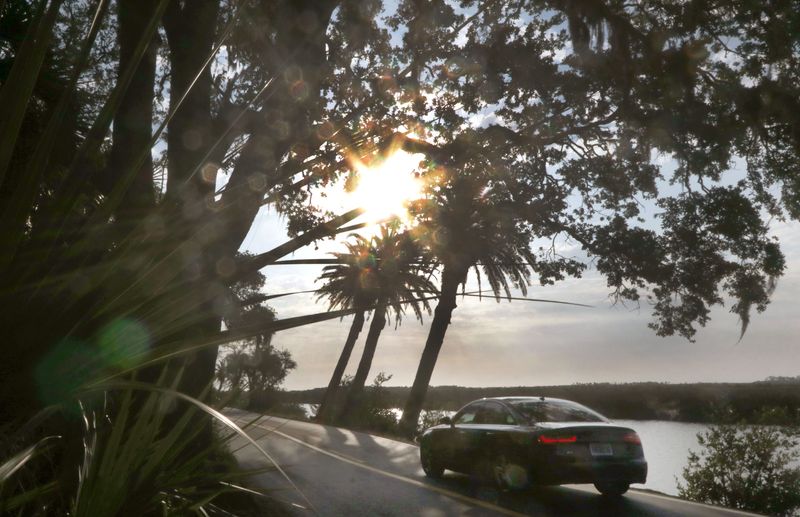
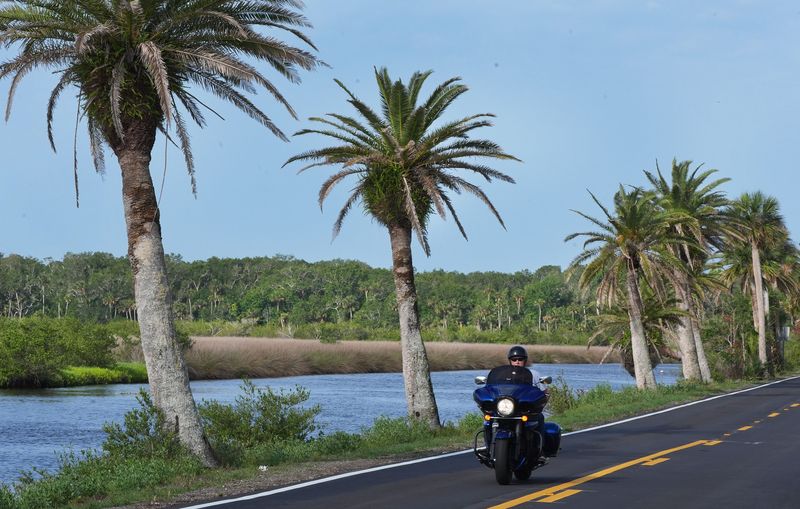
Winding along Old Florida tree canopies and marshes, Atlantic Ocean coastline, river views and historic sites, The Ormond Scenic Loop and Trail Loop is a treasured drive among residents and visitors in Volusia County.
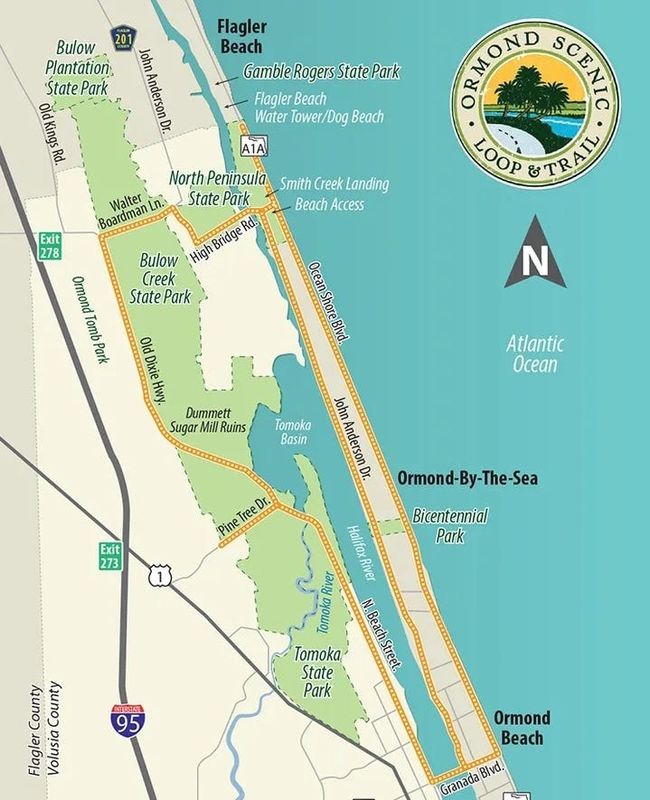
The Loop, which includes part of the coastal community of Ormond Beach, is a National Scenic Byway and a Florida Scenic Highway. The drive connects people to state parks, places to eat and shop, and other fun stops along more than 30 miles of connected roads in East Central Florida.
The Loop’s path includes State Road A1A/Ocean Shore Boulevard on the east, State Road 40/Granada Boulevard on the south end, North Beach Street, which becomes Old Dixie Highway on the west, Walter Boardman Lane and Highbridge Road on the north and John Anderson Drive slicing lengthwise between the two sides.
What makes the loop special?
It’s more than a pretty drive.
“It’s a very beloved road,” Nancy Galdo, vice chairwoman of the Ormond Scenic Loop and Trail support entity, said in an April interview.
Parts of The Loop are like a step back into Old Florida, especially Old Dixie Highway, Walter Boardman Lane and Highbridge Road. Along the way, drivers will travel nearly at water level with the wetlands, with nothing around but trees and marsh and maybe an egret here and there.
The Loop is great for a sunny day drive with loved ones.
A U.S. Department of Transportation website lists scenic byways. It puts it this way: “The Ormond Scenic Loop and Trail is an easily navigated loop of roadways traversing some of the most beautiful and diverse natural scenery remaining in all of Florida.”
What are things I can do along the loop?
The Loop’s path includes plenty of things to stop and see, and do.
Some of the most popular stops are on the western side of The Loop. Bulow Creek State Park has “one of the largest remaining stands of southern live oak forest along Florida’s east coast,” according to Florida State Parks.
Among the trees is the Fairchild Oak, “one of the largest live oak trees in the South.” It’s believed to be over 400 years old.
On the east side, beach lovers can dip their toes in “cinnamon-colored sand” at North Peninsula State Park at 40 Highbridge Road in Ormond-by-the-Sea, Galdo said.
Tomoka State Park at 2099 N. Beach St. in Ormond Beach is another good stop for recreation and history, with kayak, canoe and paddleboard rentals available at the Tomoka Outpost ― people can also pick up a batch of Cajun boiled peanuts and other refreshments at the outpost.
On the southern end of The Loop, people can visit The Casements at 25 Riverside Drive in Ormond Beach. It is the former Ormond Beach home of John D. Rockefeller and is open for tours. The house is on the National Register of Historic Places.
A good place to end or break on a tour of The Loop is in Ormond Beach. The cute downtown and beachside areas both have shops and restaurants. Some of the well-known stops include Rose Villa, a restaurant known for its Southern charm.
How much does it cost to see the loop?
Nothing. It’s free to see. Some of the stops along The Loop charge an entrance fee, though.
What is the closest city to the loop?
Ormond Beach.
Where can I find more information?
For information, go to ormondscenicloopandtrail.com. The website has a map and a listing of things to do on The Loop. People can also reach out to the nonprofit group that supports The Loop at OrmondScenicLoop@gmail.com.
— Sheldon Gardner, Daytona Beach News-Journal
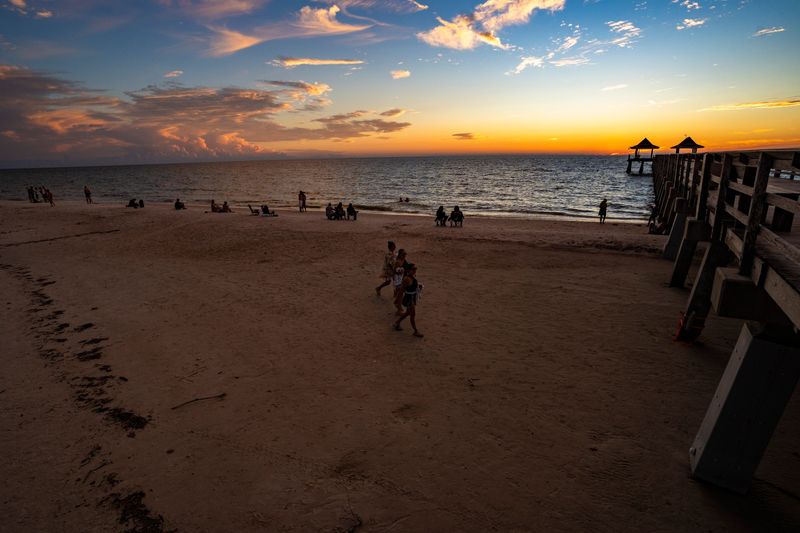
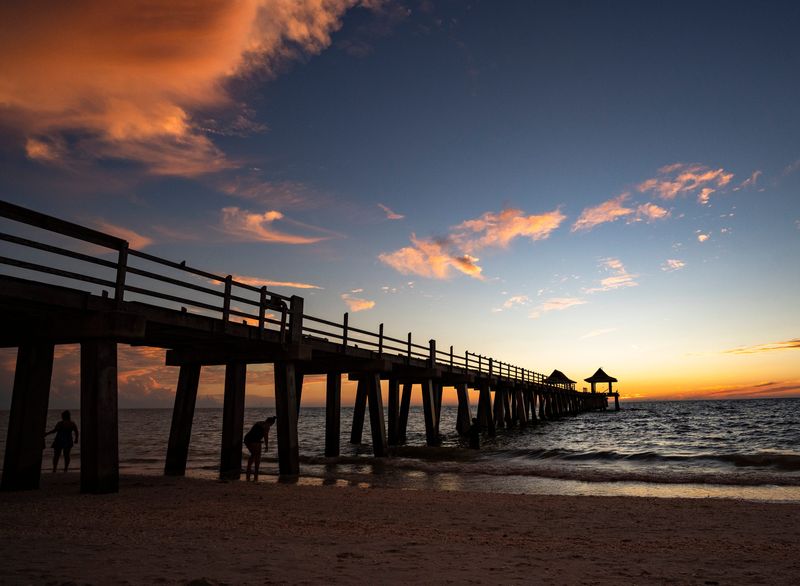
Catch a spectacular sunset along Southwest Florida’s Coast
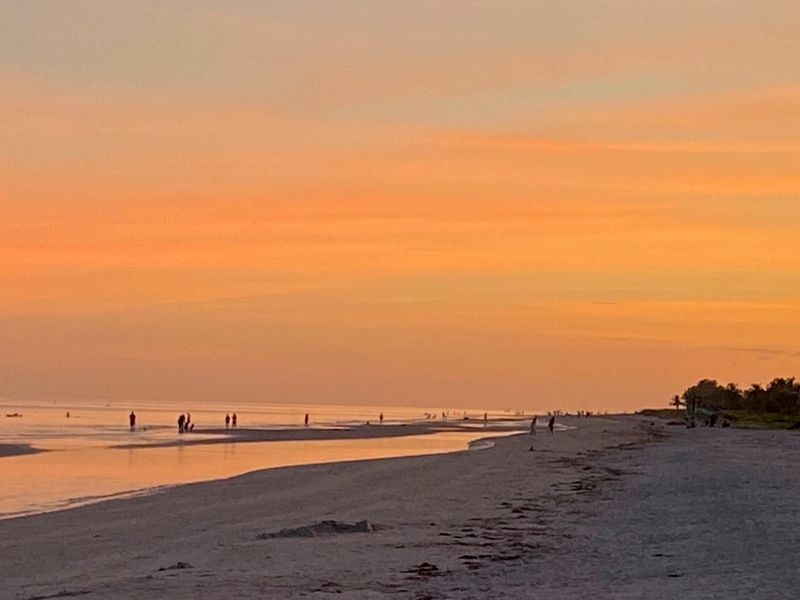
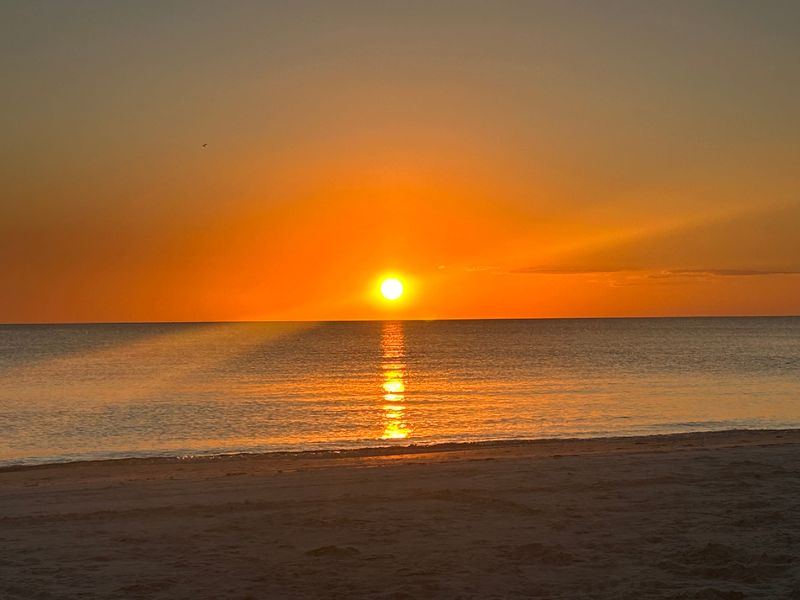
Mother Nature serves up stunning sunsets along the Southwest Florida coast.
Almost any beach along the Fort Myers and Naples areas’ coastline will do to catch a treasured view of a sunset over the Gulf of Mexico, also known as the Gulf of America.
Grab a beach chair and some refreshments and prepared to be wowed by a sky painted with fiery, bold burnt-orange, cotton candy pink, lavender or all of them.
There’s no charge to enjoy Southwest Florida beaches along the Fort Myers and Naples area Gulf shoreline, but many access points require visitors to pay to park, $2 to $5 an hour in some places, a flat $10 in others. There is a $6 toll to get to Sanibel and Captiva islands, a top Southwest Florida sunset-viewing destination.
Less beachy, but quite picturesque is the view from Pine Island, just northwest of Fort Myers.
Some of the best places to view the sunset in Southwest Florida:
Captiva Island, Sanibel Island or the Sanibel Causeway sunsets
Sanibel Causeway
A popular spot for sunset viewing is the Sanibel Causeway, which links inland south Fort Myers to the iconic Sanibel Island. Much to the delight of locals and visitors alike, the Causeway beaches reopened May 1 after Hurricane Ian destroyed them in 2022.
Things to do at the Sanibel Causeway
The fishing’s good here; you might catch snook, tarpon, speckled trout, or catfish. And it’s a great spot for kayaking paddleboarding, windsurfing on a breezy day, or simply picnicking.
Do you have to pay at the Sanibel Causway?
Parking is free and there are portable restrooms on site, but to get there, like all Sanibel and Captiva spots, you’ll be charged a $6 toll (plus a $3 administrative fee if you don’t have a transponder) at the entrance to the causeway.
Captiva Island
Views are gorgeous from both Sanibel and Captiva islands, but where Sanibel’s east-west orientation means some of its beaches face south, Captiva’s Gulf-front beach faces west.
Visitors rave about the views from Captiva Beach at Alison Hagerup Beach Park at the tip of Captiva Island. To get there, take Sanibel Captiva Road to Captiva Drive, almost until you can go no further. 14790 Captiva Drive, Captiva, Florida.
Parking is fairly abundant at Alison Hagerup park, but a bit pricey. (Proceeds fund beach renourishment and wildlife habitat enhancements): $25 for two hours or $40 all day. You’ll need to download a mobile parking app to pay.
Also recommended for pretty sunset views: Blind Pass Beach (6491-6499 Sanibel Captiva Road, Sanibel, Florida) and Turner Beach (17200 Captiva Drive, Sanibel, Florida) on either side of the Blind Pass Bridge connecting Sanibel Island and Captiva Island. You will pass this place if you’re headed to Alison Hagerup park.
Lodging on Sanibel and Captiva: Several properties have reopened for bookings on the islands after they were devastated by Ian in 2022, and recovery was set back by more hurricanes in 2024.
That means there are some freshly refurbished accommodations to select from. Among the choices of lodging on the islands:
Both ‘Tween Waters and Sundial, along with other area resorts, offer day passes for use of their campuses and amenities.
More budget-conscious visitors can stay at one of the many inland hotels in Fort Myers, Cape Coral, Bonita Springs or Naples.
Off the beaten path: Pine Island sunsets in Southwest Florida
Pineland
For a beautiful sunset view, head to the Calusa Blueway Canoe & Kayak Launch (aka Pineland Monument Park) at 13643 Waterfront Drive in the Pineland area of Pine Island. Here you can watch the sunny fireball sink into the horizon over the Gulf through Captiva Pass. Parking is free, but there are only a handful of spots.
Things to do on Pine Island
Across the street from the boat launch, visit the Calusa Heritage Trail-Randell Research Center archaeological site and take in the views from atop a Calusa shell mound. The Calusa people were early inhabitants of Southwest Florida. 13810 Waterfront Drive, Bokeelia, Florida 33922; 239-283-2157
Lodging on Pine Island: Dating to 1926, Tarpon Lodge offer Old Florida charm. Summer rates are in the $260 to $310 range. 13771 Waterfront Dr, Bokeelia, Florida; 239-283-3999
Fort Myers Beach and Bonita Beach sunset views
Matanzas Pass Bridge: For an amazing sunset view, seek higher ground at the top of the 65-feet-high Matanzas Pass bridge, the gateway to Fort Myers Beach, which is on Estero Island. There is a walk involved, but it is worth it to watch the sun set over the boats and island of Fort Myers Beach. Afterward, visitors have numerous bars or restaurants to select from.
Petey’s Upper Deck: This is the second floor bar at Matanzas on the Bay at Fort Myers Beach. It’s actually situated on the back bayside of the island, but it’s up high and long-time locals say it’s a great spot to catch a sunset. 416 Crescent St, Fort Myers Beach, Florida; 239-463-3838
Fort Myers Beach Access Points: The town of Fort Myers beach maintains 29 beach access points and many of them offer parking, some with pay-by-app parking only. A list by the cross-street to Fort Myers Beach’s main road, San Carlos Boulevard is here. Pro-tip: mid-island and south offer quieter, less crowded sunset viewing.
Lynn Hall Memorial Park: If you like a lively beach crowd, try Lynn Hall Memorial Park, just north of the foot of Matanzas Pass Bridge, next to Times Square in the heart of downtown. Parking is $2 per hour.
Lover’s Key State Park: A beautiful location along the Southwest Florida’s coast, outdoor enthusiasts will love Lover’s Key.
Bonita Beach: South of Fort Myers Beach and Lover’s Key is Bonita Beach with equally enjoyable and freshly renourished beaches, a nice setting for a sunset outing. Check out Bonita Beach Park off Hickory Boulevard. Parking can be a struggle, but it’s worth it for the magical views.
Lodging at Fort Myers and Bonita beaches: Multiple hotels have reopened since the Hurricane Ian crippled the island in 2022. A couple to consider:
Inland, lots of hotels offer summer rates in $100 to $200 range.
Naples, Marco Island, Florida promise breathtaking sunsets
Vanderbilt Beach Park
A lively, family friendly location set among the condos and hotels of the swanky north Naples coast, this is one of the most popular beach accesses in the area. 100 Vanderbilt Beach Road, Naples, Florida
Delnor Wiggins State Park
If it’s peace and tranquility you seek in your sunset viewing, Delnor Wiggins beach is a prime choice. The state of Florida calls it “one of the most pristine stretches of beaches in the world.” It took a beating by hurricanes in recent years, but reopened, all fixed-up, in early 2025.
Naples Pier
Watching the sunset at Naples Pier or the nearby beach is a classic, and you can fit in some people watching at the same time. Due to hurricane damage, only a portion of the pier is open, but that doesn’t stop beach lovers from flocking to this popular spot.
Marco Island’s Crescent Beach
Find incredible views from anywhere on Marco Island’s crescent beach, like Tigertail Beach, a white-sand beach that has recently been restored. Summer clouds make for spectacular sunset colors here. 480 Hernando Drive, Marco Island, Forida
Naples and Marco Island lodging: Among other smaller properties on the island there are full-service resorts with golf, expansive pools, dining, and recreation along Marco’s 3.5 miles of beach.
Too rich for your blood? Stay inland and drive to the beach for sunset.
Contributing: Andrew West, J. Kyle Foster, Laura Layden, Wendy Fullerton Powell, Charlie Whitehead, Dave Holmes and Cindy McCurry-Ross of The (Fort Myers) News-Press and Naples Daily News
This article originally appeared on Palm Beach Post: What are the most treasured views in Florida? Take a look.
Reporting by Kristina Webb, Palm Beach Daily News / Palm Beach Post
USA TODAY Network via Reuters Connect